Executive Lead: Operational Disruption in Critical Manufacturing Control Logic
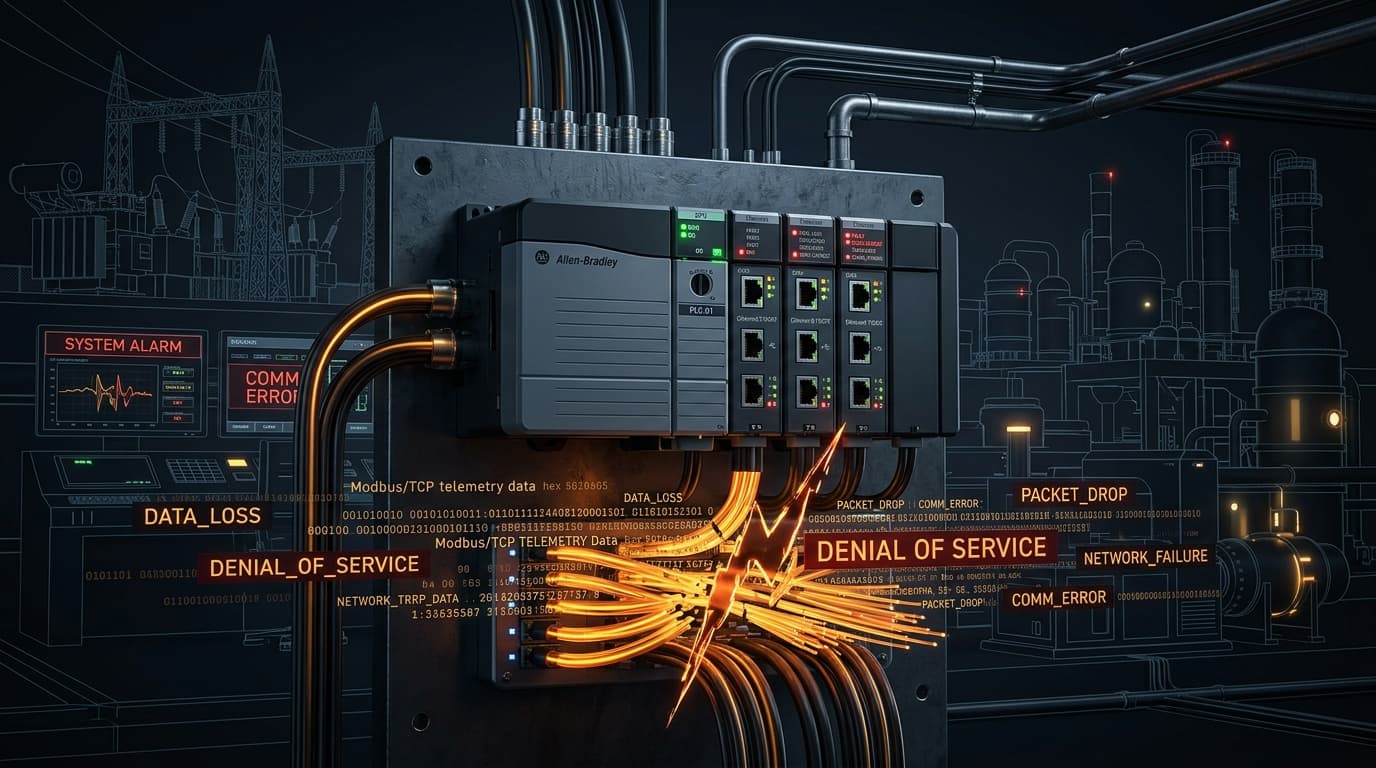
The Cybersecurity and Infrastructure Security Agency (CISA) and industrial automation giant Rockwell Automation have issued a joint Industrial Control Systems advisory, ICSA-26-244-03, warning of a high-severity denial-of-service vulnerability cataloged as CVE-2026-9637. The defect affects flagship Logix 5000 programmable automation controllers (PLCs)—specifically the ControlLogix 5580, CompactLogix 5380, GuardLogix 5580, and Compact GuardLogix 5380 families.
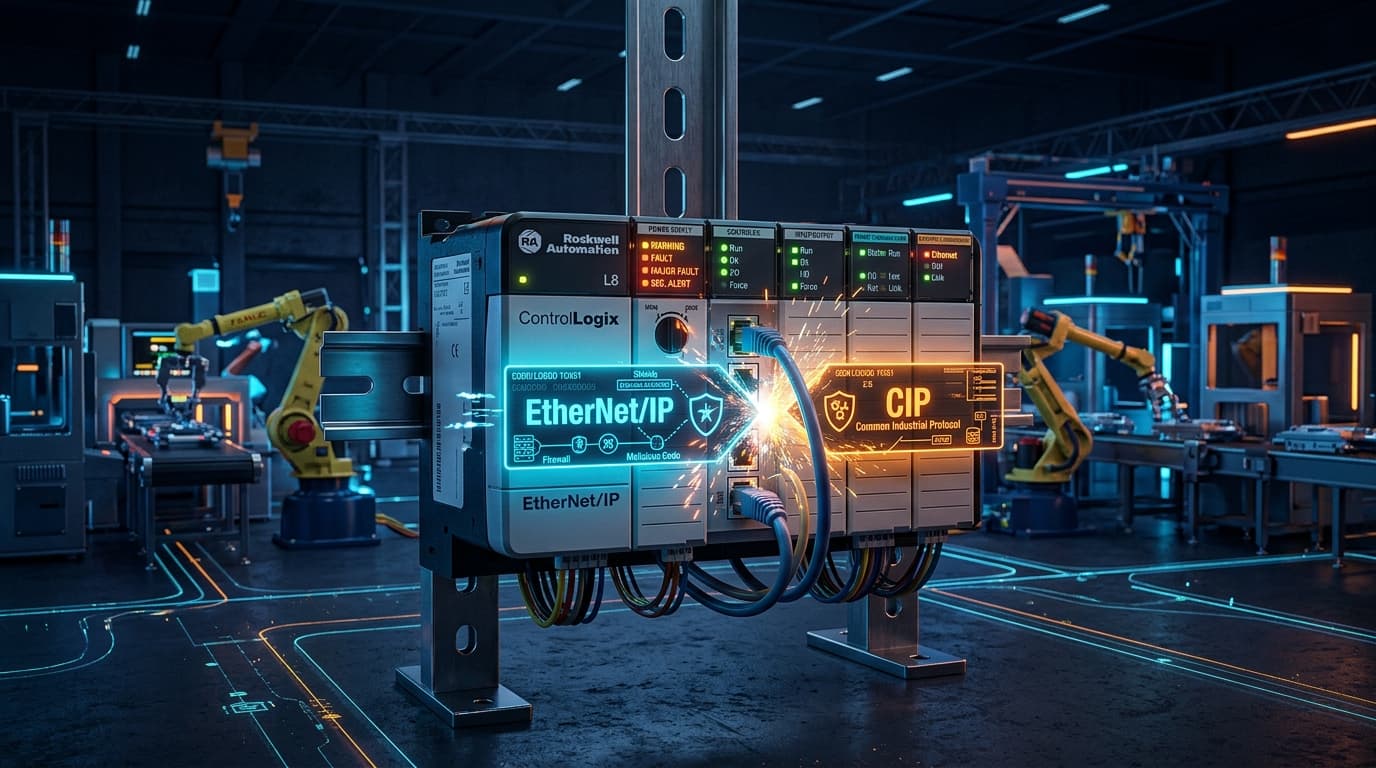
With a CVSS v3.1 base score of 7.5 High (CVSS:3.1/AV:N/AC:L/PR:N/UI:N/S:U/C:N/I:N/A:H), the vulnerability allows an unauthenticated adversary on the industrial network to send a specially crafted Common Industrial Protocol (CIP) message frame to the controller over EtherNet/IP. The resulting parser failure throws the controller into a Major Non-Recoverable Fault (MNRF), causing the real-time execution engine to crash, dropping all input/output (I/O) control loops to their fail-safe state, and requiring an engineer to physically visit the controller chassis to perform a hard power cycle.
Protocol Mechanics & Root Cause Analysis: CIP Input Length Validation Failure
The Common Industrial Protocol (CIP), managed by ODVA, is the standard application-layer protocol utilized across industrial automation networks. Logix controllers listen on standard ports TCP 44818 (encapsulation sessions) and UDP 2222 (implicit I/O messaging) to communicate with distributed I/O racks, human-machine interfaces (HMIs), engineering workstations, and supervisory SCADA hosts.
The vulnerability is rooted in the firmware's input length verification routine during CIP connection-oriented message fragmentation:
- Fragment Assembly Parser: When processing fragmented CIP requests, the communications coprocessor parses the message size declared in the packet header against an internal memory buffer allocated for reassembly.
- Integer Underflow / Discrepancy: If a packet declares an inconsistent fragment length or negative offset value, the parser fails to validate the boundary, triggering a memory management exception in the controller's real-time operating system (VxWorks RTOS).
- MNRF Assert Failure: The operating system asserts a kernel panic, setting the controller's status LED to solid red (Fault). All output cards immediately de-energize or transition to their configured fault state (Hold Last State or Off).
Because the fault is classified as non-recoverable, software resets across the network via Studio 5000 Logix Designer are rejected; the controller will not resume execution until DC power to the chassis backplane is completely cycled.
Industrial Impact Matrix Across Core Purdue Model Layers
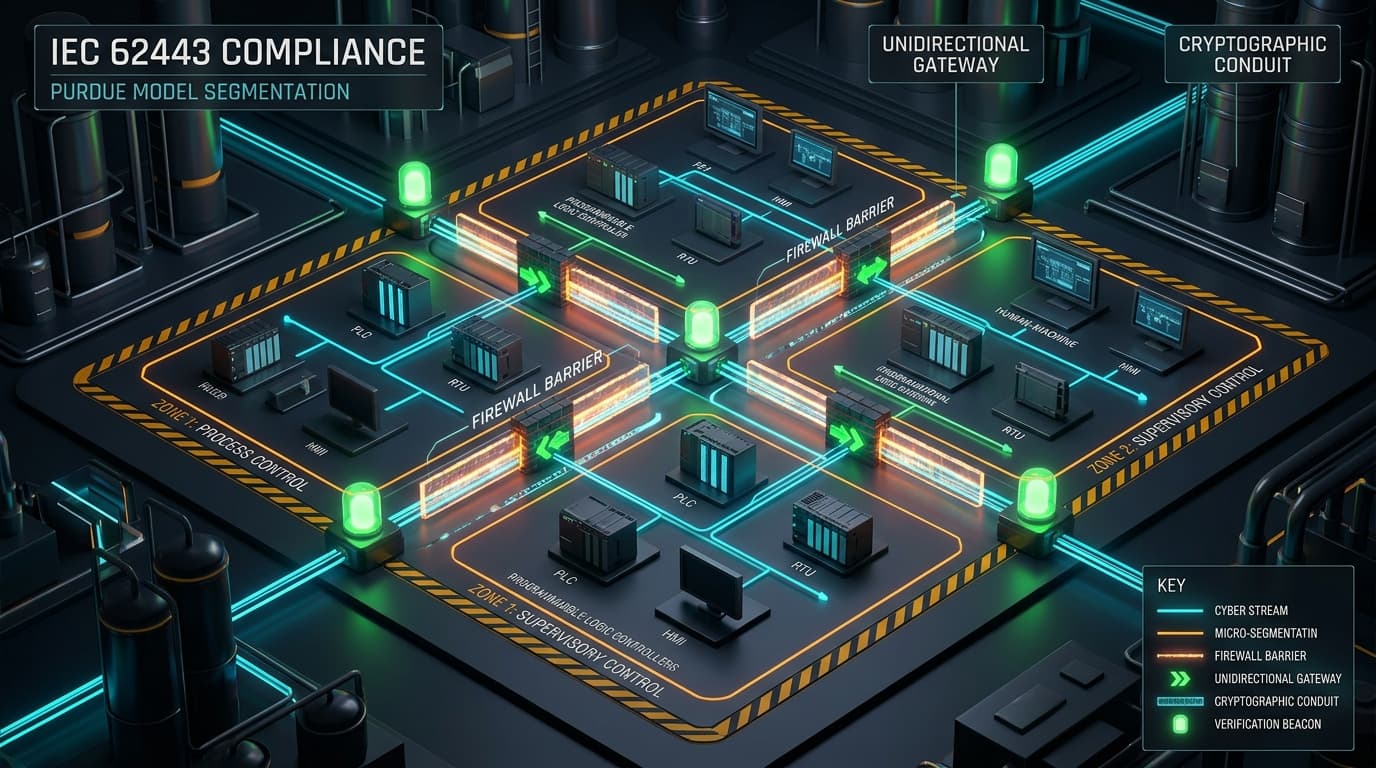
In industrial facilities governed by the Purdue Enterprise Reference Architecture (PERA), targeting Level 1 controllers disrupts the physical process:
| Purdue Model Level | Affected Equipment | Operational Consequence |
|---|---|---|
| Level 1: Basic Control | ControlLogix 5580 / GuardLogix 5580 PLCs | Controller crashes into MNRF; halts conveyor motors, chemical pumps, and turbine governors. |
| Level 1: Safety Instrumented Systems (SIS) | GuardLogix Safety Task | Safety interlocks trip, initiating emergency plant shutdowns or hazardous process stalls. |
| Level 2: Supervisory Control | FactoryTalk View SE HMI & SCADA Servers | Los communications; operators observe widespread "Wire Disconnected" and communication timeout alarms. |
| Level 3: Operations Management | Manufacturing Execution Systems (MES) | Production tracking halts; batch genealogy records corrupted due to ungraceful line stoppage. |
Affected Firmware Versions & Remediation Matrix
Rockwell Automation has released patched firmware builds resolving CVE-2026-9637 across affected controller families:
| Controller Family | Vulnerable Firmware Releases | Patched Firmware Release |
|---|---|---|
| ControlLogix 5580 | V33 and earlier, V34.011–V34.014, V35.011–V35.013, V36.011–V36.012 | V34.015, V35.014, V36.013 |
| CompactLogix 5380 | V33 and earlier, V34.011–V34.014, V35.011–V35.013, V36.011–V36.012 | V34.015, V35.014, V36.013 |
| GuardLogix 5580 | V33 and earlier, V34.011–V34.014, V35.011–V35.013, V36.011–V36.012 | V34.015, V35.014, V36.013 |
| Compact GuardLogix 5380 | V33 and earlier, V34.011–V34.014, V35.011–V35.013, V36.011–V36.012 | V34.015, V35.014, V36.013 |
IEC 62443 Defense-in-Depth & Mitigation Playbook
For facilities that cannot immediately flash controller firmware due to 24/7 continuous manufacturing schedules, asset owners must apply compensating controls in accordance with IEC 62443-3-2 and IEC 62443-3-3:
1. Restrict EtherNet/IP Port Ingress
Block all inbound access to TCP/UDP port 44818 and UDP port 2222 from outside the immediate cell/area zone:
# Industrial firewall rule: Restrict CIP traffic to authorized engineering workstations and HMIs
iptables -A FORWARD -p tcp --dport 44818 -s 192.168.10.0/24 -d 192.168.1.0/24 -j ACCEPT
iptables -A FORWARD -p tcp --dport 44818 -j DROP
iptables -A FORWARD -p udp --dport 2222 -s 192.168.10.0/24 -d 192.168.1.0/24 -j ACCEPT
iptables -A FORWARD -p udp --dport 2222 -j DROP
2. Deploy CIP Security (ODVA Standard)
Enable CIP Security on supported ControlLogix 5580 controllers and EtherNet/IP communication adapters (1756-EN4TR). CIP Security enforces TLS and DTLS mutual authentication (RFC 5246 / RFC 6347), ensuring that untrusted network nodes cannot inject unsigned CIP packets into the controller backplane.
3. Physical Run Mode Lock
Ensure the physical keyswitch on the front of all Logix controller faceplates is rotated from REM (Remote) to RUN mode. While this does not prevent network-level RTOS crashes, it prevents malicious actors from executing remote firmware downloads or program modifications.