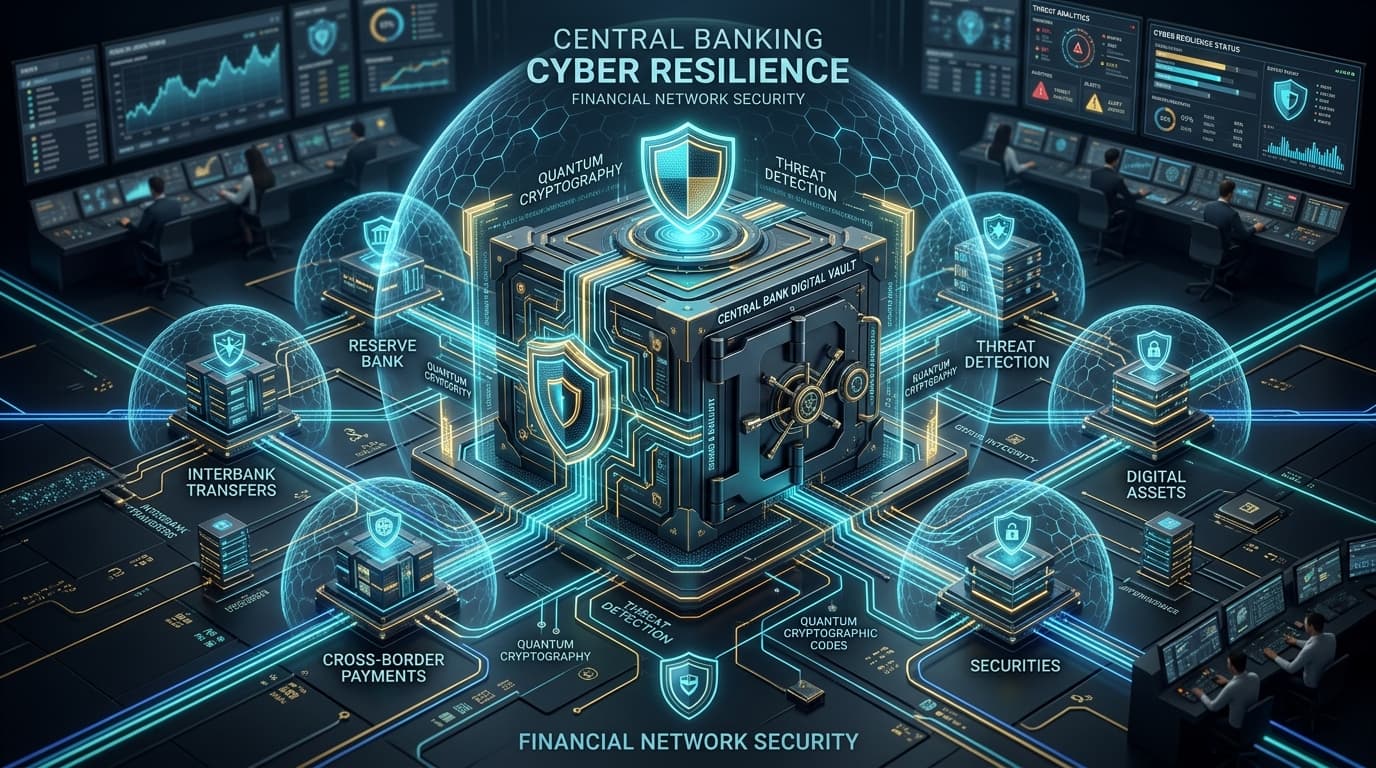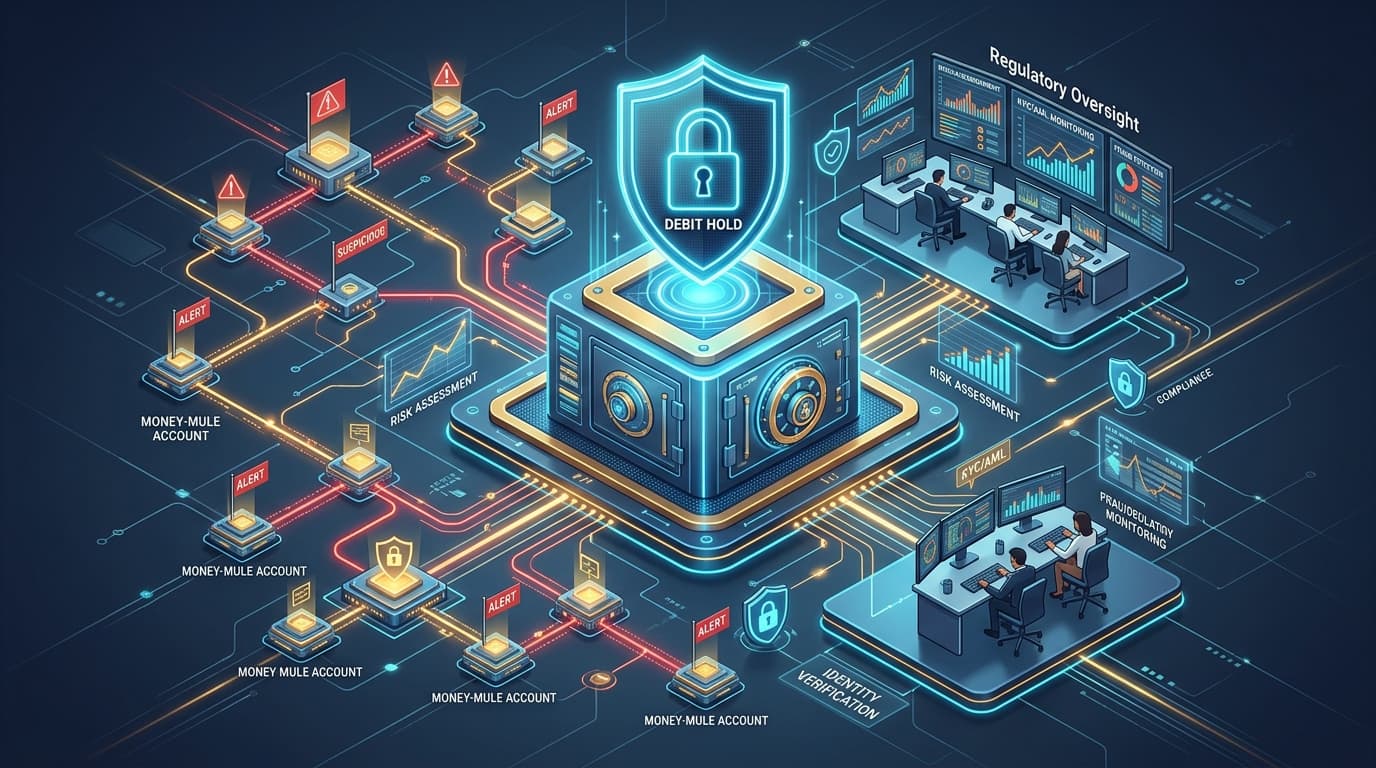
Executive Lead: The Reserve Bank of India Tightens Financial Cyber Safeguards
The Reserve Bank of India (RBI) has issued reinforced operational compliance directives governing all Scheduled Commercial Banks, Non-Banking Financial Companies (NBFCs), Primary Urban Co-operative Banks (UCBs), and authorized Payment System Operators (PSOs). Amid escalating distributed denial-of-service (DDoS) campaigns, credential-stuffing barrages targeting retail net-banking portals, and sophisticated software supply-chain compromises affecting payment gateways, the central bank has reaffirmed its Master Direction on Information Technology Governance, Risk, Controls and Assurance Practices alongside the foundational Cyber Security Framework in Banks (CSFB).
Central to the supervisory framework is the harmonization of the mandatory 6-hour cybersecurity incident reporting clock. Regulated entities (REs) must report any cybersecurity incident to the RBI Cyber Security Operation Centre (C-SOC) and the Indian Computer Emergency Response Team (CERT-In) within six hours of detection.
Beyond incident disclosure, the directive mandates board-level accountability, zero-trust digital payment switch architectures, multi-factor cryptographic authentication, and rigorous oversight of third-party cloud service providers. With India's unified payment ecosystem processing billions of transactions monthly, the RBI's stringent cyber resilience baseline serves as a global benchmark for central bank systemic risk containment.
The 6-Hour Incident Reporting Mandate: Harmonized CERT-In & RBI Clock
Under Section 70B of the Information Technology Act and RBI's operational cybersecurity guidelines, regulated entities must adhere to a strict incident notification lifecycle:
+------------------------------------------------------------------------------------------+
|                     RBI & CERT-IN 6-HOUR INCIDENT DISCLOSURE LIFECYCLE                    |
+------------------------------------------------------------------------------------------+
| T+0:00        Detection & Preliminary Triaging by Internal Bank SOC                      |
|                 |                                                                        |
|                 v                                                                        |
| T+2:00        CISO / Incident Commander Initial Assessment & Containment Activation   |
|                 |                                                                        |
|                 v                                                                        |
| T+6:00        MANDATORY FIRST DISCLOSURE DEADLINE:                                       |
|               - Initial Incident Report Form to RBI C-SOC (csoc@rbi.org.in)              |
|               - Incident Reporting Template to CERT-In (incident@cert-in.org.in)         |
|               - Root cause summary, affected systems, preliminary impact assessment      |
|                 |                                                                        |
|                 v                                                                        |
| T+24:00       Detailed Progress Report: Telemetry, IOCs, containment measures            |
|                 |                                                                        |
|                 v                                                                        |
| T+7 Days      Comprehensive Forensic Closure Report: Detailed post-mortem, external      |
|               audit findings, and board-approved corrective action plan (CAP)            |
+------------------------------------------------------------------------------------------+
The 6-hour clock begins the moment an anomaly is determined to be a security incident, rather than upon completion of forensic analysis. The reporting requirement encompasses 20 mandatory categories of cyber events, including:
- Targeted scanning or probing of critical banking network segments;
- Compromise of critical systems, core banking servers, or domain controllers;
- Unauthorized access to payment switch infrastructure or SWIFT/RTGS terminals;
- Ransomware infections or malicious code deployments on server infrastructure;
- Denial of Service (DoS) and Distributed Denial of Service (DDoS) disruptions affecting net-banking, mobile banking, or API gateways lasting longer than 15 minutes;
- Data breaches involving unauthorized access to customer personal or financial records.
Core Structural Pillars of the RBI IT Governance & CSFB Mandate
The central bank's supervisory regime establishes non-negotiable operational standards across four core operational pillars:
1. Board-Level Governance & ITSC Oversight
The RBI places ultimate cybersecurity responsibility squarely on corporate boards. Every regulated entity must establish an independent Information Technology Strategy Committee (ITSC) of the Board, chaired by an Independent Director. The ITSC must meet at least quarterly to review the bank's cyber risk appetite, approve IT capital allocations, and evaluate vulnerability audit findings directly with the Chief Information Security Officer (CISO).
2. Zero-Trust Architecture for Digital Payment Infrastructure
Flat internal networks are strictly prohibited. Core banking networks must be isolated into distinct security zones:
- Zone 1 (Core Banking System & Database): Air-gapped or strictly micro-segmented behind next-generation firewalls (NGFW) with zero direct internet access.
- Zone 2 (Digital Payment Switches & API Gateways): UPI, IMPS, NEFT, and RTGS bridges must enforce mutual TLS (mTLS) with client certificate authentication for all member banks and fintech aggregators.
- Zone 3 (Corporate LAN & Employee Workstations): Strictly isolated from production banking zones with least-privilege access controls and continuous EDR telemetry.
3. Third-Party Outsourcing & Cloud Vendor Risk Management
Banks remain fully liable for vulnerabilities introduced by third-party technology service providers (TSPs). Under the RBI's Master Direction on Outsourcing of Information Technology Services:
- Regulated entities must maintain a comprehensive, real-time inventory of all outsourced IT and cloud vendors;
- Contracts must grant the bank and the RBI unrestricted audit rights to inspect vendor data centers and cybersecurity controls;
- All financial and customer data must reside within sovereign Indian data centers in full compliance with RBI data localization mandates.
Technical Implementation Comparison Matrix
| Security Domain | Legacy / Deficient Baseline | RBI CSFB Enforced Standard |
|---|---|---|
| Incident Disclosure Clock | Voluntary / Post-investigation (days/weeks) | Strict mandatory 6-hour initial disclosure to RBI & CERT-In |
| Authentication Architecture | Static passwords or SMS-based OTP | Cryptographic MFA (FIDO2 / Hardware Token / Push Biometric) |
| API Gateway Protection | Basic API keys without rate limiting | mTLS X.509 certificates, JWT validation, automated DDoS scrubbing |
| Outsourcing Governance | Annual paper-based vendor questionnaires | Continuous automated CSPM scans, sovereign data residency, direct audit clauses |
| Core Banking Access | Shared administrative accounts on jump boxes | Privileged Access Management (PAM) with dual-authorization and session video recording |
Banking CISO Implementation Playbook & Technical Checklist
To ensure regulatory compliance and robust operational resilience, financial institutions should deploy the following engineering and governance controls:
1. Automated Incident Notification Pipeline
Configure your Security Orchestration, Automation, and Response (SOAR) platform to automatically draft regulatory reporting packets upon severity-1 alert confirmation:
# SOAR Playbook Trigger: High-Severity Security Incident
- Trigger: SIEM Alert (Ransomware / Core Switch Infiltration / DB Exfiltration)
- Action:
    1. Lock compromised user sessions and isolate affected endpoint VLANs.
    2. Populate RBI Annexure-1 incident template with:
       - Incident timestamp (IST)
       - Initial infection vector
       - Affected IP ranges / hostnames
       - Immediate containment actions taken
    3. Generate automated alert to CISO and Legal Counsel for 6-hour dispatch signoff.
2. Privileged Access Management (PAM) & Session Isolation
Enforce zero direct administrative access to core database and payment switch hosts:
# Enforce Bastion / PAM Connection Policy:
- Target: Oracle Core Banking Database / Finacle Server
- Access Method: Ephemeral SSH Certificates signed by HashiCorp Vault / CyberArk
- Validity: 1 hour maximum duration
- Dual Control: Requires real-time approval from Head of Infrastructure
- Recording: Full keystroke and session video audit trail forwarded to WORM storage
3. Continuous Red Teaming & Cyber Crisis Drills
Conduct board-level cyber crisis simulation exercises semi-annually. Test the organization's ability to operate under simulated ransomware lockouts, payment gateway DDoS attacks, and core database corruptions, verifying that Recovery Time Objectives (RTO < 2 hours) and Recovery Point Objectives (RPO ~ 0) meet RBI disaster recovery benchmarks.