Executive Lead: The 6-Hour Mandate Reshapes Financial Cyber Governance
The Reserve Bank of India (RBI) has issued enhanced operational compliance directives governing banking institutions, Non-Banking Financial Companies (NBFCs), payment system operators, and urban co-operative lenders. Amid soaring distributed denial-of-service (DDoS) campaigns, credential-stuffing blitzes, and supply-chain compromises targeting payment gateways, the central bank has reinforced its Master Direction on Information Technology Governance, Risk, Controls and Assurance Practices alongside the foundational Cyber Security Framework in Banks (CSFB).
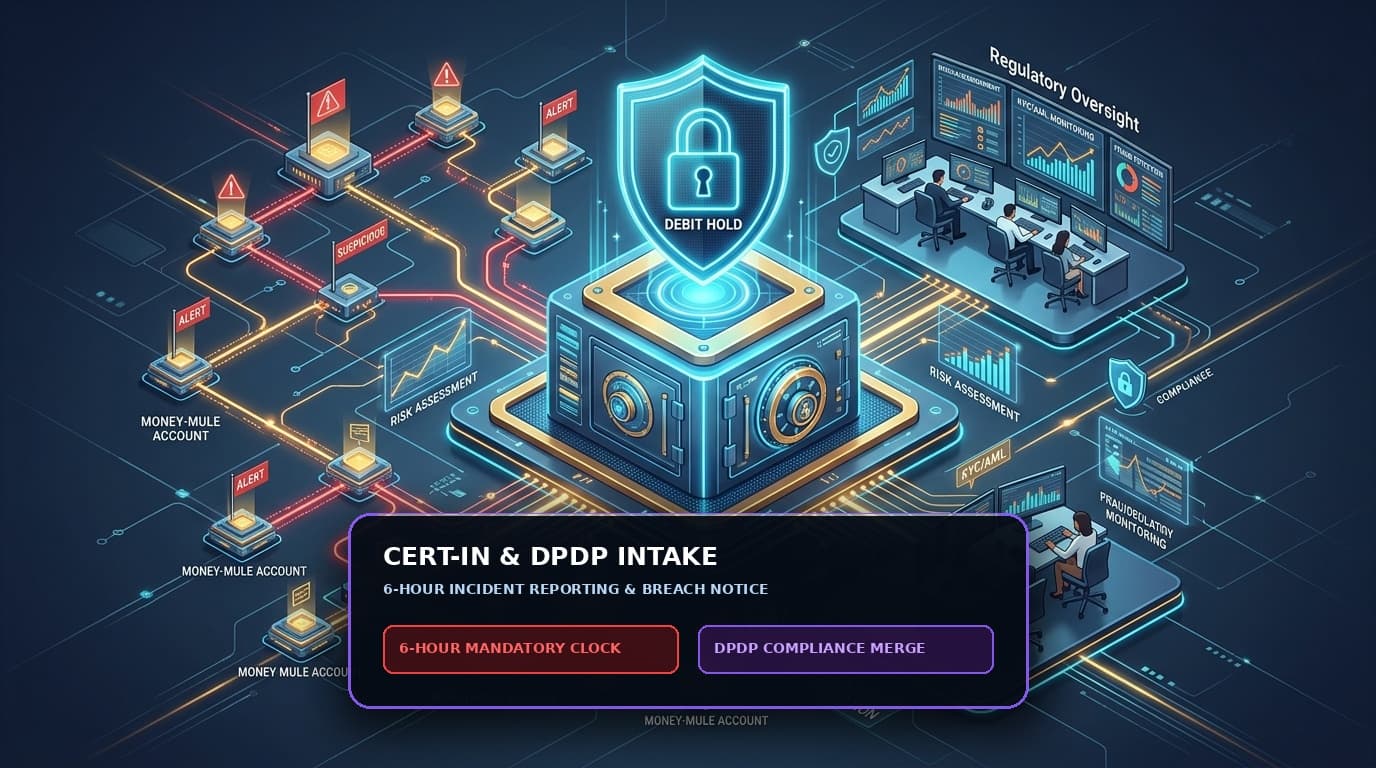
Central to the tightened mandate is the absolute requirement for regulated entities (REs) to report all material cybersecurity incidents, unauthorized network intrusions, and ransomware disruptions to the RBI Cyber Security Operations Centre (CSOC) and CERT-In within six hours of identification. The clock begins ticking upon initial automated detection or tier-1 alert qualification—not following the conclusion of internal forensic deliberations.
Regulatory Scope & Mandatory 6-Hour Incident Clock
The RBI directives eliminate previously exploited ambiguities regarding incident classification. Under the updated notification rubric, regulated entities must report any unauthorized alteration, exposure, denial-of-service, or data leakage impacting core banking systems (CBS), payment settlement bridges (UPI, IMPS, RTGS, NEFT), or customer financial telemetry.
| Reporting Milestone | Regulatory Deadline | Recipient Bodies | Required Submission Deliverables |
|---|---|---|---|
| Initial Telemetry Dispatch | Within 6 Hours of Detection | RBI CSIRT & CERT-In Incident Desk | Incident classification, affected host IP ranges, timestamp of anomaly, initial triage vector. |
| Interim Containment Dossier | Within 24 Hours | RBI Information Security Cell | Blast radius assessment, affected account counts, network isolation status, forensic log hashes. |
| Root Cause Analysis (RCA) | Within 14 Calendar Days | Board IT Strategy Committee & RBI | Full forensic timeline, CWE attribution, decompiled malware analysis, remediation audit report. |
Third-Party Vendor Risk & Cloud Outsourcing Compliance
Financial institutions increasingly rely on multi-tenant public cloud infrastructure (AWS, Microsoft Azure, Google Cloud) and specialized SaaS fintech partners. The RBI Master Direction explicitly states that "outsourcing of IT services does not diminish the ultimate responsibility of the regulated entity’s Board and Senior Management."
To satisfy compliance audits, CISOs must institute verifiable technological controls governing all external partners:
- Contractual Right to Audit: Unrestricted access for internal audit teams and RBI examiners to inspect cloud tenant environments, log repositories, and SOC 2 Type II attestation records.
- Cryptographic Data Sovereignty: Customer financial records and transaction logs must reside within Indian geographical boundaries, encrypted using Hardware Security Module (HSM) keys managed exclusively by the bank (Bring Your Own Key - BYOK).
- Zero-Trust Vendor Gateways: External IT providers and Managed Service Providers (MSPs) must authenticate through hardware-bound FIDO2 multi-factor authentication, with all administrative sessions recorded and constrained to ephemeral bastion jumphosts.
Defensive Architecture & Incident Response Playbook
Defenders must align their SOC playbooks with the RBI cyber guidelines. The following configuration and command checklist assists engineering teams in establishing verifiable evidence trails:
1. Automated Incident Reporting Script for SOC Teams
#!/usr/bin/env bash
# Automated RBI / CERT-In 6-Hour Incident Notification Packaging Script
set -euo pipefail

INCIDENT_ID="INC-$(date +%Y%m%d-%H%M)"
REPORT_DIR="/var/log/rbi-incident-dossier/${INCIDENT_ID}"
mkdir -p "${REPORT_DIR}"

echo "[*] Capturing firewall and perimeter auth drops..."
journalctl -u firewalld --since "6 hours ago" --no-pager > "${REPORT_DIR}/firewall_drops.log"

echo "[*] Exporting SIEM alert correlation logs..."
grep -E "EXPLOIT|BEACON|RCE|LATERAL" /var/log/suricata/eve.json | tail -n 5000 > "${REPORT_DIR}/eve_threats.json"

echo "[*] Generating cryptographic SHA-256 ledger of collected telemetry..."
sha256sum "${REPORT_DIR}"/* > "${REPORT_DIR}/manifest.sha256"

echo "[+] Incident dossier compiled for RBI CSOC submission: ${REPORT_DIR}"
2. Continuous Verification Audit Checklist
- Privileged Access Review: Bi-weekly reconciliation of all Active Directory / Entra ID domain administrative accounts against approved HR rosters.
- Air-Gapped Immutable Backups: Daily verification of write-once-read-many (WORM) offline backups for Core Banking databases to defeat double-extortion ransomware.
- Vulnerability Patch Slashes: Known Exploited Vulnerabilities (KEVs) identified by CISA, CERT-In, or vendor PSIRTs must be remediated on internet-facing assets within 48 hours.