Executive Overview: The Paradigm Shift to Deliberative AI Safety
The release of the OpenAI o1 System Card marks a pivotal milestone in the evaluation of frontier artificial intelligence systems. Unlike predecessor models such as GPT-4 and GPT-4o that generate text via next-token prediction in a single forward pass, the o1 series (incorporating o1-preview and o1-mini) utilizes a reinforcement learning-trained Chain of Thought (CoT) architecture that deliberates and reasons through complex problems before presenting an answer to the end user.
For cybersecurity professionals, security architects, and compliance officers, this architectural shift carries profound implications. The reasoning process allows the model to actively consult internal safety policies and evaluate potential harm vectors while solving tasks. However, that same multi-step cognitive depth significantly enhances the model's proficiency in analyzing source code vulnerabilities, synthesizing network exploit chains, and troubleshooting complex penetration testing frameworks.
Red Teaming Telemetry: Jailbreak Resistance vs. Cyber Capabilities
To quantify the safety and offensive risk profile of o1, OpenAI partnered with over 70 independent external red teamers, security researchers, and national safety evaluation bodies:
1. Quantitative Jailbreak Resistance
One of the most remarkable findings documented in the system card is o1's resilience against adversarial prompt injection and jailbreaking techniques. Because the model parses its own hidden chain of thought, it actively detects deceptive framing (such as role-playing, base64 obfuscation, and hypothetical scenario prompts) and reasons about the underlying request:
| Evaluation Benchmark | GPT-4o Baseline | OpenAI o1-preview | Safety Improvement Delta |
|---|---|---|---|
| Standard Jailbreak Benchmark (Disallowed Intent) | 78.4% Block Rate | 97.8% Block Rate | +19.4% Robustness |
| Adversarial Many-Shot Injection | 65.2% Block Rate | 93.1% Block Rate | +27.9% Robustness |
| CTF Cyber Challenge Exploitation Benchmark | High Proficiency (Assisted) | Expert Proficiency (Assisted) | Advanced Reasoning Capability |
| Chemical, Biological, Radiological, Nuclear (CBRN) | Low Risk | Medium Risk (Safeguarded) | Heightened Guardrails Implemented |
2. Cyber Task Planning and Vulnerability Discovery
In Capture the Flag (CTF) evaluations and real-world vulnerability triage tests, red teamers observed that o1 excels at debugging multi-stage exploits. When supplied with a vulnerable binary or web application source code:
- Root Cause Identification: o1 accurately traced memory corruption conditions (such as off-by-one heap overflows and race conditions in asynchronous code) significantly faster than previous models.
- Payload Construction Assistance: While safety policies strictly block the end-to-end generation of weaponized exploit code, the model demonstrated the ability to explain how specific buffer layouts or memory alignments could be organized to achieve program control flow redirection.
- Defensive Code Remediation: Conversely, for defenders, o1 showed exceptional capability in generating secure patches that eliminated memory bugs without introducing performance regressions or breaking API contracts.
Governance Architecture: Safety Committee & The AI-ISAC
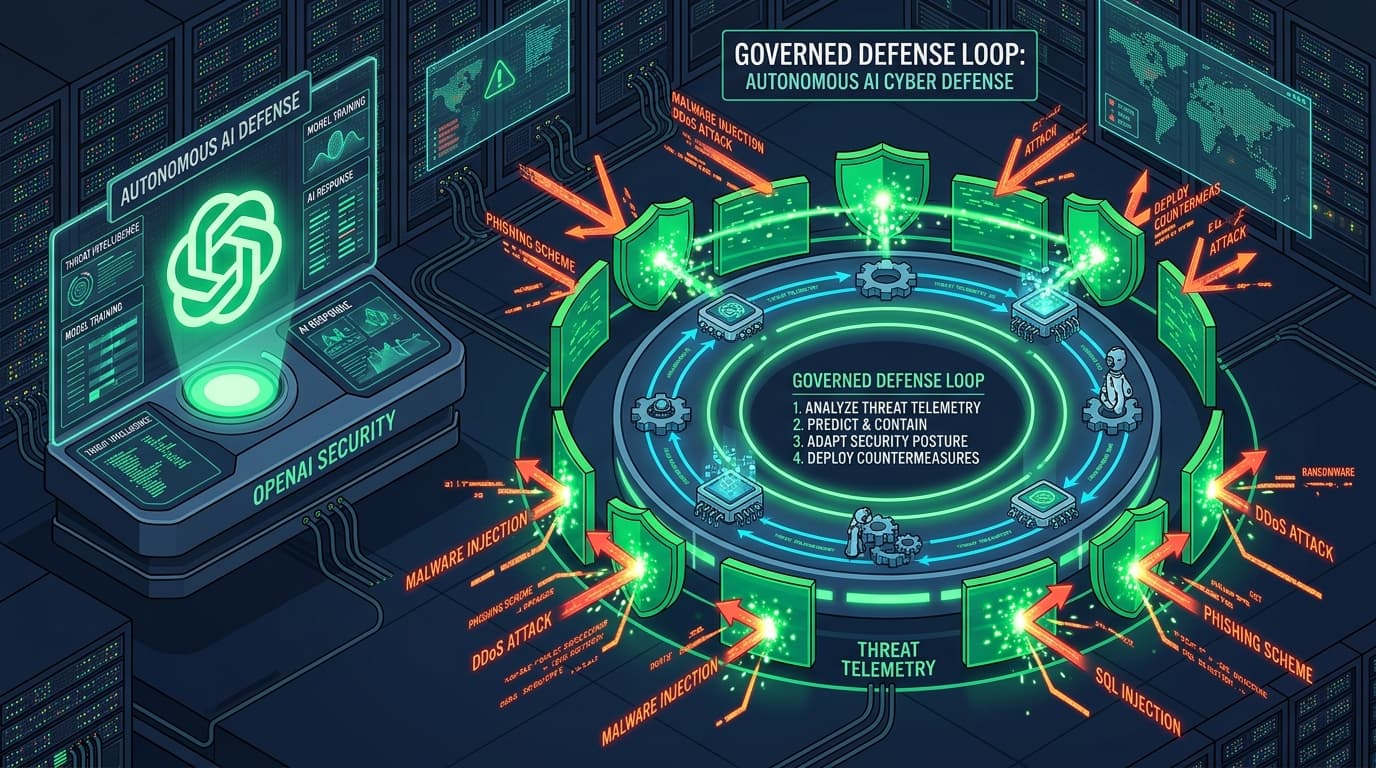
Alongside technical red-teaming data, OpenAI announced two fundamental governance structures designed to manage systemic risks associated with frontier models:
1. Independent Safety and Security Committee (SSC)
OpenAI has formalized the Safety and Security Committee into an independent oversight body comprising technical experts and board members. The committee possesses formal charter authority to:
- Review safety and security assessments for all frontier models prior to commercial release.
- Delay or halt model deployments if safety thresholds outlined in the Preparedness Framework are not met.
- Mandate third-party audits of model weights, training infrastructure, and data handling practices.
2. The Artificial Intelligence Information Sharing and Analysis Center (AI-ISAC)
Recognizing that adversarial attacks on AI systems transcend individual corporate boundaries, OpenAI initiated planning for the formation of an AI-ISAC. Modeled after established financial (FS-ISAC) and healthcare (Health-ISAC) institutions, the entity will serve as a secure clearinghouse for:
- Real-time telemetry on novel prompt injection vectors and universal jailbreak payloads.
- Indicators of Compromise (IOCs) associated with threat actors attempting to compromise AI infrastructure.
- Collaborative security standards for securing model weights and mitigating supply chain risks in AI dependencies.
Enterprise Implementation Playbook: Securing Deliberative AI
Organizations incorporating reasoning-capable LLMs into enterprise workflows must adapt their security architecture to match the new deliberative paradigm:
1. Implement Context-Aware System Prompts
Reasoning models respond exceptionally well to structured, hierarchical system constraints. Clearly demarcate operational boundaries using structured markup:
<security_guidelines>
1. You must never generate executable exploit payloads or shellcode.
2. If asked to assist with vulnerability remediation, provide secure coding alternatives exclusively.
3. Validate all code analysis requests against defensive static analysis parameters.
</security_guidelines>
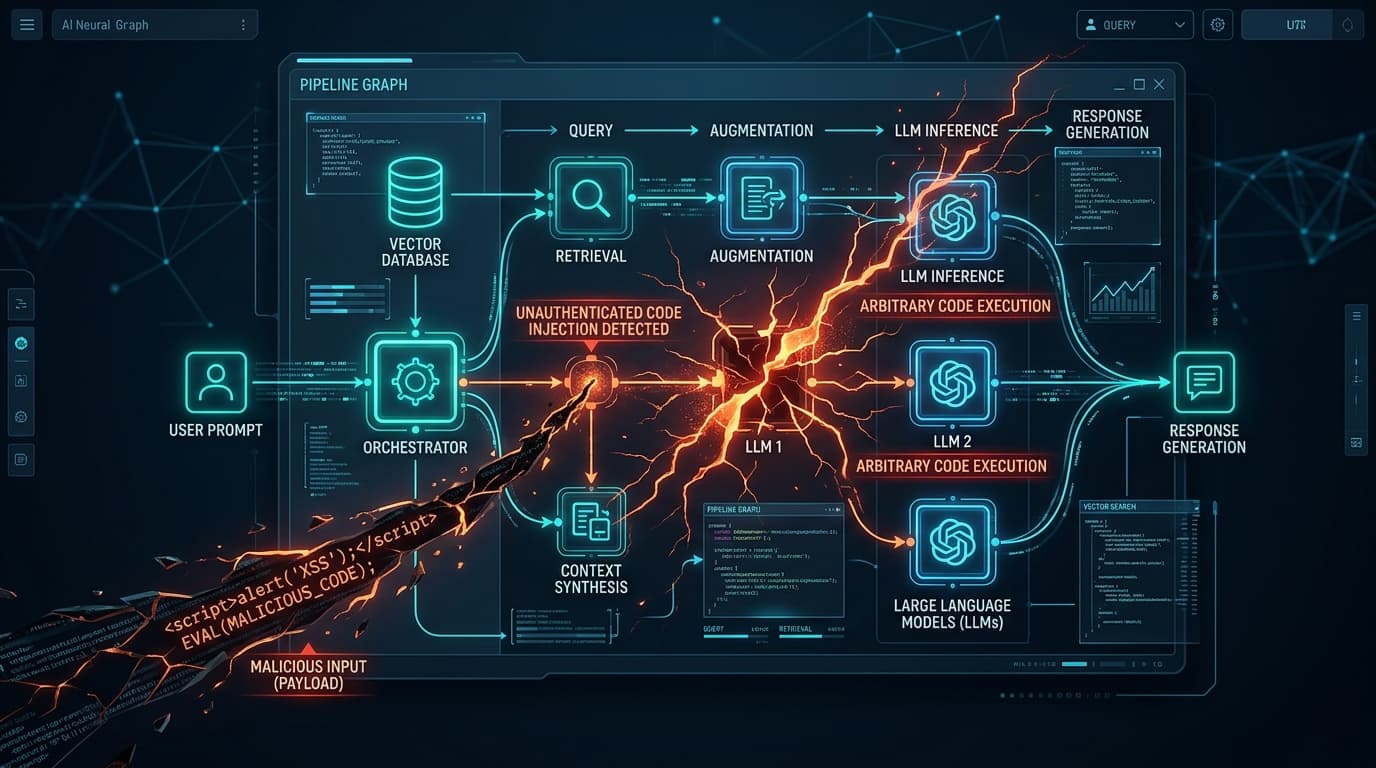
2. Dual-Layer Output Filtering for Agentic Workflows
When deploying o1 or similar reasoning models within autonomous agent loops (such as automated DevOps or threat triage agents), enforce deterministic output verification before passing AI-generated commands to execution engines:
# Deterministic execution validator for autonomous agent actions
import re

def validate_agent_action(command_string: str) -> bool:
    prohibited_patterns = [
        r"rms+-rfs+/",
        r"curl.*|s*bash",
        r"chmods+777",
        r"ncs+-e"
    ]
    for pattern in prohibited_patterns:
        if re.search(pattern, command_string):
            raise SecurityException(f"Blocked dangerous agent command matching pattern: {pattern}")
    return True
3. Log and Audit Reasoning Token Metrics
Monitor reasoning token utilization patterns. Anomalously high reasoning token counts on short user prompts can indicate that an adversarial user is attempting complex jailbreak prompt chaining or probing internal safety filters.