OpenAI is presenting Daybreak as more than a cybersecurity model tier: it is a governed operating model for using AI across the defensive work that surrounds a vulnerability or incident. The company says the program combines frontier models, the Codex harness, Codex Security, defined workflows and external partners into a stack intended to help teams reduce risk while retaining human control over consequential actions.
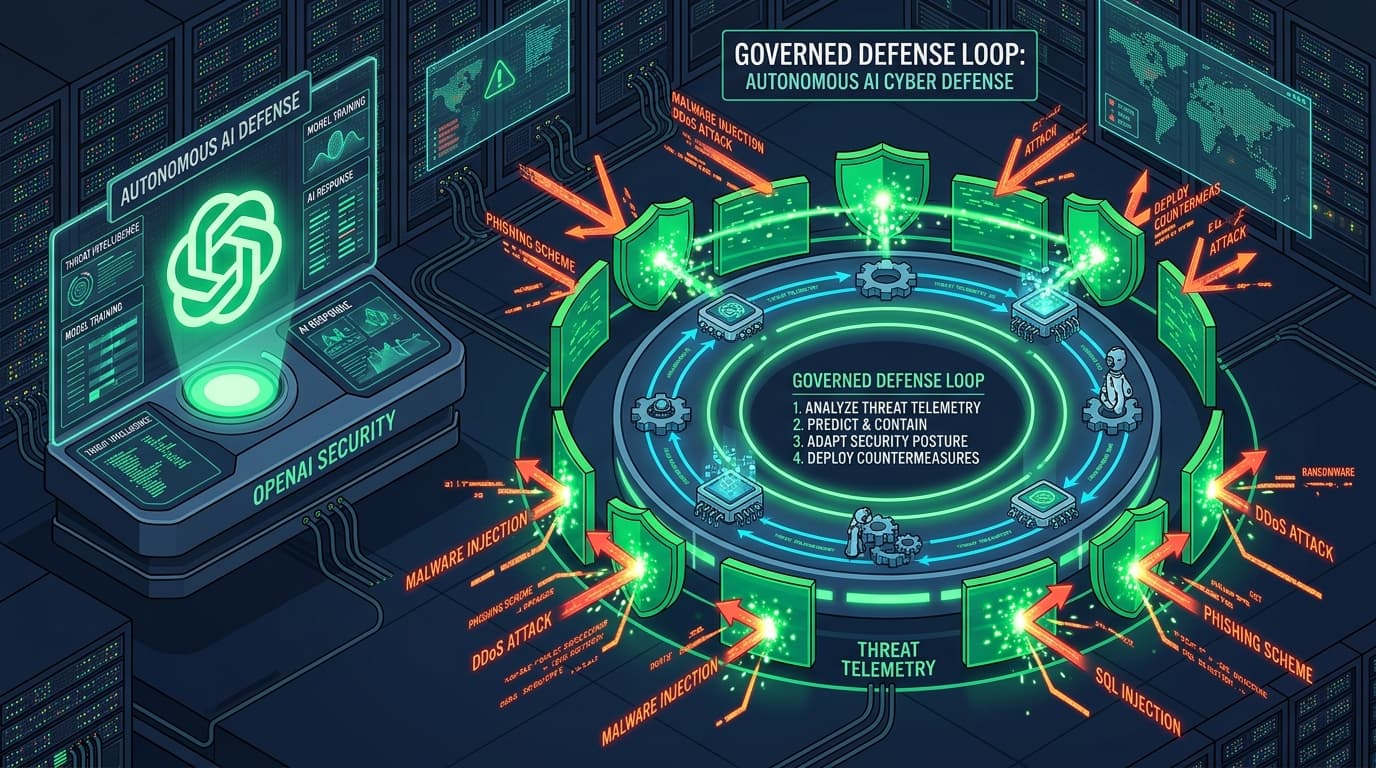
The timing matters because security work is increasingly fragmented. A vulnerability can begin as an inventory gap, become a scanner finding, move into validation, then wait on ownership and a maintenance window before anyone can prove the fix actually landed. Daybreak's pitch is to join those stages into a continuous loop rather than treat each as a handoff between tools and teams.
From finding to verified remediation
On its Daybreak site, OpenAI defines six parts of that loop: inventory, discovery, dynamic validation, ownership assignment, verified remediation, and a return to inventory. The company describes the sequence as mapping systems, scanning or importing findings, reproducing and confirming issues, routing work to an owner, deploying a patch, and verifying the result.
That is a meaningful distinction from simply attaching an assistant to a ticket queue. The difficult part of vulnerability management is rarely producing more findings. It is maintaining enough context to decide whether a finding is real, who owns the affected system, which remediation is appropriate, and whether the change closed the exposure without breaking production. OpenAI says a shared SECURITY.md context can carry the system map, ownership, investigation evidence and prior checks between passes through the loop.
The company also explicitly frames this as a governed process. It says people should review consequential changes and independently verify deployed fixes. For security leaders, that is the operational test: AI may accelerate collection, analysis and draft remediation work, but the authority to change a production system should remain constrained by the same change-control, logging and accountability mechanisms that apply to human operators.
What Daybreak access includes
OpenAI says Daybreak Blue is the recommended starting point for most approved defenders, covering work such as vulnerability discovery, secure-code review, malware analysis, incident response and patch validation. The company separately describes Daybreak Red as an access tier for approved defenders conducting authorized vulnerability research, exploit validation and security testing.
In its August announcement, OpenAI said Daybreak Red includes access to GPT-5.6-Cyber, a cybersecurity-specific model based on GPT-5.6 Sol. The company says the model is intended to improve performance on specialized cyber tasks and reduce refusals for some higher-risk, dual-use work. That does not make an access tier a blanket authorization to test systems. The stated model is still based on verified access, approved-use restrictions and scope controls for authorized work.
OpenAI says it controls Daybreak access through identity verification, account security, monitoring, legal attestations and approved-use restrictions. It also recommends controlled environments, monitoring of agent actions and explicit definitions of the systems and actions that are authorized. Those details should matter to buyers evaluating agentic security tooling: a workflow that can validate a vulnerability or draft a patch is valuable only if its permissions and outputs are reviewable.
A subsidy commitment, not a universal entitlement
Daybreak also has a public-interest component. OpenAI says it is committing $1 billion in subsidized access over six months for defenders protecting essential services and digital infrastructure. The company says state and local governments, critical-infrastructure operators, community banks, nonprofits and open-source maintainers can register interest in help finding, prioritizing and fixing vulnerabilities.
Registration is not a guarantee of access, funding, model availability, partner services or a specific timeline. OpenAI's application page says applicants should not submit vulnerabilities, confidential information or sensitive security details through that form. Teams should treat the program as an opportunity to request support, not as a replacement for their own disclosure process, incident-response channel or vulnerability-management program.
The practical question for defenders
Daybreak's value will be determined by whether organizations can turn its promised loop into measurable operational improvements: fewer unowned findings, faster validation, safer changes and more fixes that are actually verified after deployment. The most useful implementation starts small. Choose a bounded, authorized workflow—such as validating scanner findings in a non-production environment or drafting remediation plans for a known service inventory—then keep approvals, evidence collection and rollback controls intact.
OpenAI's announcement is a significant signal about where cyber tooling is heading: away from isolated AI chat sessions and toward systems that coordinate research, validation and repair across existing workflows. The guardrail is equally important. The relevant question is not whether an agent can complete a long sequence of cyber tasks, but whether a defender can prove what it did, why it did it and who approved the action at each consequential step.