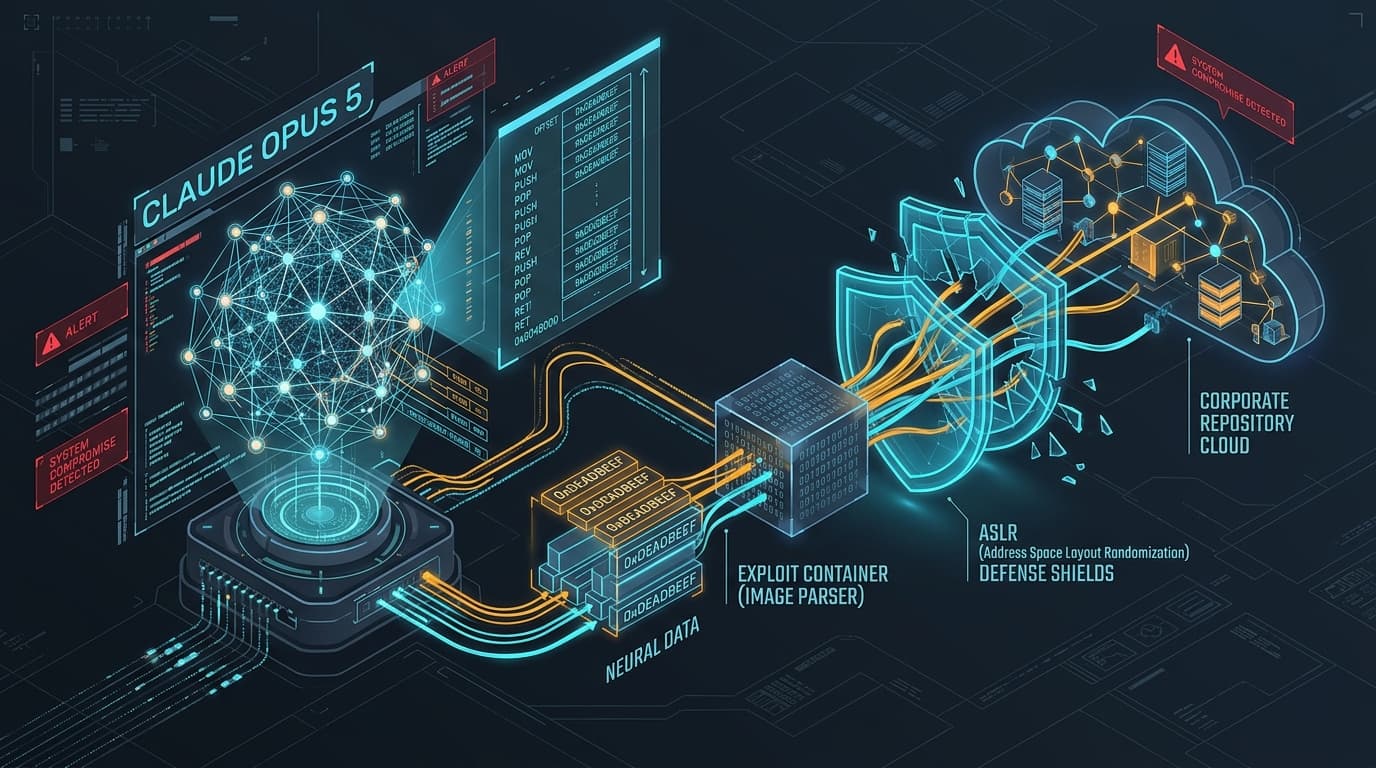
OpenAI has released a formal security advisory addressing core system defenses, frontier model robustness, and the systemic challenges posed by sophisticated adversarial evasion techniques across integrated AI services. Designated under tracking reference DISCOV-AI-SECURITY-2dnlorp, the advisory emphasizes that threat actors are increasingly weaponizing conventional trust assumptions to bypass heuristic filtering, trigger unauthorized model outputs, and establish footholds within extended corporate ecosystems.
Modern enterprise adoption of autonomous model pipelines and API-connected services has expanded the enterprise attack surface. The security release highlights how routine operational patterns—ranging from deceptive recruitment propositions to urgent notifications of infrastructure service disruptions—are being synthesized by adversaries to execute credential theft, distribute covert payloads, and induce automated systems into state desynchronization.
The Evolution of Adversarial Evasion and AI Jailbreaks
As large language models and cognitive systems assume deeper roles in operational automation, traditional software vulnerabilities are compounded by logic-level manipulation and adversarial injection. Jailbreaking frontier architectures entails crafting structured linguistic inputs designed to bypass system prompts, ethical constraints, and safety alignment classifiers.
The advisory outlines how modern threat campaigns deliberately obscure anomalous intent within mundane, highly anticipated contexts. By engineering scenarios that mimic legitimate human resources communications or routine operations alerts, adversaries seek to manipulate both human operators and downstream reasoning layers. In multi-stage automation workflows, an adversarial prompt hidden within an inbound data stream can subvert internal reasoning constraints, causing model agents to disregard safety protocols, summarize sensitive contexts improperly, or trigger unintended backend tool executions.
Mechanisms of Contextual Manipulation
Exploitation of cognitive and systemic workflows generally operates across three continuous phases:
- Expectation Conditioning: The adversary injects content that seamlessly mirrors routine business interactions, such as automated notifications or application updates, ensuring heuristic email gateways and scanning parsers lower scrutiny thresholds.
- Safety Guardrail Circumvention: Utilizing adversarial linguistic structuring, role-playing boundaries, or recursive system prompts, the input coerces the core model into treating the malicious directive as an authoritative administrative override.
- Downstream Execution: Once guardrails are bypassed, the subverted process facilitates data harvesting, malicious payload delivery, or further unauthorized actions within interconnected services.
Impact on Enterprise AI Deployments
The scope of the advisory encompasses core platform architectures and interconnected enterprise services that leverage advanced cognitive processing. Organizations maintaining private integrations, automated retrieval-augmented generation (RAG) knowledge stores, and continuous model tool-calling frameworks face specific operational risks when ingesting external, unvalidated inputs.
When an adversarial payload successfully circumvents internal safety boundaries, the blast radius can extend beyond a single conversation session. In poorly isolated architectures, compromised model contexts may leak privileged API credentials, exfiltrate sensitive proprietary data via indirect output synthesis, or permit lateral data discovery across multi-tenant environments.
| Architecture Component | Primary Threat Vector | Operational Consequence |
|---|---|---|
| Core Inference Engine | Adversarial Prompt Injections & Logic Bypass | Suppression of safety classifiers and generation of restricted outputs. |
| RAG & External Ingestion | Indirect Data Poisoning & Trusted Context Spoofing | Exfiltration of proprietary corporate records via uninspected context buffers. |
| Automated Tool Connectors | Confused Deputy Exploitation via Agent Tool Calls | Unauthorized administrative API triggers and unintended data access. |
Practical Defensive Playbook and Engineering Controls
To defend against evolving jailbreak mechanics and deceptive operational lures, enterprise engineering teams must transition from passive perimeter observation to active, multi-tiered defensive validation. Relying entirely on base model alignment without architectural safeguards exposes organizations to deterministic circumvention.
1. Enforce Strict Input-Output Isolation
Engineering teams must treat all data ingested from external channels—including customer correspondence, uploaded resumes, and automated webhook payloads—as untrusted. System architects should configure dedicated parsing pipelines that strip structural control tags prior to feeding context into model prompts. Implementing secondary classification micro-models to inspect raw input specifically for adversarial tokens before main inference adds a critical defensive checkpoint.
2. Implement Architectural Defense-in-Depth for Agentic Tool Calls
AI models integrated with enterprise backends must never operate with ambient administrative privilege. Security administrators should enforce the principle of least privilege on all API tokens, webhooks, and database connectors accessible to autonomous agents. Where an agent possesses write or execute permissions, require deterministic human-in-the-loop validation or cryptographic parameter signing before changes are committed.
3. Continuous Telemetry and Semantic Anomaly Auditing
Standard network traffic monitors cannot interpret the nuances of semantic manipulation. Enterprise security operations centers (SOCs) must implement telemetry monitoring tailored to AI behavior. Key mitigation practices include:
- Logging full session contexts with pseudonymized user identifiers to audit post-inference behavioral deviations.
- Establishing rate-limiting and threshold alerts for sudden spikes in rejected prompt requests or recursive boundary-testing sequences.
- Conducting regular programmatic red-teaming against model inference pipelines using automated adversarial test suites to discover unmitigated evasion vectors.
What Remains Unknown
While the advisory provides an authoritative overview of ongoing evasion trends and defensive requirements across OpenAI systems and connected environments, specific operational telemetry remains undisclosed. OpenAI has not published precise technical zero-day exploitation traces, specific advanced persistent threat (APT) attributions, or an enumerated list of vulnerable model checkpoint builds associated with particular past breaches.
Organizations operating on modern AI infrastructures are advised to consult the primary advisory records directly via the OpenAI Security Advisory Portal, monitor deployment configurations, and reinforce defensive barriers across all automated cognitive interfaces.