Enterprise deployments of frontier artificial intelligence frameworks face emerging structural hurdles as multi-modal model architectures become deeply intertwined with internal infrastructure, automation workers, and enterprise communications. A recent disclosure issued through the OpenAI Security Advisory Portal under identifier DISCOV-AI-SECURITY-2dnlorp outlines systemic risks involving prompt jailbreak vectors, indirect input contamination, and automated ingestion weaknesses across OpenAI Core System & Services.
According to advisory telemetry, threat actors consistently target human and automated trust models by embedding adversarial sequences into seemingly benign workflows. Common entry surfaces include unexpected notifications disguised as routine organizational messages, fake recruitment exchanges, and system health status updates. Because autonomous agents and large language model interfaces are designed to parse and prioritize incoming user directives, adversarial content embedded in mundane data streams poses substantial risks to data privacy, access tokens, and systemic behavior.
Technical Context and Attack Mechanics
Modern enterprise model architectures rely heavily on unified context windows where system-level instructions, enterprise knowledge retrievals (such as Retrieval-Augmented Generation or RAG), and untrusted user inputs coexist. The core vulnerability pattern described in the disclosure pertains to context confusion—an architectural paradigm where untrusted input strings successfully mimic higher-privilege system instructions or escape parsing boundaries.
When an autonomous workflow ingests external documents, email bodies, or API payload strings, embedded adversarial sequences can command the underlying model to discard preceding alignment rules. Unlike conventional injection vulnerabilities (such as SQL injection or shell escaping), model jailbreaks exploit the semantic flexibility of language parsers. The prompt sequences manipulate the internal token probability distributions, compelling the core system to produce restricted outputs, expose contextual training tokens, or issue unauthorized downstream API commands.
Multi-Modal Ingestion and Secondary Execution
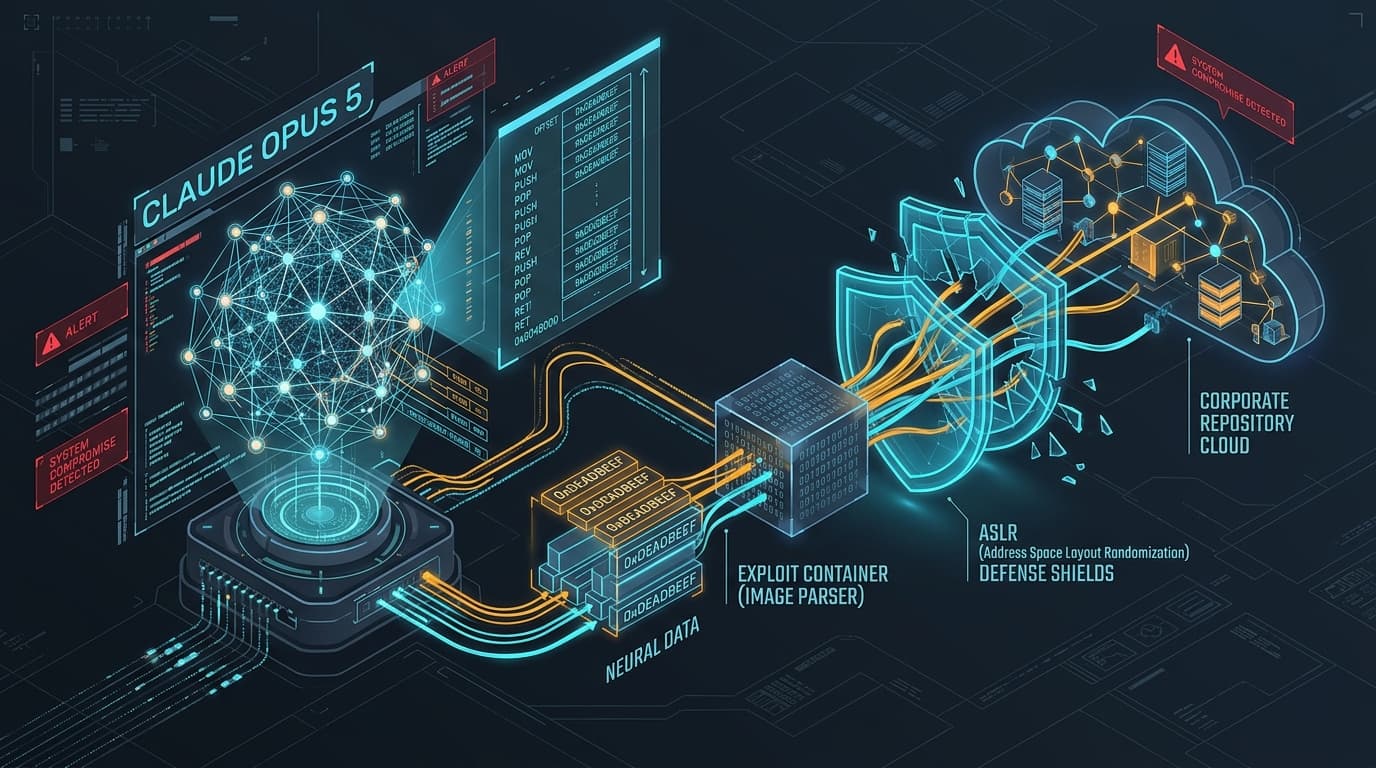
The advisory notes that ingestion risks extend beyond standard plain text interfaces. Multi-modal ingest processors handling binary containers, structured documents, and parsed graphical assets can function as carrier channels for prompt injection payloads. When unstructured data is passed into automated analytical pipelines without deterministic sanitization, secondary execution risks materialize:
- Document Structure Hijacking: Malicious directives embedded inside hidden metadata fields, non-rendered document layers, or image descriptions execute during context ingestion.
- Autonomous Agent Tool Abuse: Language models granted autonomous function-calling privileges can be misled into triggering webhooks, reading protected memory segments, or executing database queries on behalf of an attacker.
- Context Exfiltration: Adversarial formatting can instruct the engine to append previous session secrets, proprietary configurations, or authentication tokens into outgoing responses.
Affected Systems and Deployment Profiles
The exposure footprint primarily impacts organizations integrating OpenAI Core System & Services into automated decision pipelines, customer support platforms, and unsegmented internal intelligence tools. Specific deployment paradigms experiencing heightened risk profiles include:
| Deployment Vector | Primary Risk Factor | Operational Consequence |
|---|---|---|
| Autonomous Agent Workflows | Direct API tool invocation permissions without manual approval gates. | Unauthorized tool triggering, data alteration, and credential leakage. |
| RAG and Search Ingestion | Ingesting untrusted external web pages, emails, and shared documents into common context. | Indirect jailbreaks, retrieval contamination, and hallucinated security policies. |
| Multi-Tenant Enterprise Chatbots | Lack of boundary isolation between disparate tenant sessions and shared model cache. | Context leakage, guardrail circumvention, and policy compliance violations. |
Practical Response and Defensive Architecture
Securing enterprise AI pipelines against prompt bypasses and ingestion subversion requires engineering controls that do not rely solely on the model's native conversational alignment. Security teams and system administrators deploying core model services should implement defense-in-depth mitigations immediately:
1. Enforce Strict Architectural Boundary Separation
Isolate untrusted inputs from administrative control planes. Instead of combining raw user documents directly into a privileged execution context, utilize a two-tier architectural pattern where a stateless parsing agent inspects, strips, and converts external inputs into strict, validated JSON schemas before passing them to privileged downstream reasoning systems.
2. Implement Deterministic Egress and Function Gateways
Limit autonomous model capabilities by deploying strict application programming interface (API) gateways between the model and external execution environments. Tool calls should enforce:
- Least Privilege Scoping: Function calls must carry granular tokens limited strictly to the immediate task, prohibiting broad enterprise scope.
- Human-in-the-Loop Verification: Require out-of-band confirmation or operator validation for sensitive operational tasks, such as database updates, financial transactions, or privilege changes.
- Deterministic Parameter Validation: Validate model output arguments against rigid type definitions, regex patterns, and range constraints before passing parameters to internal endpoints.
3. Deploy Input Sanitization and Semantic Filtering
Incorporate dedicated classification layers capable of identifying injection signatures, anomalous control instructions, and known jailbreak patterns before context synthesis occurs. Inputs exhibiting repetitive instruction-overriding markers (such as directives commanding the model to ignore earlier guidelines) should be flagged and rejected prior to model evaluation.
Confirmed Facts and Residual Unknowns
While the disclosure confirms the systemic vulnerability vectors associated with indirect prompt manipulation and core ingestion services, several operational details remain intentionally withheld or unconfirmed under existing vendor records:
- Specific Firmware and Patch Designations: Vendor advisories have not cataloged specific numeric patch builds or CVSS base score vectors for tracking identifier
DISCOV-AI-SECURITY-2dnlorp. - Attribution and Exploitation Metrics: No distinct threat group, commercial espionage syndicate, or ransomware operator has been publicly tied to targeted exploitation of this specific advisory identifier.
- Quantitative Loss and Breach Filings: The primary vendor documentation does not report verified unauthorized intrusions or enterprise financial losses originating directly from this vulnerability cluster.
Enterprise operators should review current API integrations, implement strict schema constraints across all autonomous pipelines, and verify input sanitization layers to mitigate indirect prompt injection exposures across their AI infrastructure.