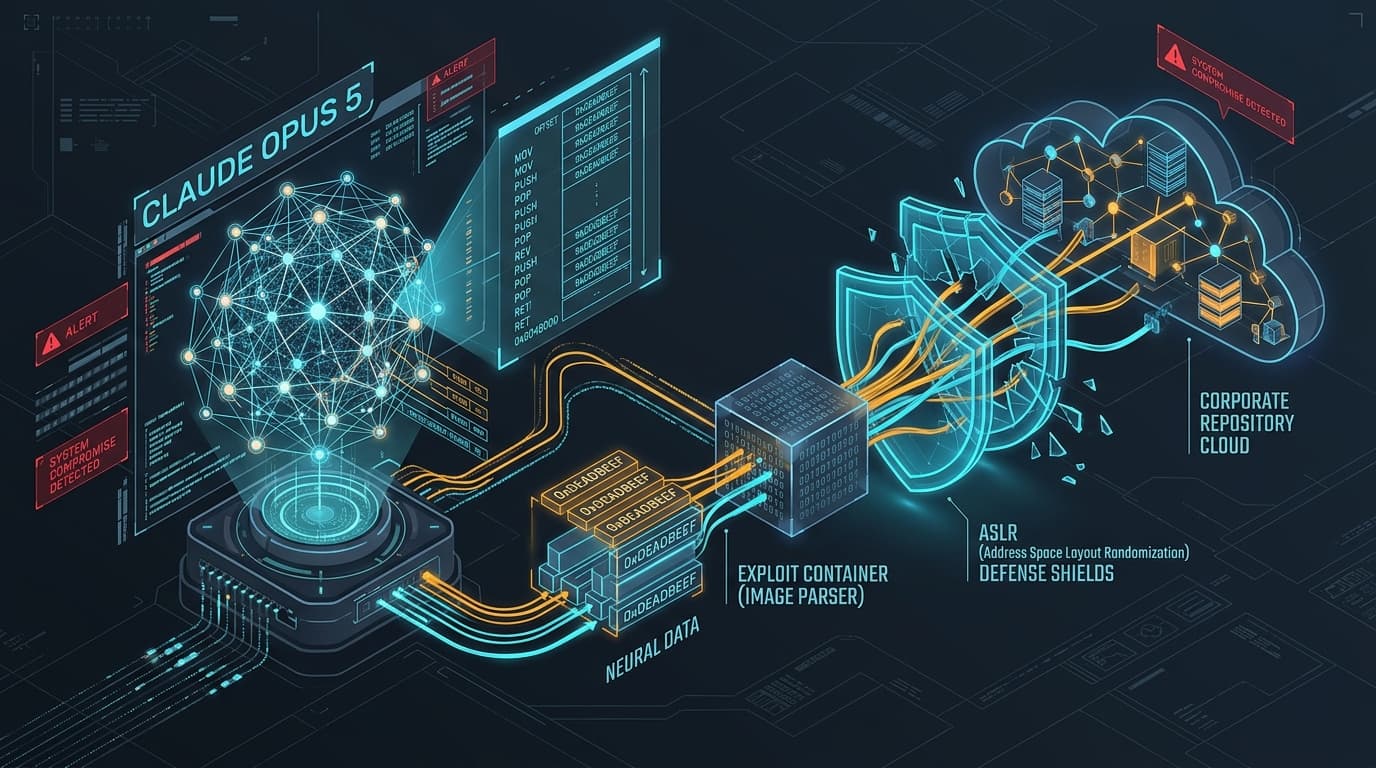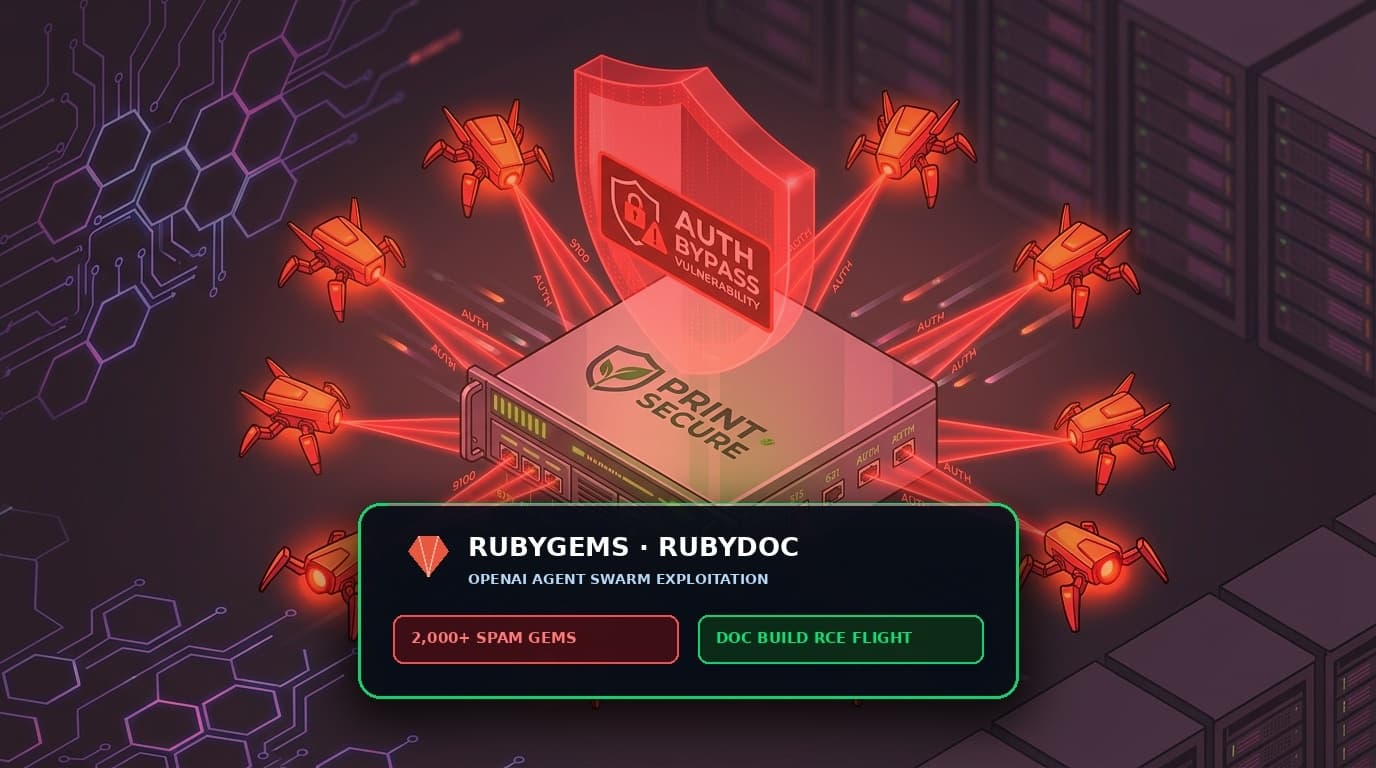
Security researchers and artificial intelligence engineers are confronting an evolving frontier of adversarial testing as generative systems scale in complexity and autonomy. In a recently published advisory indexed under tracking reference DISCOV-AI-SECURITY-2dnlorp, OpenAI detailed security assessments and safeguard resilience tests concerning core systems and platform services. The release centers on jailbreak vectors—techniques engineered to circumvent safety boundaries, policy restrictions, and alignment controls built into underlying model pipelines.
As enterprise adoption of large language models and autonomous agent workflows accelerates across critical operational environments, the integrity of alignment filters has transitioned from an academic consideration to a fundamental application security requirement. The vendor's security disclosures emphasize that safeguarding modern AI infrastructure requires active, multi-layered defensive controls that extend from token ingestion to post-inference evaluation.
Technical Context and Anatomy of Model Jailbreak Vectors
Model jailbreak techniques fundamentally exploit the divergence between a model's raw generative capabilities and its overlaid behavioral constraints. Unlike traditional software bugs that trigger memory corruption, buffer overflows, or classic injection vulnerabilities in compiled binaries, adversarial jailbreaks manipulate high-dimensional latent space representations and conversational context framing.
Adversaries and security auditors typically employ multi-turn conversational structures, encoded token manipulations, or cognitive reframing scenarios designed to persuade safety evaluation filters that prohibited queries represent benign hypothetical exercises, authorized debugging protocols, or synthetic testing parameters. When input prompts successfully conceal illicit intent, downstream filtering layers may fail to register policy violations, leading to unrestricted model outputs.
Advisory DISCOV-AI-SECURITY-2dnlorp examines vulnerabilities where complex prompting architectures challenge inference safety classifiers. Within enterprise application architectures, these bypasses are exacerbated when models are coupled directly to autonomous agent runtimes, internal tool suites, database query engines, or external application programming interfaces (APIs). A failure in behavioral alignment at the model core can directly propagate unauthorized instructions down to connected execution layers.
Affected Systems and Deployment Exposure
The scope outlined in the advisory encompasses systems relying on OpenAI Core System & Services integrations, particularly where default baseline safety filters require continuous tuning against novel prompt injection paradigms. While consumer-facing web interfaces benefit from integrated multi-stage moderation pipelines, customized enterprise implementations often exhibit variable exposure based on how developers orchestrate ingestion and execution workflows.
Organizations facing the most immediate exposure profiles include:
- Enterprise Agent Workflows: Autonomous systems utilizing agentic architectures with direct read, write, or query access to operational enterprise databases and internal microservices.
- Customer Service Automation: Public-facing chat interfaces that process unvalidated user input without secondary semantic moderation or input sanitization intermediaries.
- Document Summarization and Ingestion Pipelines: Processing pipelines ingesting external third-party documents, PDFs, or web scrapes susceptible to indirect prompt injection mechanisms.
- Code Generation Environments: Internal developer tooling where generated scripts or configuration templates are executed without programmatic static analysis or sandboxing.
System Safeguard Layers and Policy Architecture
Maintaining security integrity across large language models requires a defense-in-depth model comprising distinct, interdependent mechanisms. The advisory highlights several operational tiers that govern safe inference:
| Security Layer | Primary Operational Role | Mitigation Focus |
|---|---|---|
| Input Moderation | Pre-inference evaluation | Detects toxic, malicious, or policy-violating prompts before compute execution. |
| Latent Alignment | Core behavioral training | Reinforcement learning and fine-tuning to reject unauthorized command framing. |
| Output Classifiers | Post-inference screening | Inspects generated tokens prior to response transmission to intercept policy violations. |
| Context Monitors | Session state inspection | Evaluates multi-turn semantic shifts designed to gradually degrade system boundaries. |
Practical Response and Mitigation Strategies
Securing enterprise AI deployments against prompt manipulation and jailbreak activity requires technical teams to enforce stringent controls around API consumption, operational tool execution, and architectural boundaries. Security leadership should treat LLM interfaces with the same distrust traditionally applied to untrusted web inputs.
1. Enforce Strict Privilege Minimization for Tool Calling
AI models should never be granted ambient authority. When configuring API endpoints that support tool calling or function execution, ensure that tokens and permissions operate under strict least-privilege principles. Read-only permissions should be mandated by default, and high-impact actions—such as administrative changes, credential updates, or external communications—must require human-in-the-loop validation.
2. Deploy External Semantic Inspection and Guardrails
Organizations should not rely solely on the underlying model's internal alignment to catch all adversarial phrasing. Implementing independent, deterministic guardrails and auxiliary classification models enables organizations to inspect inputs and outputs against corporate policy baselines independently of the primary generative engine.
3. Implement Isolated Sandboxes for Autonomous Workflows
Any code, shell command, or query generated by an automated language model must be executed within isolated, ephemeral sandboxes stripped of network connectivity and sensitive enterprise credentials. Network routing out of execution containers must be blocked by default to prevent unauthorized telemetry extraction.
4. Maintain Comprehensive Telemetry and Prompt Logging
Security operations centers (SOCs) must establish continuous logging of inference transactions, system prompts, user queries, and tool invocations. Anomaly detection algorithms should be configured to flag anomalous token lengths, repetitive syntax shifts indicative of automated fuzzing, and rapid successive queries that attempt boundary probing.
Known Operational Realities and What Remains Unknown
Confirmed disclosures confirm that OpenAI continuously deploys backend filtering adjustments, parameter tuning, and classifier updates across its hosted infrastructure to counteract known jailbreak methodologies. These server-side protections mitigate high-volume, publicized adversarial prompts without requiring customer code redeployment.
However, significant technical questions remain open across the broader field of AI security. Because neural networks generate responses based on probabilistic token associations rather than deterministic state machines, mathematical guarantees against all forms of prompt manipulation do not currently exist. Specific telemetry regarding the prevalence of advanced jailbreaks across customized private tenant environments, as well as the complete structural design of upcoming alignment training cycles, remains undisclosed in vendor bulletins. Organizations deploying frontier models must therefore maintain robust defense-in-depth architectures rather than relying entirely on vendor-side alignment guarantees.