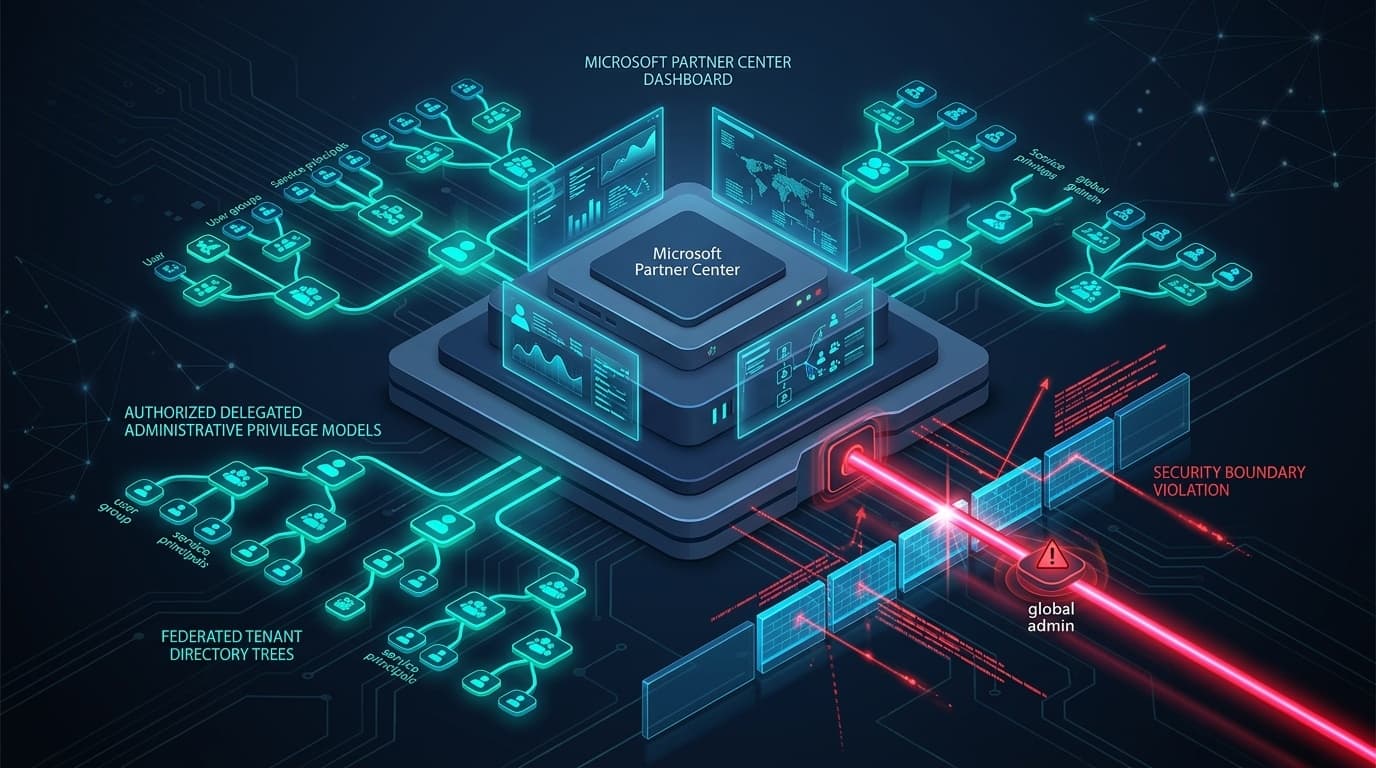
The Microsoft Security Response Center (MSRC) has addressed a maximum-severity privilege escalation flaw tracked as CVE-2026-96207, carrying a perfect CVSS v3.1 score of 10.0. The vulnerability affected Microsoft Partner Center, the multi-tenant cloud portal used by Cloud Solution Providers (CSPs) and Managed Service Providers to administer millions of customer Microsoft 365, Azure, and Dynamics 365 enterprise tenants globally.
Root Cause: Authorization Desynchronization in GDAP Engine (CWE-269)
Microsoft Partner Center utilizes Granular Delegated Admin Privileges (GDAP) to enforce zero-trust, time-bound, least-privilege administrative access. Under GDAP, customer organizations grant specific Microsoft Entra ID directory roles (such as Helpdesk Administrator or Exchange Administrator) to designated security groups within the partner organization.
The vulnerability stemmed from a defect in how Partner Center's back-end token issuance service validated role bindings during cross-tenant session exchange. When a partner user initiated a delegated administration request, the API gateway validated that the partner had an active GDAP relationship with the customer. However, the subsequent role-assignment verification routine failed to validate whether the requested administrative scope matched the customer's approved consent contract:
/* Conceptual representation of manipulated cross-tenant GDAP token request */
POST /api/v1/delegated-auth/tokens HTTP/1.1
Host: partner.microsoft.com
Authorization: Bearer [Valid-Partner-User-Token]
Content-Type: application/json

{
  "targetTenantId": "customer-enterprise-tenant-uuid",
  "requestedRole": "Company Administrator",  // Escalation: Customer only granted Helpdesk Admin!
  "relationshipId": "gdap-rel-valid-12345"
}
Full Cross-Tenant Takeover Exposure
Because the gateway trusted the partner's validated token without cross-checking the granular role limits established by the customer, it issued an access token carrying full Global Administrator (Company Administrator) scopes for the target customer tenant. An authenticated attacker possessing even the lowest tier of partner credentials could seize total administrative control over any customer organization serviced by that partner.
Global Server-Side Mitigation & Enterprise Auditing Guide
Because the vulnerability existed entirely within Microsoft's cloud control plane, Microsoft remediated the flaw globally across all cloud regions. Enterprise tenants and partners do not need to apply software patches, but security operations teams should perform the following security checks:
- Audit Active GDAP Relationships: Navigate to the Microsoft Entra Admin Center > Identity > Governance > Partner Relationships. Terminate any legacy Delegated Admin Privileges (DAP) relationships and enforce strict duration caps (≤ 180 days) on all GDAP grants.
- Review Privileged Role Assignments: Inspect Entra ID audit logs for any unexpected
Add member to roleevents targeting Global Administrator, Privileged Role Administrator, or Security Administrator roles:# Audit privileged directory role assignments over the past 30 days Get-MgAuditLogDirectoryAudit -Filter "activityDisplayName eq 'Add member to role'" -Top 50 - Enforce Privileged Identity Management (PIM): Require all internal and partner administrative actions to require just-in-time (JIT) activation protected by Phishing-Resistant Multi-Factor Authentication (FIDO2 / passkeys).