Executive Overview
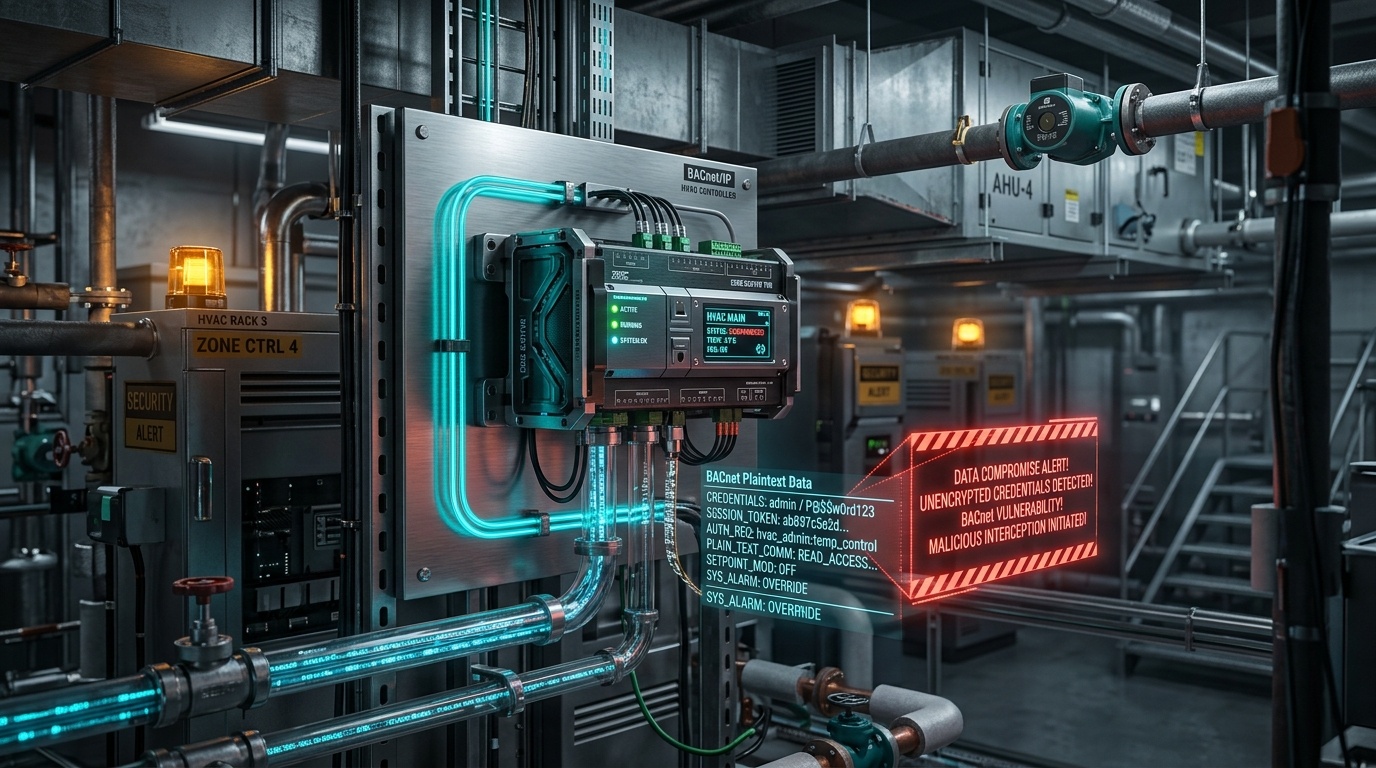
Honeywell Building Solutions and the Cybersecurity and Infrastructure Security Agency (CISA) have published coordinated advisories regarding CVE-2026-73850, a critical remote stack buffer overflow vulnerability in Honeywell Trend IQ4 building automation controllers. With a CVSS v3.1 base score of 9.1 (Critical), the flaw enables unauthenticated network actors on the local building management network to crash controllers or achieve arbitrary remote code execution on the embedded controller CPU.
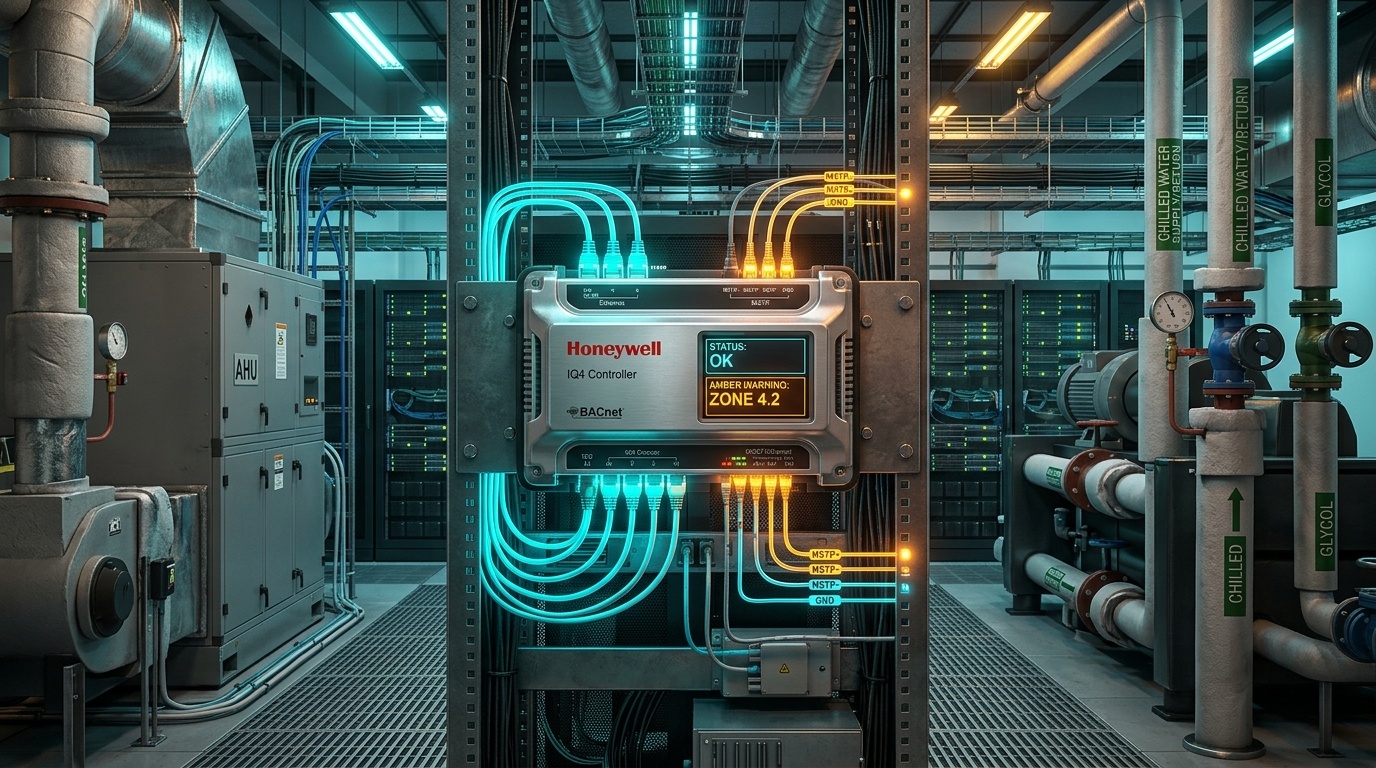
Honeywell IQ4 controllers serve as the primary automation nodes for building management systems (BMS), controlling heating, ventilation, and air conditioning (HVAC) systems, variable air volume (VAV) boxes, and chiller plants across critical enterprise facilities, including hospital operating theaters, semiconductor cleanrooms, and hyperscale datacenters.
Vulnerability Mechanics: BACnet/IP APDU Parser Memory Overflow
The flaw originates within the firmware module processing BACnet/IP Application Protocol Data Units (APDUs) on UDP port 47808. Specifically, when handling ReadPropertyMultiple requests containing vendor-specific proprietary property tags, the parsing function copies object identifier strings into a stack buffer without checking the bounds specified by the APDU length indicator:
// Vulnerable snippet in BACnet APDU parser
int parse_bacnet_read_property(const uint8_t *apdu_buf, size_t apdu_len) {
    char property_name[64];
    uint8_t tag_len = apdu_buf[OFFSET_TAG_LEN];

    // VULNERABLE: Unbounded copy triggers stack buffer overflow into return address
    memcpy(property_name, apdu_buf + OFFSET_TAG_BODY, tag_len);

    return dispatch_bacnet_property(property_name);
}
Operational Threats to Mission-Critical Facilities
Building management networks are increasingly interconnected with corporate networks and IoT sensor arrays. Exploitation of CVE-2026-73850 poses acute physical hazards:
- Datacenter Thermal Runaway: Crashing or manipulating chillers and Computer Room Air Conditioning (CRAC) units can cause server rack temperatures to spike past thermal thresholds in minutes, forcing emergency hardware shutdowns.
- Hospital Cleanroom Depressurization: In hospital surgical suites and isolation wards, IQ4 controllers maintain positive/negative air pressure differentials. Loss of differential pressure risks airborne infectious contamination.
- Physical Equipment Wear: Rapidly toggling compressor stages or variable frequency drives (VFDs) creates severe mechanical resonance and premature hardware failure.
Remediation & Defense-in-Depth Roadmap
Honeywell has issued remediated firmware packages. Facility managers and operational technology engineers should enact the following safeguards:
- Upgrade IQ4 Firmware: Update IQ41x, IQ42x, and IQ4E controllers to firmware version
v4.22or higher. - Isolate BACnet UDP Port 47808: Enforce firewall rules blocking UDP port 47808 at all perimeter and inter-VLAN routing interfaces, permitting BACnet traffic only between authorized BMS supervisory workstations.
- Deploy BACnet Secure Connect (BACnet/SC): Transition legacy unencrypted BACnet/IP networks to BACnet/SC (WebSocket over TLS 1.3) to enforce mutual certificate authentication and prevent rogue packet injection.
- Physical Tamper Protection: Ensure controller cabinets are physically locked and monitored via physical access control systems to prevent unauthorized hardware access.