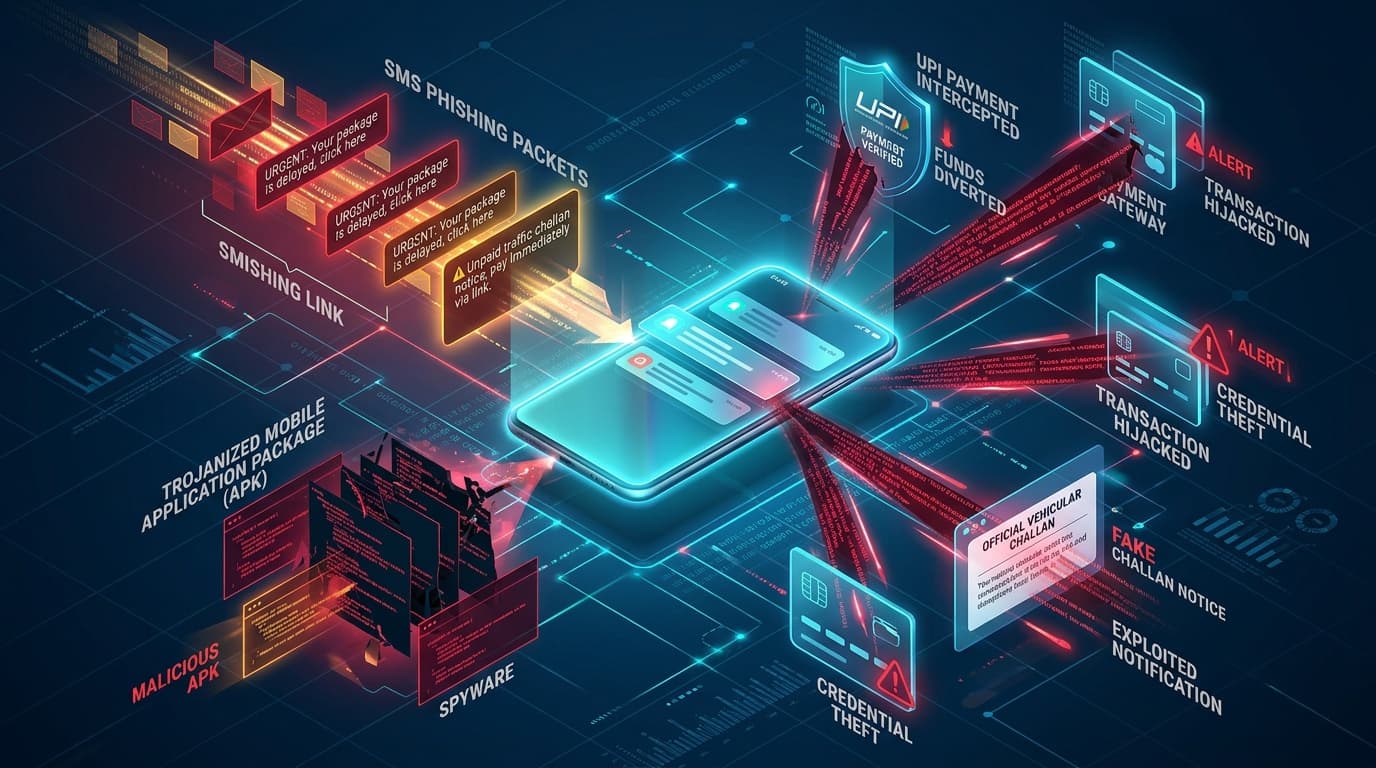
In a striking demonstration of how municipal utility data breaches directly fuel downstream cyber extortion, cybercriminals operating across four Indian states have stolen the sensitive personal records of more than 75,000 piped natural gas (PNG) consumers from Green Gas Limited (a joint venture of GAIL and Indian Oil Corporation). The syndicate weaponized the compromised utility database to mount hyper-targeted SMS and WhatsApp smishing campaigns, tricking residents across Agra and Lucknow into installing trojanized Android applications (APKs) that siphoned banking credentials and drained over ₹55 lakh from victim accounts.
Investigations spearheaded by the Agra Cyber Crime Police Station have linked the utility breach to an organized interstate syndicate specializing in supply-chain mobile malware distribution. Rather than sending generic phishing spam, the fraudsters leveraged authentic consumer names, residential meter numbers, specific home addresses, and genuine past billing records to create convincing disconnection notices. Victims who clicked the malicious links were directed to install a spoofed utility manager named GreenGas.apk, granting threat actors complete administrative visibility over mobile SMS communications and two-factor authentication tokens.
From Database Compromise to Malware Weaponization
The incident demonstrates a classic two-phase cyberattack lifecycle: database exfiltration followed by social engineering weaponization.
The Green Gas Supply Chain Fraud Pipeline
- Utility Database Exfiltration: Attackers gained unauthorized access to third-party vendor systems or an unpatched API endpoint managing Green Gas customer relationship management (CRM) records, exfiltrating 75,000+ subscriber profiles.
- Targeted Smishing Dispatch: Consumers received urgent messages stating: "Dear Green Gas Customer, your PNG connection will be disconnected tonight at 9:30 PM due to pending bill update. Update immediately via official app."
- Trojanized APK Sideloading: The links bypassed Google Play Protect by hosting
GreenGas.apkon dynamic, bulletproof domains. Users were guided to enable Android's "Install from Unknown Sources" setting. - SMS Interception & C2 Exfiltration: The malware requested
RECEIVE_SMSand accessibility permissions, establishing an automated listener that captured incoming bank OTPs and forwarded them to threat actor command-and-control (C2) servers. - Real-Time Net Banking Drainage: With the victim's mobile number, PII, and live OTP stream in hand, the operators logged into net banking and UPI portals, transferring funds into 60 pre-arranged mule accounts across Uttar Pradesh, Bihar, West Bengal, and Rajasthan.
Malware Capabilities: Dissecting the Fake Utility APK
Forensic analysis of the GreenGas.apk binary recovered by Agra police reveals standard commercial Android remote access trojan (RAT) and SMS-stealing behaviors tailored for Indian banking targets.
| Malware Attribute | Technical Implementation in GreenGas.apk |
|---|---|
| Package Name | com.greengas.billing.service |
| Abused Permissions | android.permission.RECEIVE_SMS, android.permission.READ_SMS, BIND_ACCESSIBILITY_SERVICE |
| C2 Communication | HTTPS REST endpoints communicating with dynamic Telegram Bot APIs and compromised VPS nodes |
| OTP Interception Logic | Regex pattern matching for 4- to 6-digit numeric strings preceded by keywords: "OTP", "Bank", "debited", "valid" |
| Evasion Tactics | Hides app launcher icon immediately upon installation; runs as persistent background service |
Supply Chain Accountability Under the DPDP Act 2023
The breach of 75,000 utility subscriber records places Green Gas Limited under intense regulatory scrutiny. Under the Digital Personal Data Protection (DPDP) Act, 2023, municipal and commercial utility providers qualify as Data Fiduciaries obligated to maintain robust technical safeguards protecting subscriber personal data:
- Duty to Protect Personal Data: Failure to deploy reasonable security safeguards to prevent personal data breaches carries potential statutory penalties of up to ₹250 crore under Section 33 of the DPDP Act.
- Third-Party Vendor Due Diligence: Utility companies outsourcing CRM databases, billing portals, or metering apps to third-party software vendors remain fully liable for security breaches occurring within vendor infrastructure.
- Mandatory Consumer Notification: Data Fiduciaries must notify the Data Protection Board of India and affected data principals immediately upon discovering a data compromise to allow users to take protective measures against downstream financial fraud.
Defensive Guidance for Consumers and Enterprise Utilities
To combat utility-themed malware campaigns, critical infrastructure operators and consumers must observe rigorous defensive measures:
- Never Sideload APK Files: Legitimate utility providers (including GAIL, IOCL, and municipal gas companies) never distribute APK files via direct download links, SMS, or WhatsApp. Applications must only be downloaded from official app stores.
- Enterprise API Protection: Utility CRM and billing portals must enforce strict rate-limiting, IP reputation filtering, and multi-factor authentication on all database inquiry interfaces to prevent bulk data scraping.
- Immediate Carrier Block on Phishing SMS Headers: Telecommunications operators must block unverified SMS headers mimicking public utility services under TRAI DLT regulations.
The Agra Green Gas investigation demonstrates that utility data theft is not merely a privacy concern—it provides the initial reconnaissance data for high-impact financial malware campaigns. Securing public utility databases is essential to disrupting modern mobile banking fraud.