Regulatory Framework Overview
The European Supervisory Authorities (consisting of the European Banking Authority - EBA, the European Insurance and Occupational Pensions Authority - EIOPA, and the European Securities and Markets Authority - ESMA) have finalized their binding Regulatory Technical Standards (RTS) under the Digital Operational Resilience Act (DORA). Entering full enforcement across all 27 European Union member states, DORA establishes a comprehensive regulatory architecture ensuring that financial entities can withstand, respond to, and recover from severe information and communication technology (ICT) disruptions.
A central pillar of the newly ratified standards is the formalization of standardized thresholds for classifying Major ICT-Related Incidents and the operationalization of an aggressive multi-tiered notification timeline to national competent authorities (NCAs) and the European Central Bank (ECB).
Harmonized Classification Criteria & Notification Timelines
Under the RTS, an ICT incident is classified as "major" if it crosses quantitative or qualitative thresholds involving affected clients, transaction values, data losses, or systemic operational downtime. When an incident is classified as major, financial institutions must adhere to strict reporting deadlines:
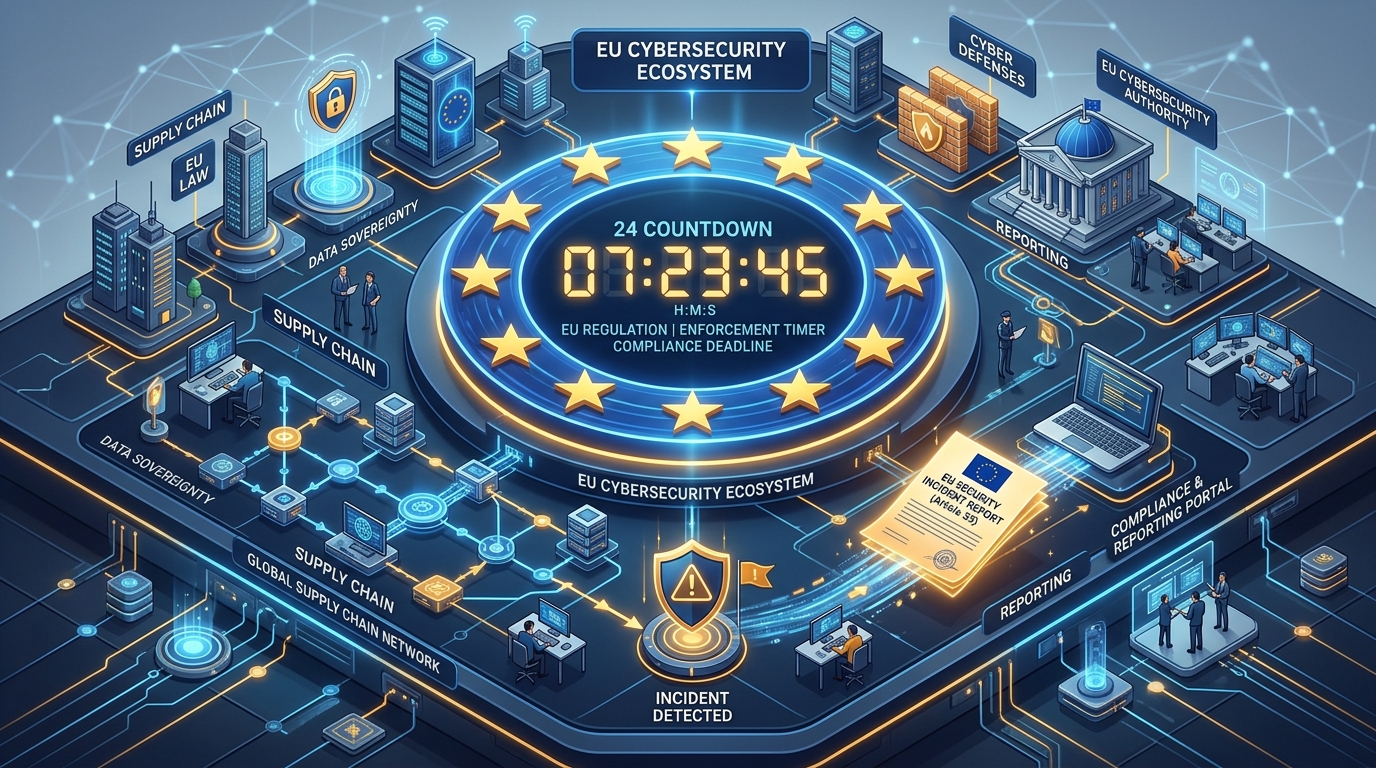
- Initial Notification (Within 4 Hours): The financial entity must notify its competent authority within 4 hours of classifying the incident as major, and no later than 24 hours from the initial detection of the disruption.
- Intermediate Report (Within 72 Hours): An intermediate technical report detailing impact analysis, ongoing mitigation measures, and forensic indicators must be submitted within 72 hours.
- Final Resolution Report (Within 1 Month): A definitive post-incident analysis detailing root causes, actual financial loss figures, and long-term architectural remediations must be filed within one month of service restoration.
DORA Mandatory Incident Reporting Pipeline:
[ICT Disruption Detected]
       │
       ▼ (Classification against RTS Thresholds)
[Major ICT Incident Confirmed]
       │
       ├── Within 4 Hours ───> Initial Notification (Brief Impact & Vectors)
       │
       ├── Within 72 Hours ──> Intermediate Report (Forensic IOCs & Mitigations)
       │
       └── Within 1 Month ───> Final Resolution Report (Root Cause & Preventative Fixes)
Critical Third-Party Provider (CTPP) Oversight Framework
Recognizing the profound systemic concentration of risk in cloud service providers, DORA introduces a groundbreaking direct oversight mechanism for Critical Third-Party ICT Service Providers (CTPPs), including major hyperscale cloud vendors (AWS, Microsoft Azure, Google Cloud), core banking SaaS providers, and payment processors.
Lead Overseers designated by the EU authorities possess statutory powers to conduct on-site physical audits, inspect cloud datacenters, review multi-tenant isolation architectures, and impose periodic penalty payments of up to 1% of average daily worldwide turnover for non-cooperation.
Enterprise Operational Resilience Checklist
Financial institutions operating in or serving clients across the European Union must execute the following readiness controls:
- Maintain a comprehensive, real-time Register of Information documenting all contractual arrangements with third-party ICT service providers.
- Conduct mandatory Threat-Led Penetration Testing (TLPT) at least once every three years utilizing frameworks based on TIBER-EU.
- Establish automated SIEM and incident triage correlation capable of calculating DORA impact metrics (clients affected, downtime duration, economic loss) within minutes of alert generation.