Executive Summary & SEC Regulatory Filing Overview
AdaptHealth Corp. (NASDAQ: AHCO), a leading national provider of patient-centered healthcare solutions, medical equipment, and chronic condition management (including sleep therapy, oxygen, and diabetes devices), has submitted an official regulatory filing with the U.S. Securities and Exchange Commission (SEC). The filing, submitted under Item 1.05 (Material Cybersecurity Incidents) of Form 8-K, discloses an unauthorized intrusion into segments of the company's internal information technology environment.
According to the regulatory disclosure, internal security monitoring systems detected anomalous activity indicative of external unauthorized access. The company immediately activated its formal Incident Response Plan, initiated network containment protocols, and retained independent digital forensics and incident response (DFIR) specialists alongside legal counsel. Preliminary forensic analysis confirmed that the threat actors accessed and exfiltrated confidential files from internal systems, compromising Protected Health Information (PHI) and sensitive Personally Identifiable Information (PII).
Threat Actor Vector & Attack Mechanics
While AdaptHealth continues its forensic investigation to determine the exact initial compromise vector, forensic telemetry across comparable healthcare cyber intrusions indicates recurring attack patterns:
- Compromised Enterprise VPN / SSO Gateway: Exploitation of edge perimeter gateways lacking phishing-resistant multi-factor authentication (FIDO2/WebAuthn), allowing adversaries to leverage credentials harvested through info-stealer malware or credential-stuffing campaigns.
- Lateral Movement via Active Directory: Following perimeter breach, threat actors routinely utilize native administrative utilities (Living off the Land / LotL) including PowerShell, WMI, and BloodHound to map internal network domains and escalate to Domain Administrator.
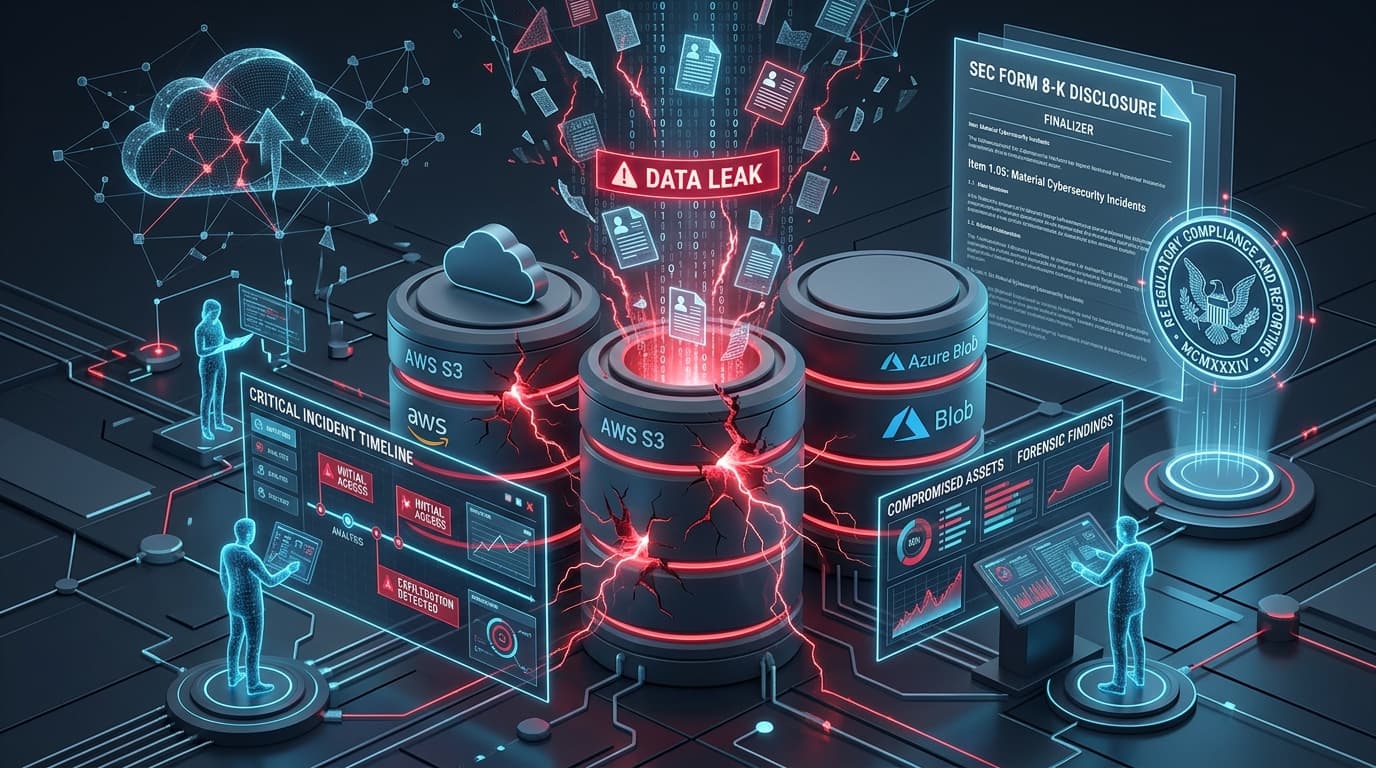
- Cloud Backup & Data Lake Exfiltration: Adversaries identify unstructured data shares, unencrypted network backups, and Amazon S3 or Azure Blob storage buckets storing customer invoices, physician orders, and medical delivery records. Exfiltration occurs via encrypted Rclone or MegaSync tunnels prior to any extortion communication.
Healthcare Blast Radius & HIPAA Regulatory Exposure
As a major home healthcare and medical equipment provider serving millions of patients nationwide, AdaptHealth manages highly regulated data under the Health Insurance Portability and Accountability Act (HIPAA):
| Regulatory Body | Mandatory Statutory Deadline | Required Compliance Deliverable |
|---|---|---|
| U.S. SEC (Item 1.05) | 4 Business Days from materiality determination | Form 8-K filing outlining incident nature, scope, timing, and material impact on operations/financial condition |
| HHS OCR (HIPAA) | Within 60 calendar days of discovery | Breach notification to Secretary of HHS for incidents affecting 500+ individuals, accompanied by individual patient notice letters |
| State Attorneys General | Varies by jurisdiction (e.g., California, Texas, Maine) | State-specific consumer protection filings, forensic summaries, and complimentary credit monitoring offerings |
| Federal Law Enforcement | Immediate upon detection | Coordination with FBI Cyber Division and CISA regarding threat actor infrastructure and IOC dissemination |
Incident Response & Enterprise Containment Playbook
Healthcare organizations and business associates operating complex patient delivery networks must implement immediate containment and hardening measures:
# PowerShell Hunt Script: Detect Unauthorized Rclone / Exfiltration Binaries on Windows Endpoints
Get-CimInstance Win32_Process | Where-Object {
    $_.CommandLine -match "rclone|megasync|chisel|cloudflared|ngrok"
} | Select-Object ProcessId, Name, CommandLine, CreationDate | Format-Table -AutoSize- Revoke & Rotate All Kerberos Golden Tickets: Reset the Active Directory
krbtgtaccount password twice with a 24-hour interval to invalidate any forged TGT tickets minted by the intrusion group. - Enforce Micro-Segmentation Around Electronic Health Record (EHR) Systems: Restrict HL7 and FHIR API interfaces to mutually authenticated TLS (mTLS) connections originating strictly from verified clinical endpoints.
- Audit Cloud Storage Access Policies: Enforce strict AWS IAM or Azure RBAC conditional access policies blocking public bucket access and mandating customer-managed encryption keys (CMEK) with AWS KMS or Azure Key Vault.