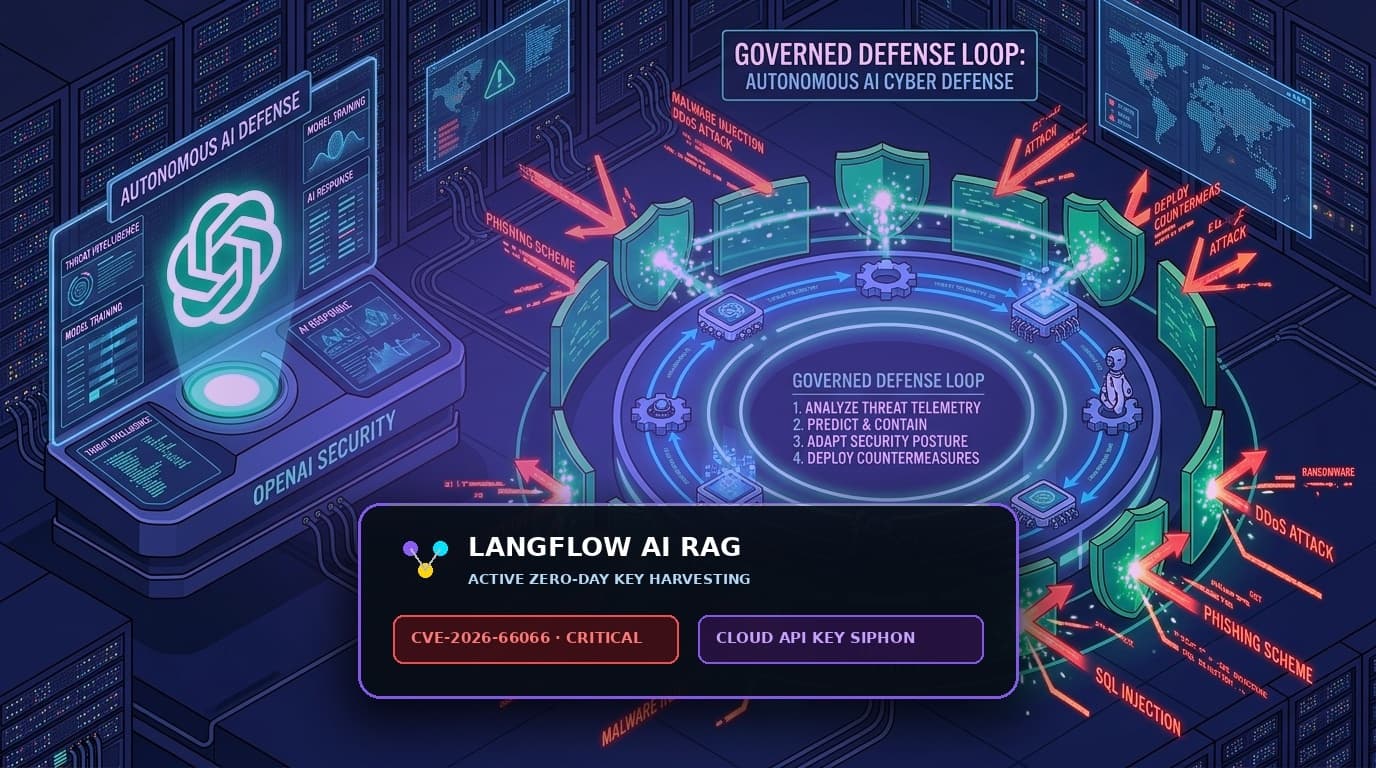
Enterprise security operations centers (SOCs) are navigating a structural shift in operational workflows as chief information security officers (CISOs) systematically re-evaluate the threshold for autonomous machine intervention. While traditional security orchestration, automation, and response (SOAR) frameworks have long relied on rigid, deterministically scripted playbooks, modern deployments increasingly incorporate autonomous artificial intelligence agents capable of executing decisions without step-by-step human intervention.
Confirmed Adoption Trends and Delegation Metrics
Recent survey data examining security leadership across large organizations—specifically enterprises maintaining headcounts exceeding 1,000 employees—demonstrates measurable momentum toward granting AI agents autonomous authority over targeted security workflows. According to findings documented in recent enterprise assessments, 36% of surveyed CISOs indicate that their organizations are currently comfortable delegating low-risk security tasks directly to autonomous AI agents.
This comfort level is anticipated to expand rapidly across enterprise environments over the coming year. Within a 12-month horizon, 60% of surveyed security leaders project they will be comfortable permitting AI systems to take autonomous actions on low-risk operational responsibilities. This trajectory highlights an inflection point where automated assistance transitions into supervised operational sovereignty for discrete defensive actions.
Current vs. Projected Enterprise Comfort Levels
| Operational Metric | Current Baseline | 12-Month Projection | Observed Trend |
|---|---|---|---|
| CISO Comfort Delegating Low-Risk Actions | 36% | 60% | +24% Expansion |
| Target Enterprise Scale | >1,000 Employees | >1,000 Employees | Enterprise Focus |
| Primary Task Category | Low-Risk Actions | Low-Risk Actions | Gradual Authority Expansion |
Technical Context: From Deterministic Playbooks to Agentic Operations
To understand the implications of this shift, SOC architecture must be examined across its operational tiers. Traditionally, tier-1 analysts spend substantial bandwidth triaging alerts, cross-referencing telemetry across distinct instrumentation layers, and carrying out repetitive enrichment queries. Standard automation historically supported these tasks via predefined logical trees; however, any variation in telemetry formats, missing variables, or unexpected alert correlation required manual operator intervention.
Autonomous agents operating within security domains leverage model-driven reasoning loops rather than static decision matrices. These systems assess inbound alert telemetry, execute dynamic data-gathering routines, and decide upon an appropriate resolution path. When granted execution authority, such agents interface directly with enterprise tools via programmatic interfaces, performing actions such as querying endpoint detection and response (EDR) telemetry, interrogating identity stores, or verifying host state parameters.
In low-risk contexts, autonomous intervention typically encompasses operations where the potential for operational disruption is negligible. Examples of tasks governed under low-risk classification include:
- Initiating diagnostic log collection from non-critical endpoints exhibiting anomalous telemetry.
- Executing targeted registry, file-system, or process inspection queries via established security sensors.
- Revoking active sessions for service accounts exhibiting verified token expiration abnormalities in development segments.
- Enriching threat intelligence records by cross-referencing internal indicator data with external security advisories.
- Resolving low-severity, high-volume alert noise that has been conclusively verified as benign administrative activity.
Affected Deployments and Operational Architecture
The operational pivot toward agent autonomy primarily affects organizations maintaining large-scale security architectures where telemetry volume routinely outpaces analyst processing capacity. In organizations with more than 1,000 personnel, distributed IT infrastructure, multi-cloud platforms, and remote workforces generate thousands of daily alerts, creating operational strain that static automation alone cannot resolve.
Deployments impacted by this transition include:
- Enterprise Security Operations Centers: Centralized defensive teams utilizing modern SIEM and data lake architectures where inbound event volume demands real-time triaging.
- Hybrid Cloud Workloads: Environments where ephemeral infrastructure, microservices, and rapid identity provisioning require rapid, automated validation of configuration anomalies.
- Distributed Identity Infrastructures: Enterprise directory services and single sign-on (SSO) ecosystems that require rapid verification of low-risk credential hygiene warnings.
Within these architectures, the deployment of autonomous agents creates a tiered operational boundary. Security teams maintain supervisory guardrails around API access, ensuring that agent execution privileges are tightly constrained to designated low-blast-radius functions.
Practical Engineering Response and Governance Controls
As organizations prepare to expand AI delegation from 36% to the projected 60% baseline, security engineering teams must institute rigorous technical controls to govern agent behavior. Granting operational autonomy without precise boundary enforcement introduces architectural risk, including the potential for compounding errors or unexpected system interactions.
1. Define Precise Blast-Radius Boundaries
Security architects must explicitly codify what constitutes a low-risk action within the enterprise policy engine. Actions that interact with core production databases, disrupt mission-critical network paths, or isolate executive endpoints must remain strictly reserved for human validation. Low-risk privileges should be enforced at the API token layer using least-privilege principles, ensuring that agents lack access to high-impact administrative commands.
2. Implement Continuous Auditing and Execution Logging
Every autonomous action taken by an AI agent must produce an immutable audit record. Security teams should aggregate agent decision telemetry, including the inbound context, the model reasoning trace, the target system identifiers, and the exact API calls dispatched. These audit records should be integrated into existing enterprise monitoring pipelines to identify drift or unexpected patterns in automated decision-making.
3. Establish Real-Time Kill Switches and Fallback Mechanisms
Operational frameworks hosting autonomous agents require deterministic override controls. If an agent encounters unexpected telemetry anomalies, experiences latency spikes, or attempts actions outside established operational boundaries, the orchestration harness must automatically revoke execution permissions and divert the workflow to a human analyst queue.
What Remains Unknown
While the direction of enterprise adoption is evident from leadership surveys, several key operational and technical factors remain unconfirmed in current disclosure data:
- Long-Term Error Rates in Production: Available records do not detail empirical error or hallucination rates when autonomous agents operate across varied, non-standardized enterprise telemetry environments.
- Standardized Qualification Criteria: There is currently no cross-industry consensus or formal regulatory definition specifying which operational security actions qualify as inherently low-risk versus high-risk.
- Impact on Staffing Models: Longitudinal data is not yet available to confirm whether higher agent autonomy leads to a reduction in tier-1 SOC staffing or if analyst capacity is simply redirected toward proactive threat hunting and defensive engineering.
- Vendor Integration Lifecycles: The exact protocols and security boundaries enforced by individual commercial platform providers to prevent privilege abuse by embedded AI agents remain subject to ongoing vendor implementation roadmaps.