Regulatory Mandate Overview
The Reserve Bank of India (RBI) has issued landmark Master Directions titled Transition Framework for Post-Quantum Cryptographic Resilience across the Indian Financial Sector, establishing a mandatory migration timeline for all scheduled commercial banks, non-banking financial companies (NBFCs), and payment system operators.
The directive addresses the national security and economic risks posed by quantum computers capable of breaking conventional public-key cryptography (RSA and ECC) through Shor's algorithm, specifically countering state-sponsored Harvest Now, Decrypt Later (HNDL) campaigns.
Key Compliance Timelines & Milestones
The RBI has set phased, binding deadlines for regulated institutions:
| Phase | Regulatory Deadline | Mandatory Milestone Deliverable |
|---|---|---|
| Phase I: Cryptographic Inventory | March 31, 2027 | Comprehensive cryptographic bill of materials (CBOM) identifying all RSA/ECC keys in HSMs and microservices. |
| Phase II: Hybrid Key Exchange | September 30, 2027 | Deployment of hybrid classical-quantum key encapsulation (ML-KEM / FIPS 203) across all inter-bank TLS tunnels. |
| Phase III: Full PQC HSM Migration | December 31, 2027 | Root of trust and digital signature transition to ML-DSA (FIPS 204) and SLH-DSA (FIPS 205) on core payment switches. |
Architectural Impact on Banking Infrastructure
The migration to post-quantum standards requires deep technical overhauls across foundational banking systems:
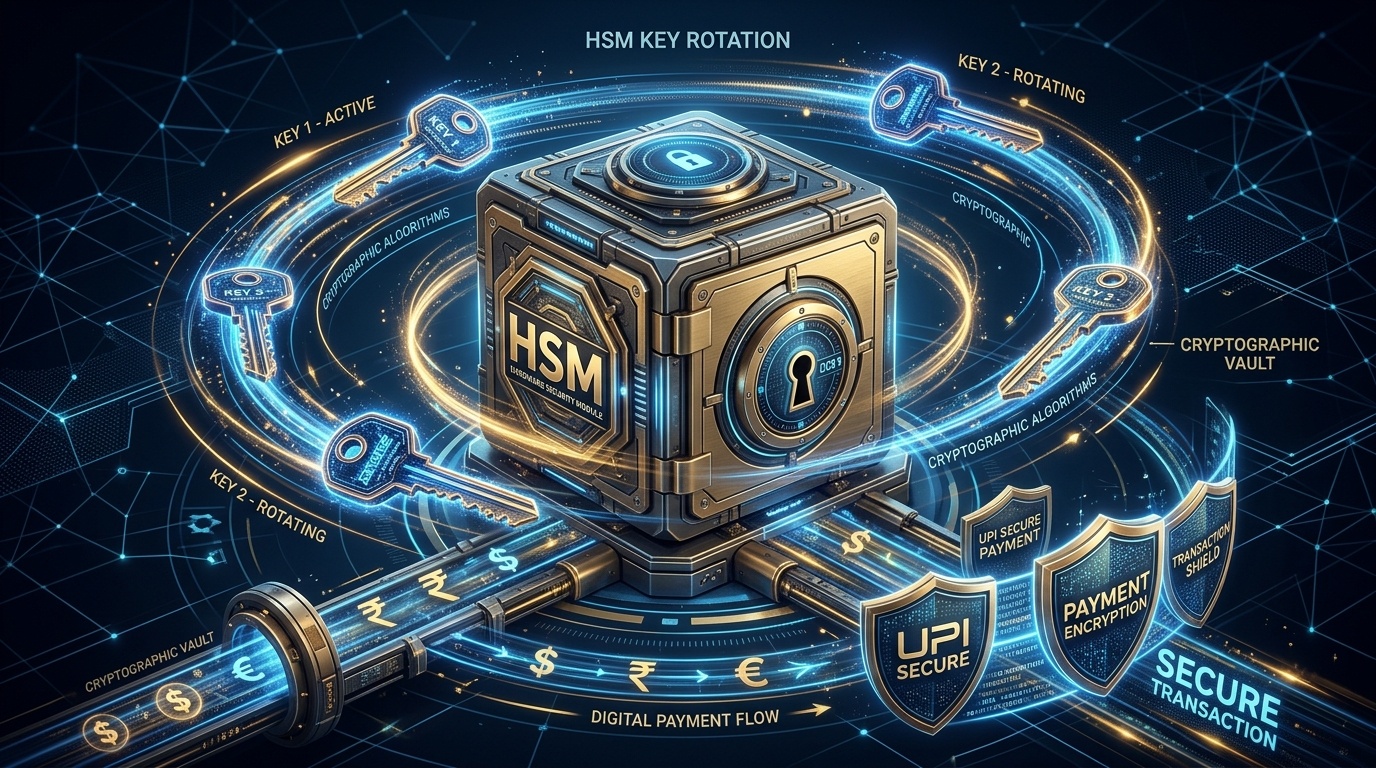
- Hardware Security Module (HSM) Firmware: Legacy payment HSMs lack the memory and processing capabilities required to generate and store larger post-quantum keys. Banks must upgrade to FIPS 140-3 Level 3 quantum-ready HSM appliances.
- Network Packet MTU Sizing: Quantum-resistant signatures and public keys are significantly larger than RSA-2048 or ECDSA certificates. Network switches and load balancers must be reconfigured to prevent TCP packet fragmentation and TLS handshake timeouts.
- Interbank Switch Handshakes: Payment networks including UPI, NEFT, RTGS, and IMPS must support hybrid negotiation modes to guarantee backwards compatibility during the transition window.
CISO & Compliance Implementation Roadmap
Financial institution leadership must immediately initiate the following execution steps:
- Board-Approved PQC Transition Charter: Form a dedicated Cryptographic Agility Working Group reporting directly to the Board Risk Committee and CISO.
- Automated Cryptographic Discovery: Deploy automated network scanning and code analysis tools to generate real-time CBOMs of all SSL/TLS termination points and internal certificates.
- Vendor Readiness Audits: Issue mandatory compliance questionnaires to core banking solution (CBS) providers and HSM vendors verifying their support for NIST FIPS 203/204/205 standards.
- Participate in RBI Sandbox Pilot: Enroll core transaction processing systems in the Reserve Bank Innovation Hub (RBIH) Quantum Security Sandbox for interoperability testing.