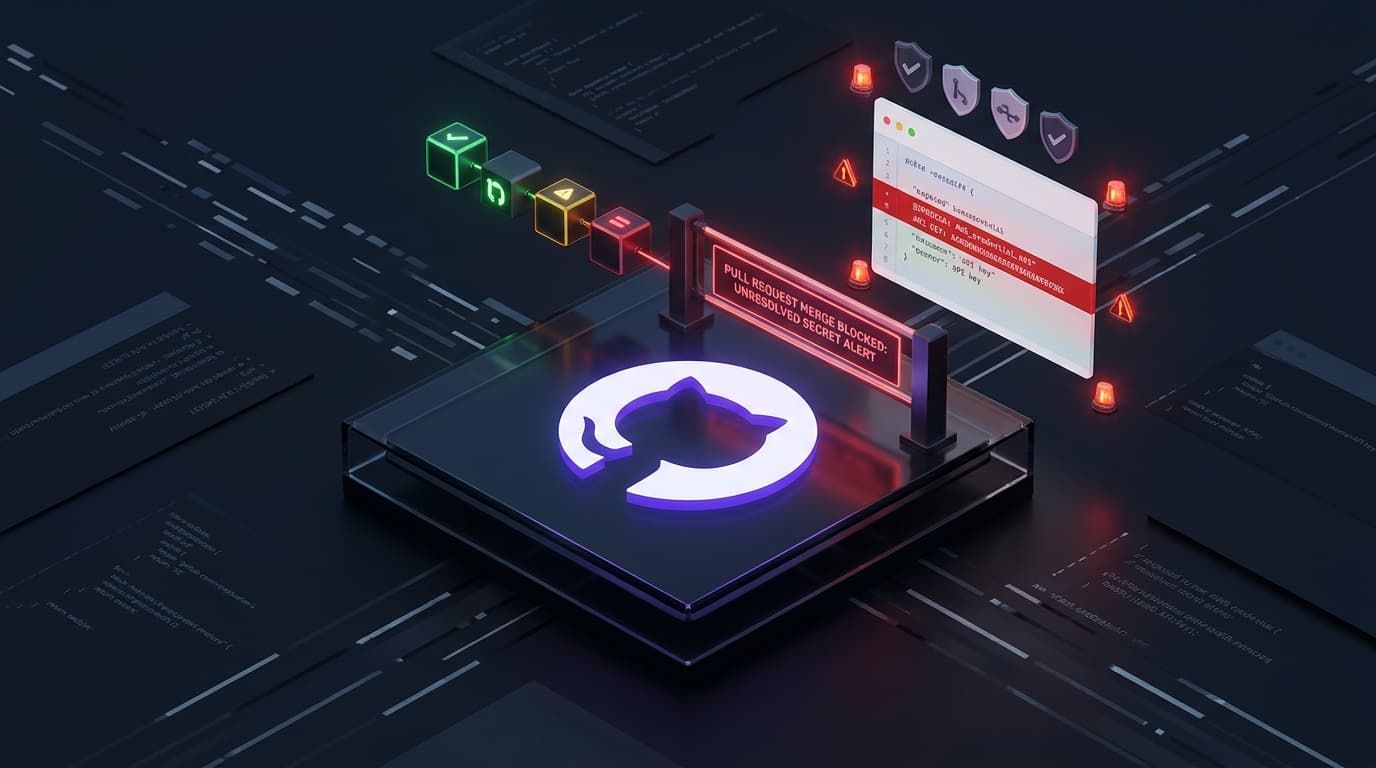
A large-scale software supply chain compromise identified as the PolinRider campaign has impacted more than 7,600 GitHub repositories, poisoning legitimate software projects with persistent multi-stage loaders. Forensic investigations indicate that threat actors compromised genuine developer accounts rather than simply publishing typosquatted or synthetic packages, embedding malicious Python loading mechanisms directly into established codebases. Analysis shows that underlying campaign operations and reconnaissance likely trace back as early as February 2025, demonstrating sustained and deliberate staging prior to wide-scale payload deployment.
Confirmed Incident Facts and Scope of Exposure
Software supply chain attacks traditionally rely on brandjacking, dependency confusion, or creating deceptive repositories designed to lure unwary users. The PolinRider campaign diverges fundamentally by compromising authentic developer environments and actively maintained repositories. By inserting code into existing development trees, the adversary bypasses basic heuristic filters that scrutinize newly registered maintainer accounts or unstarred projects.
Key confirmed findings regarding the intrusion set include:
- Scale: In excess of 7,600 distinct GitHub repositories across diverse software domains have had unauthorized modifications introduced.
- Mechanism: Insertion of malicious Python loader scripts engineered to retrieve, unpack, and execute secondary and tertiary payload stages.
- Actor Profile: Tracked under attribution assessments linking the intrusion cluster to North Korea-nexus state-sponsored cyber operations.
- Timeline: While broad operational execution expanded systematically, artifacts indicate initialization and unauthorized activity commencing as early as February 2025.
- Impact Vector: Compromised identities belong to real software engineers and maintainers, allowing poisoned commits to blend seamlessly into project revision histories.
Technical Anatomy: The Python Loader Pipeline
The technical nucleus of the PolinRider intrusions revolves around modular Python loader scripts inserted into project initiation routines, setup scripts, or recurring development workflows. By weaponizing files such as setup.py, module initializers (__init__.py), or build utility scripts, the threat actors ensure silent execution whenever a developer, system administrator, or CI/CD runner checks out and builds the software.
Staged Execution Architecture
Rather than dropping conspicuous compiled binaries directly into repository trees—which would trigger automated static application security testing (SAST) and signature-based scanning—the adversary established a multi-tiered execution pathway:
- Legitimate Context Masking: The malicious code is embedded alongside benign functions, frequently obfuscated using native base encoding, string splitting, or dynamically resolved attributes to evade naive AST (Abstract Syntax Tree) linting checks.
- Execution Ingestion: When dependencies are parsed or unit testing hooks are initiated, the Python loader executes in memory without immediately writing secondary stages to disk.
- Payload Resolution: The loader reaches out over encrypted channels to remote command-and-control (C2) nodes to fetch modular next-stage payloads tailored to the hosting architecture.
This staged approach grants the operators operational flexibility. Because the preliminary commit only contains the retrieval mechanism rather than the final operational malware, repositories can remain poisoned for weeks or months while payloads are swapped, paused, or selectively delivered based on targeted telemetry.
Affected Deployments and Supply Chain Blast Radius
The compromise of more than 7,600 repositories introduces substantial downstream blast radius. Organizations and developer workstations that consumed these projects between early 2025 and late 2026 are subject to immediate scrutiny. In modern development workflows, dependencies and submodules are frequently ingested via automated tooling without line-by-line manual code review at every revision step.
| Deployment Category | Exposure Vector | Primary Impact |
|---|---|---|
| Developer Workstations | Direct local execution, dependency building, running test suites | Local credential harvesting, SSH/GPG key theft, lateral corporate infiltration |
| CI/CD Build Pipelines | Automated integration runners pulling latest master/main branch HEAD | Compromise of build environments, leak of pipeline environment variables and cloud tokens |
| Downstream Distributed Binaries | Packaging libraries into commercial or internal software bundles | Unintentional propagation of multi-stage loaders to end customers |
| Containerized Workloads | Dockerfiles fetching git dependencies dynamically during build stage | Container breakout risks, cluster credential exfiltration, compromised base images |
Practical Incident Response and Containment Playbook
Engineering teams and security operations centers (SOCs) must execute comprehensive audit and containment workflows across all internal and public repository forks. Organizations should immediately assume that automated git clones of affected dependencies may have executed arbitrary code within their continuous integration runner contexts.
1. Git History and Commit Integrity Verification
Security teams should not rely exclusively on current branch heads. Attackers frequently squash, amend, or interleave commits to mask their presence. Repository administrators must audit the commit log across all active branches since February 2025:
- Inspect commit signatures: Isolate any commits that lack valid maintainer GPG or SSH commit signatures.
- Review unexpected Python script additions, particularly modifications to package descriptors and entry points.
- Enforce mandatory repository branch protection rules that require signed commits, peer reviews, and automated linting before any merge.
2. CI/CD Pipeline and Environment Variable Rotation
Because automated CI/CD runners frequently execute repository code with elevated secrets in memory, any automated build that ingested an affected commit must be treated as potentially breached. Security engineers should execute the following protocol:
- Revoke and cycle all deployment keys, service principal tokens, cloud credentials, and API access tokens stored as secrets within affected repository pipelines.
- Isolate ephemeral build runners and audit persistent runner nodes for anomalous egress network connections or unexpected background daemon processes.
- Pin third-party dependencies strictly to known-good cryptographic commit hashes rather than floating branch heads or mutable release tags.
3. Endpoint and Network Egress Auditing
Organizations must interrogate host-level telemetry across developer fleets. Focus monitoring on instances where local Python runtime environments (python3, python.exe) initiated outbound network sockets to external destinations outside standard private package registries and public infrastructure providers.
Confirmed Details Versus Unresolved Intelligence Gaps
Rigorous threat analysis requires clearly demarcating confirmed operational parameters from elements that remain under active investigation.
Confirmed Factors: It is validated that the intrusion set leverages compromised developer credentials to poison legitimate repositories, that the aggregate tally exceeds 7,600 codebases, that Python-based modular loaders serve as the primary execution primitive, and that initial activities surfaced as early as February 2025.
Unresolved Elements: The precise initial access broker or compromise mechanism used to hijack the authentic developer accounts—whether via large-scale session token theft, credential stuffing, spear-phishing campaigns, or development machine compromise—has not been fully published across every individual project. Furthermore, the complete registry of end-stage post-exploitation tools deployed selectively against high-value downstream targets remains closed under ongoing security agency and forensic inquiry.