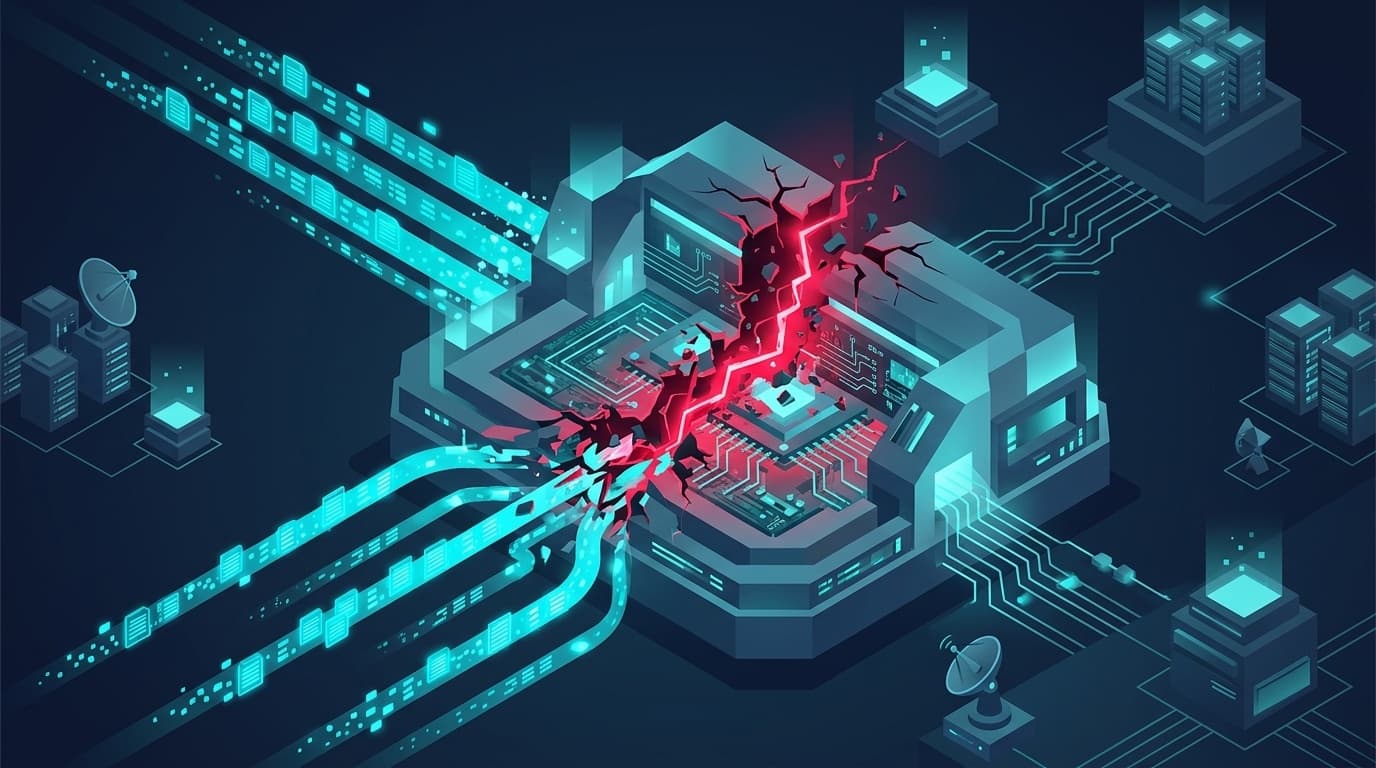
Enterprise perimeter firewalls and gateway filters are frequently deployed as primary defensive boundaries, yet unmanaged virtual machines, orphaned test workloads, and unmonitored host servers operating within private subnets continue to introduce critical security blind spots across modern enterprise IT infrastructure. Organizations often focus defensive resources on perimeter traffic inspection while internal compute resources—provisioned for temporary development projects, staging evaluations, or legacy operational tasks—remain active without oversight, configuration audits, or centralized patch cycles.
The Operational Mechanics of Virtualization Blind Spots
Virtualization platforms allow rapid deployment of guest operating systems, enabling rapid scaling of business applications and development pipelines. However, when lifecycle decommissioning processes fail to run automatically, these instances frequently transition into unmanaged virtual machines (VMs). Over extended intervals, forgotten guest instances miss critical hypervisor integration updates, security hotfixes, and vendor patch baseline synchronizations.
Because perimeter firewalls primarily inspect north-south ingress and egress boundary traffic, an unmonitored internal virtual machine operating on an authenticated segment is often trusted implicitly by adjacent systems. If an internal host running unpatched software services is exposed to lateral scanning or legacy protocol inquiries from compromised domain assets, the lack of centralized management prevents security teams from detecting anomalous compute consumption or rogue network connections initiated from the instance.
Key Structural Factors Driving Virtualization Risk
- Deprovisioning and Lifecycle Gaps: Workloads provisioned for temporary analysis, testing, or migration routines are often abandoned post-completion without being formally decommissioned, leaving network ports and operational system daemons running indefinitely.
- Unpatched Guest Software and Base Systems: Isolated or forgotten instances rarely receive routine software packages, core dependency updates, or operating system patches, leaving known structural weaknesses unaddressed.
- Excessive and Inherited Access Permissions: Virtual machine instances frequently retain privileged default credentials, broad local administrative rights, or unsegmented service tokens that bypass the principle of least privilege.
- Network Visibility Voids: Compute instances spawned outside centralized enterprise resource management platforms operate beyond the reach of automated inventory discovery and configuration compliance audits.
Technical Vectors: Inactive Servers and Excessive Access Rights
The operational danger posed by unmanaged instances is intensified when default permissions and broad network entitlements are preserved across development environments. In distributed enterprise infrastructures, engineers frequently configure broad connectivity rules and administrator-level service accounts to accelerate staging, intending to restrict permissions before final production deployment. When deployments bypass production handover reviews or remain abandoned, these permissive profiles persist indefinitely.
Excessive access controls allow any actor or automated tool that establishes access to an unmonitored virtual machine to query internal naming services, access local storage volumes, and traverse internal networks without triggering standard authentication boundaries. Because internal security gateways may not inspect East-West traffic between virtual workloads operating on the same physical host or VLAN, an unmonitored VM serves as an uninspected vantage point across the local subnet.
Mitigation Framework and Centralized Resource Governance
Securing enterprise infrastructure against risks introduced by unmonitored compute assets requires replacing ad-hoc provisioning with centralized infrastructure management, strict role-based access controls, and programmatic resource lifecycle automation. Organizations must unify hypervisor platforms, cloud orchestration APIs, and physical compute monitoring under cohesive oversight policies.
| Risk Category | Infrastructure Exposure | Recommended Defensive Remediation |
|---|---|---|
| Orphaned Compute Resources | Forgotten virtual machines remain powered on indefinitely without software inventory tracking. | Implement automated resource lifecycle decommissioning and automated hypervisor asset discovery routines. |
| Unpatched Guest Instances | Operating systems and runtime services run legacy software builds without security hotfixes. | Enforce centralized patch management baselines and mandatory hypervisor-level vulnerability scanning. |
| Excessive Administrative Entitlements | Workloads operate using root, domain admin, or unrestricted internal API service tokens. | Apply strict Role-Based Access Control (RBAC), enforce least privilege, and revoke static admin tokens. |
| Segment Traversal | Unrestricted lateral connectivity allows communication across unmonitored internal subnets. | Deploy microsegmentation, East-West firewall inspection rules, and mandatory zero-trust verification. |
Practical Engineering Response Checklist
Security and engineering teams should implement immediate technical measures to discover, isolate, and remediate unmanaged internal virtual machines across all local hypervisors and private cloud clusters:
- Execute Comprehensive Hypervisor Audits: Query all hypervisor management interfaces and container runtimes to compile a definitive inventory of all running, suspended, and dormant virtual machine disk images (VMDK, VHD, QCOW2).
- Enforce Automated Lifecycle Decommissioning: Mandate expiration deadlines and automated shutdown schedules on all newly provisioned developer, staging, and evaluation instances.
- Audit Privilege Trees and Role-Based Access Controls: Restrict VM creation, modification, and network provisioning permissions to authorized centralized infrastructure platforms, removing direct, uncontrolled hypervisor access.
- Deploy Internal Network Segmentation: Segment development, testing, and operational subnets, preventing East-West communications between non-production virtual machines and critical production database servers.
- Enforce Baseline Host Monitoring: Ensure automated asset verification agents or agentless hypervisor monitors actively verify compliance status before granting network access to internal subnets.
Remaining Operational Unknowns
While centralized lifecycle governance and strict access control mechanisms significantly reduce the risk surface, several operational challenges remain unverified across broad enterprise networks. The precise extent to which hidden virtual instances remain undetected inside air-gapped segments, non-standard hypervisor configurations, and legacy physical hardware often remains unquantified until full discovery sweeps are executed across every physical datacenter footprint. Furthermore, organizations must continuously validate whether automated provisioning hooks used by continuous integration pipelines inadvertently bypass centralized visibility tools during continuous deployment routines.