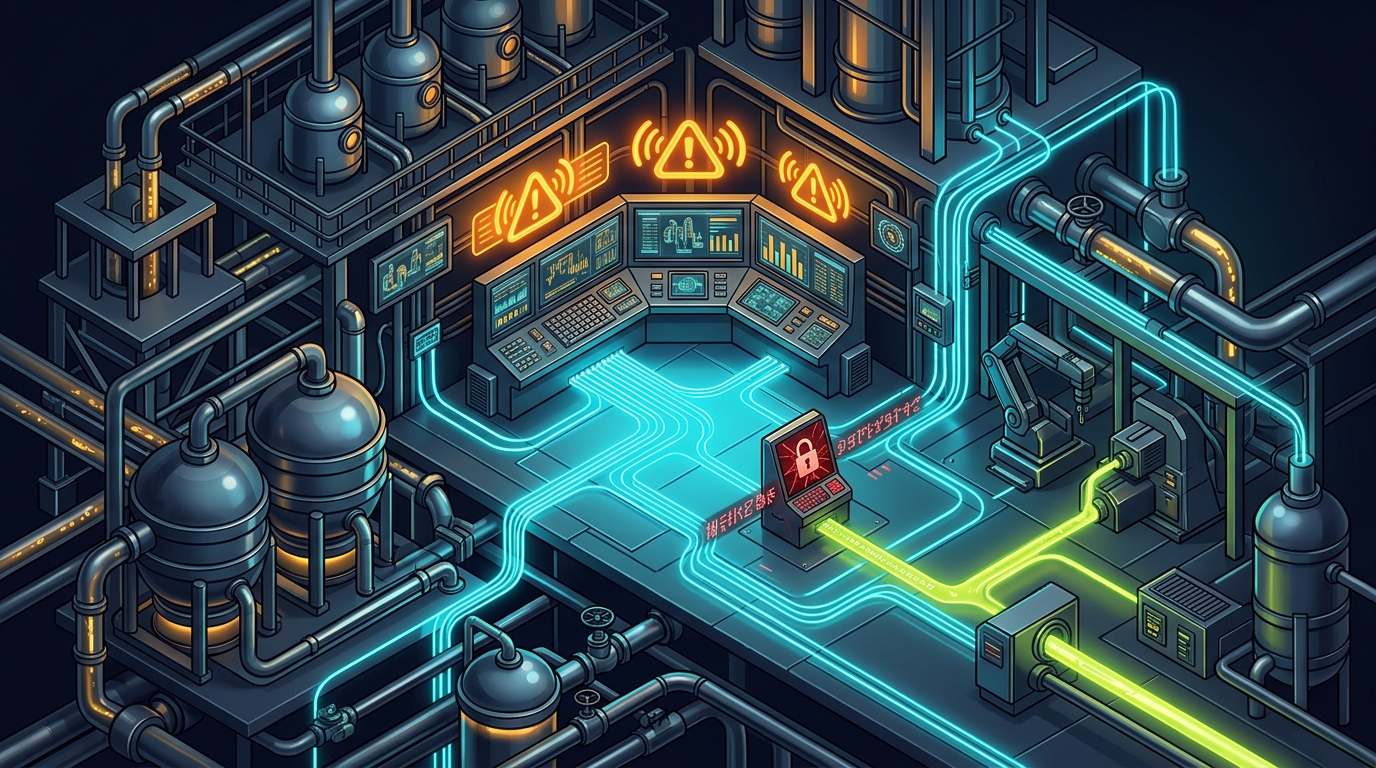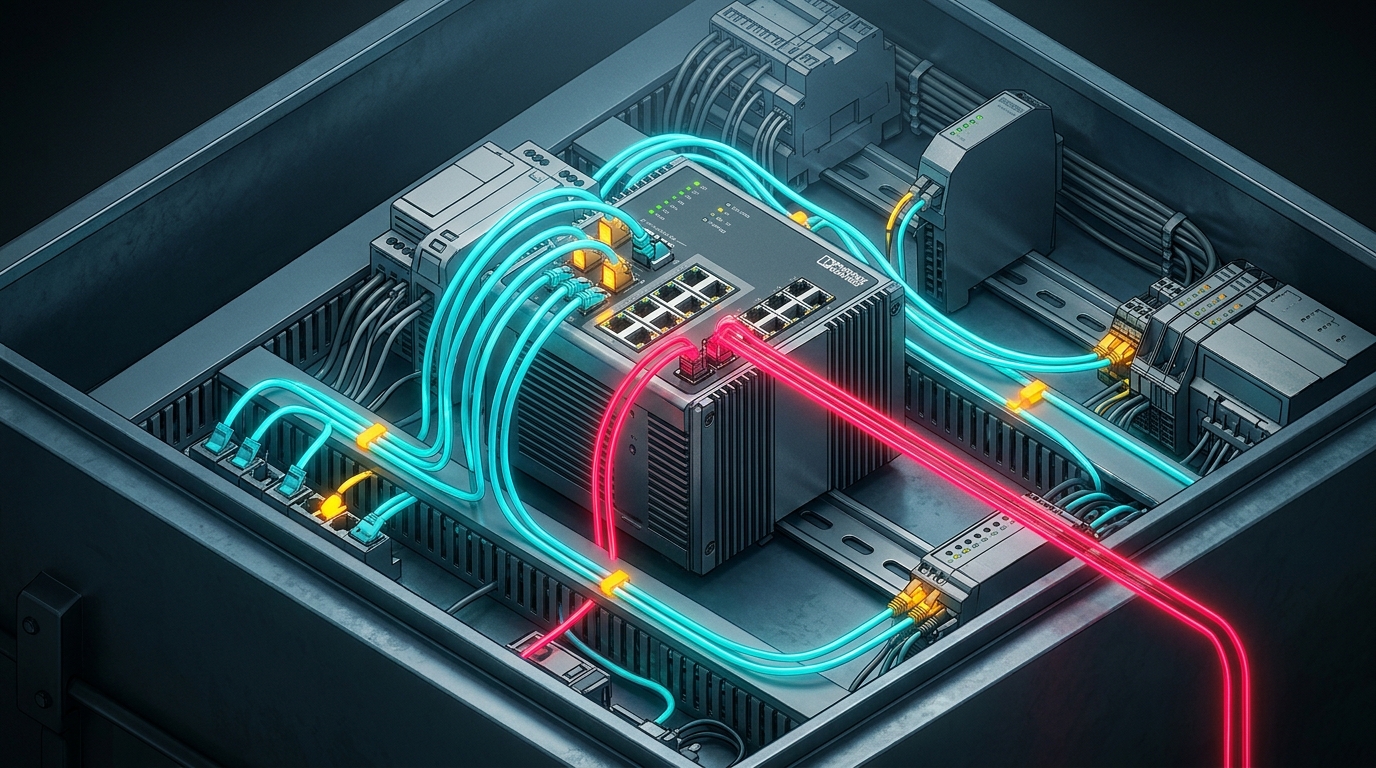
The Cybersecurity and Infrastructure Security Agency (CISA) has published advisory ICSA-26-285-01 detailing a maximum-severity remote code execution vulnerability (CVE-2026-48192, CVSS 9.8) in Phoenix Contact FL SWITCH managed industrial Ethernet switches. The vulnerability allows unauthenticated network attackers to inject shell commands into embedded device firmware, compromising network backbone segmentation across railway signaling, smart energy grids, and manufacturing facilities.
Vulnerability Analysis: OS Command Injection in CGI Handler (CWE-78)
Phoenix Contact FL SWITCH devices (including the popular 2000, 3000, and 4000 DIN-rail product lines) form the communication backbone of automated industrial plants, directing Profinet, EtherNet/IP, and Modbus TCP traffic between PLCs, DCS controllers, and supervisory SCADA servers.
According to the coordinated disclosure, the switch's embedded web management interface passes user-supplied parameters from diagnostic ping and traceroute CGI endpoints directly to the underlying Linux shell without sanitization:
// Vulnerable CGI diagnostic handler in Phoenix Contact firmware
POST /cgi-bin/diagnostics.cgi HTTP/1.1
Host: 192.168.1.254
Content-Type: application/x-www-form-urlencoded

# Injected command escapes shell context via backtick execution
target_host=127.0.0.1%60id%3E/tmp/out%60&action=ping
Because the web daemon runs under root privileges, an adversary on the local industrial subnet can achieve unrestricted administrative control over the switch operating system.
Operational Impact on Industrial Networks (IEC 62443 Perspective)
A compromised industrial switch allows adversaries to subvert the physical plant network topology:
- Traffic Sniffing & Port Mirroring: Attackers can reconfigure switch port mirroring to capture unencrypted industrial protocol traffic, harvesting SCADA passwords and PLC ladder logic.
- Man-in-the-Middle (MitM) Attacks: Adversaries can poison ARP caches or alter VLAN tagging to intercept and modify real-time control commands destined for safety-critical actuators.
- Denial of Process: Disabling Spanning Tree Protocol (STP) or terminating industrial ring redundancy (MRP/RSTP) creates network broadcast storms that freeze plant automation controllers.
Remediation Playbook for OT/ICS Engineers
- Upgrade Firmware: Immediately update all affected FL SWITCH units to firmware version v3.40 or higher.
- Isolate Management Interfaces: Disconnect management web interfaces from operational data networks and assign management IPs strictly to dedicated, firewalled Out-of-Band (OOB) VLANs.
- Disable Insecure Protocols: Disable HTTP and Telnet management services in favor of HTTPS and SSH with key-based authentication.