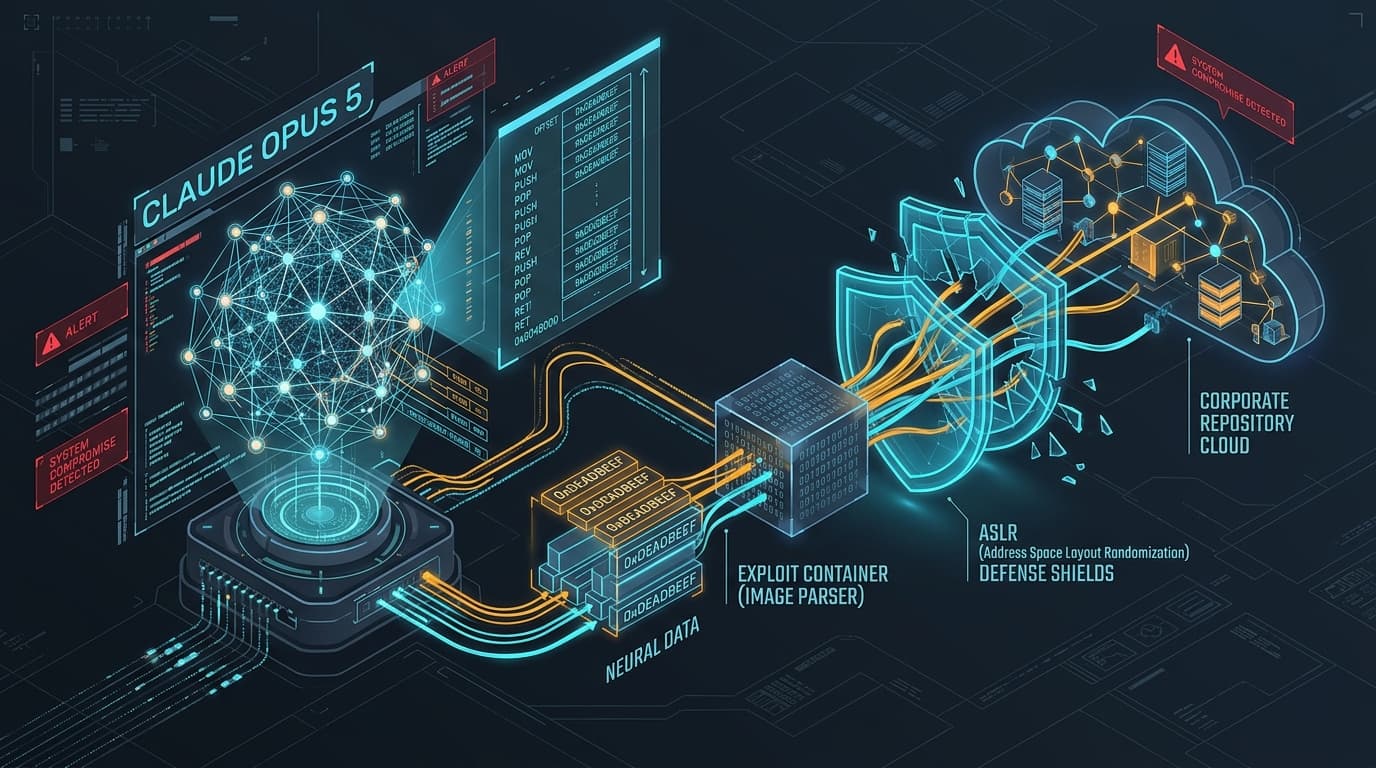
OpenAI has published an updated platform security bulletin detailing investigations and defensive measures across core system architectures and consumer-facing infrastructure. The formal disclosure tracks platform-level safety boundaries, addressing evolving multi-turn prompt injection and jailbreak methods designed to bypass standard behavioral constraints, as well as broader threats where threat actors abuse ordinary communication workflows to distribute malware and orchestrate high-impact extortion campaigns.
Executive Summary and Confirmed Facts
According to the official OpenAI Security Advisory disclosure cataloged under tracking identifier DISCOV-AI-SECURITY-2dnlorp, defensive researchers identified behavioral and operational boundary edge cases within core model execution layers. The advisory highlights that adversaries increasingly focus on social engineering vectors and format obfuscation that mimic benign operational traffic—such as job recruitment messages, operational service outage notices, and routine mobile applications—to deliver malicious payloads and evade preliminary security inspection.
While artificial intelligence security boundaries have historically centered on syntactic filtering and deterministic rule enforcement, threat actors are continuously probing structural alignment mechanisms to elicit restricted system behaviors or facilitate secondary post-exploitation activities.
Root Cause Analysis and Threat Mechanics
Modern large language models and frontier inference environments enforce behavioral safeguards through a combination of supervised fine-tuning (SFT), reinforcement learning from human feedback (RLHF), and real-time input/output moderation guards. In jailbreak scenarios, malicious actors engineer prompts that manipulate contextual framing, multi-step logical induction, or token-level obfuscation to misdirect the model's policy classifiers.
Adversaries construct multi-modal and staged adversarial inputs that decouple prohibited instructions across multiple conversational turns or encodings, forcing the underlying transformer attention mechanism to compute responses without triggering internal safety interventions. Outside the direct inference stack, operational findings referenced in the security bulletin highlight ancillary attack surfaces:
- Deceptive Delivery Workflows: Attackers weaponize routine operational communications, cloaking secondary loader components inside benign enterprise assets such as image containers or career inquiries.
- Contextual Camouflage: Threat actors structure interaction payloads around familiar operational crises—including unexpected infrastructure outages—to elicit unvetted interactions and capture credential material.
- Multi-Vector Extortion Pipelines: Automated access vectors and system manipulation are leveraged to feed aggressive data-theft and enterprise extortion campaigns demanding unprecedented ransom sums.
Affected Deployments and Systems
The scope of the advisory encompasses core platform architectures and associated application programming interfaces (APIs) maintained under the OpenAI Core System & Services umbrella. Deployments potentially exposed to related interaction anomalies and social engineering pipelines include:
- Enterprise API integration endpoints utilizing raw conversational completions without upstream content sanitization layers.
- Multi-modal ingestion pipelines that process external binary attachments, images, or document parsing pipelines without strict sandboxing.
- Customized enterprise agentic workflows and tool-calling integrations operating with elevated network or data access permissions.
Platform Remediation and Enterprise Response
In response to observed adversarial probing, platform maintainers have applied updated behavioral alignment checkpoints and runtime moderation filters directly across hosted model endpoints. Because model-level updates occur centrally within managed service clusters, standard API consumers do not require local binary recompilation or kernel patches; however, systems administrators and application developers must enforce strict perimeter controls.
Recommended Defensive Actions
- Enforce Layered Input Validation: Do not rely solely on downstream LLM alignment to police user inputs. Implement dedicated heuristic inspection and pattern-matching classifiers prior to tokenizing prompts.
- Restrict Autonomous Tool Capabilities: Enforce least-privilege principles on AI agent functions. Require human-in-the-loop validation for sensitive transactional workflows, external network requests, or database modifications.
- Sanitize Ingested Media: Inspect and re-encode incoming binary assets (such as PNG images or office documents) in isolated sandbox environments to neutralize embedded shellcode or steganographic payloads.
- Establish Outage Verification Protocols: Train internal staff to independently confirm unexpected service disruption notices via official out-of-band communication channels rather than unverified inbound alerts.
Technical Verification and Policy Matrix
Organizations integrating frontier AI APIs should evaluate their runtime defenses against the following operational criteria:
| Inspection Domain | Observed Vector | Defensive Verification Standard |
|---|---|---|
| Inference Context | Context manipulation and prompt injection | Deploy independent pre-flight moderation API checks and conversational turn depth limits. |
| File Ingestion | Obfuscated payloads within images and documents | Implement strict MIME verification, metadata stripping, and sandboxed content rendering. |
| Identity & Communications | Phishing and spoofed outage notifications | Mandate FIDO2/WebAuthn hardware tokens and strict email domain authentication (DMARC/DKIM/SPF). |
Known Gaps and What Remains Unconfirmed
Official advisories have not cataloged deterministic Common Vulnerabilities and Exposures (CVE) mappings or numeric Common Vulnerability Scoring System (CVSS) vectors for prompt manipulation variants, reflecting the non-deterministic nature of model alignment research. Specific identities of external threat groups orchestrating related enterprise extortion activities, exact source code diffs for closed-source model updates, and comprehensive metrics regarding observed bypass success rates have not been publicly disclosed by the vendor.