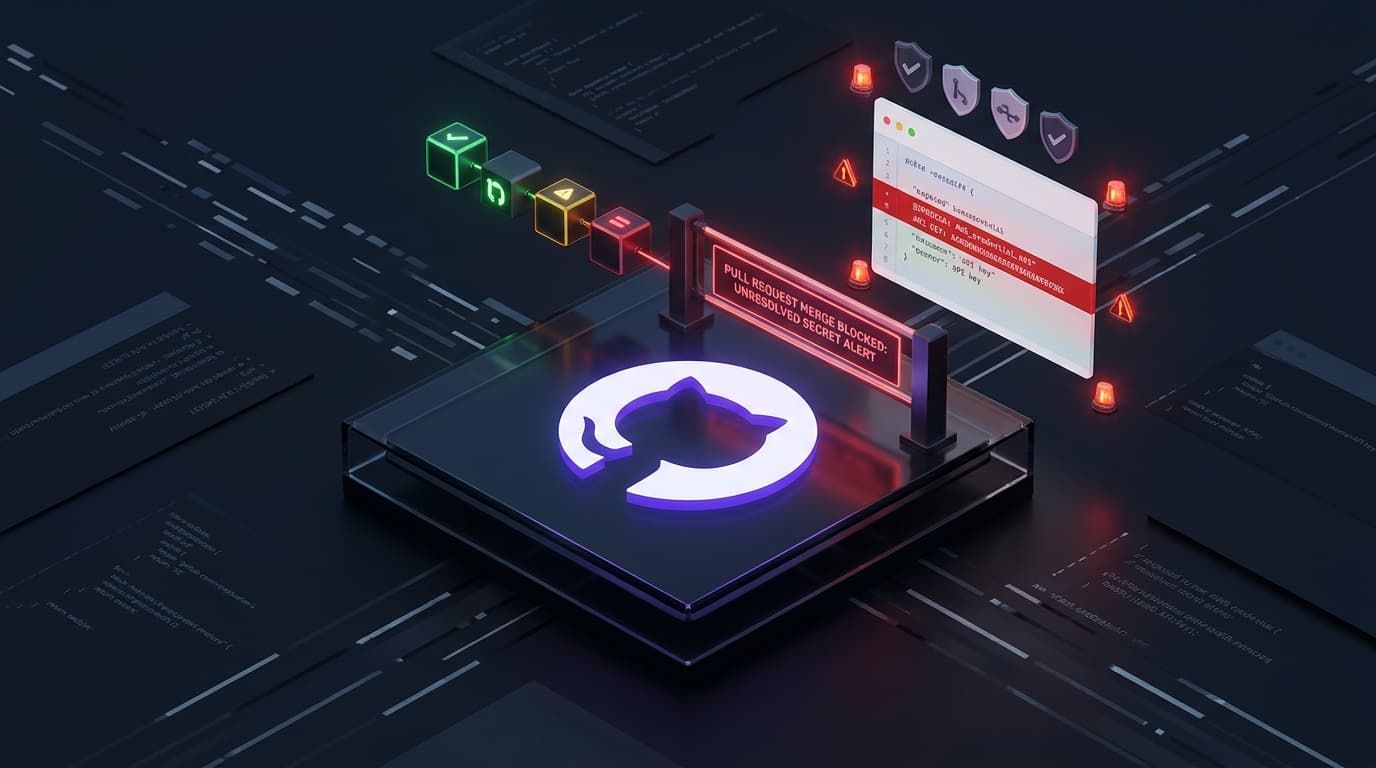
A sophisticated software supply-chain operation linked to North Korean threat actors has compromised more than 7,600 GitHub repositories to distribute malicious code, according to threat telemetry and tracking records. Operating under the moniker PolinRider, the campaign involves the systematic infiltration of legitimate developer repositories to embed multi-stage loaders capable of retrieving secondary malware payloads.
Investigation into the campaign indicates that the underlying activity is not an isolated breach but part of an extended espionage and access-distribution pipeline that may have commenced as early as February 2025. Rather than relying exclusively on newly generated fake accounts or typosquatted package names, the operators have targeted authentic developer environments and existing project repositories to evade automated source code auditing controls and developer scrutiny.
Campaign Scope and Attack Architecture
The scale of the PolinRider campaign represents a massive abuse of open-source and collaborative development infrastructure. Across the affected 7,600 repositories, the operators systematically introduced malicious artifacts, focusing heavily on Python environments.
Telemetry associated with the tracking identifier DISCOV-THREATS-1v0x0sc highlights the following core operational attributes observed in the campaign:
- Target Ecosystem: Projects hosted within GitHub Core System & Services, spanning thousands of active community and developer codebases.
- Malicious Artifact: Compact Python loader scripts designed to execute unobtrusively during standard project runtime, installation, or dependency initialization.
- Execution Capability: Dynamic fetching and execution of next-stage payloads from attacker-controlled external command-and-control (C2) servers.
- Operational Footprint: Backdated activity stretching back to February 2025, suggesting persistent surveillance and deliberate staging prior to broad discovery.
Mechanics of the Malicious Python Loader
The primary vector embedded across the compromised repositories is a lightweight Python loader. Python's flexibility and extensive usage across cloud automation, machine learning projects, and developer utilities provide a fertile substrate for stealth execution.
Once planted within a repository, the malicious script is typically integrated into build routines, configuration helpers, or utility modules. When an unsuspecting developer or automated pipeline clones the repository and executes scripts or imports modules from the project, the loader activates:
- System Profiling: Evaluates host environment attributes, including username, operating system architecture, and local network configuration.
- Payload Staging: Initiates an outbound HTTPS network request to retrieve encoded secondary stages, bypassing rudimentary signature filters that look only for explicit reverse shells or static binaries.
- In-Memory Ingestion: Decodes and executes incoming stages directly within memory buffers where possible, minimizing disk artifacts that could trigger endpoint detection alerts.
Because the malicious updates were committed directly to authentic developer repositories, they often inherited the implicit trust granted by peer developers, automated dependency scanners, and continuous integration (CI) workflows.
Affected Deployments and Exposure Vectors
The blast radius of the PolinRider operation extends beyond the direct owners of the 7,600 compromised repositories. Due to the interconnected nature of software engineering, organizations consuming third-party modules or forks of these repositories face acute supply chain risks.
| Exposure Tier | Direct Impact | Operational Consequence |
|---|---|---|
| Direct Repository Maintainers | Compromised credentials, unauthorized commits, injected branches | Loss of repository integrity, unauthorized software distribution |
| Downstream Consumers | Ingestion of malicious Python scripts via clone, submodule, or vendored dependencies | Arbitrary code execution on developer endpoints and CI/CD runners |
| Enterprise CI/CD Pipelines | Execution of untrusted build tasks without isolation | Exfiltration of runner build secrets, API tokens, and cloud service credentials |
Recommended Incident Response and Defensive Measures
Organizations and individual developers maintaining or pulling from GitHub repositories must take systematic steps to verify the provenance of recent commits and isolate suspicious Python scripts.
1. Repository Integrity and Commit Auditing
Maintainers should review all commit logs and pull requests back to early 2025, specifically searching for unusual code additions in Python setup files, helper scripts, and automated workflows. Any commit made without verified cryptographic signatures (e.g., GPG or SSH commit signing) should undergo rigorous manual review.
2. Revocation of Personal Access Tokens and Credentials
Given that real developer accounts were leveraged to push unauthorized changes across thousands of projects, organizations should rotate all GitHub Personal Access Tokens (PATs), deploy keys, and OAuth application authorizations that had write access to compromised codebases. Enforce mandatory multi-factor authentication (MFA) via hardware security keys across all organizational accounts.
3. Hardening CI/CD Runners and Build Isolation
Development teams must ensure that build systems run with least privilege. Automated builds and pull request tests should run in ephemeral, network-restricted container environments:
- Block arbitrary outbound internet connectivity from CI/CD worker nodes to mitigate first-stage callback attempts.
- Pin dependencies strictly to known-good cryptographic hashes rather than loose version floating or direct branch references.
- Restrict build runners from accessing cloud environment metadata services (such as IMDSv2) or global deployment secrets during initial compilation steps.
4. Host and EDR Threat Hunting
Security operations centers (SOCs) should hunt across developer workstations and engineering endpoints for suspicious Python child processes, abnormal outbound socket connections established by python or python3 binaries, and unexpected child shells spawned from interactive development environments.
Unconfirmed Aspects and Ongoing Investigation
While the footprint of 7,600 compromised repositories and the presence of the Python loader are confirmed, key facets of the PolinRider campaign remain under active analysis:
- Initial Account Compromise Vector: It remains unconfirmed whether maintainer accounts were compromised through widespread credential stuffing, phishing targeting software developers, session token hijacking, or malicious third-party OAuth app permissions.
- Specific Downstream Targets: The exact profile of organizations successfully compromised by the next-stage payloads has not been fully detailed in public disclosures.
- Payload Typology: The full catalog of secondary payloads delivered by the Python loader—whether focused on cryptocurrency theft, intellectual property exfiltration, or persistent lateral movement—continues to be monitored by threat analysts.