Japanese electronics retailer Nojima has revised its reported personal-data breach total to 7,179,818 people after identifying exposure at five additional sites. Its November 18 second report says 7,162,082 people are associated with Nojima Online, while 17,736 distinct people were affected across the other sites. Bank account information was included for 4,223 people in the newly identified group. These are revised figures from the company's investigation, not a new estimate of how many people used the stores in a given year.
What the second report adds
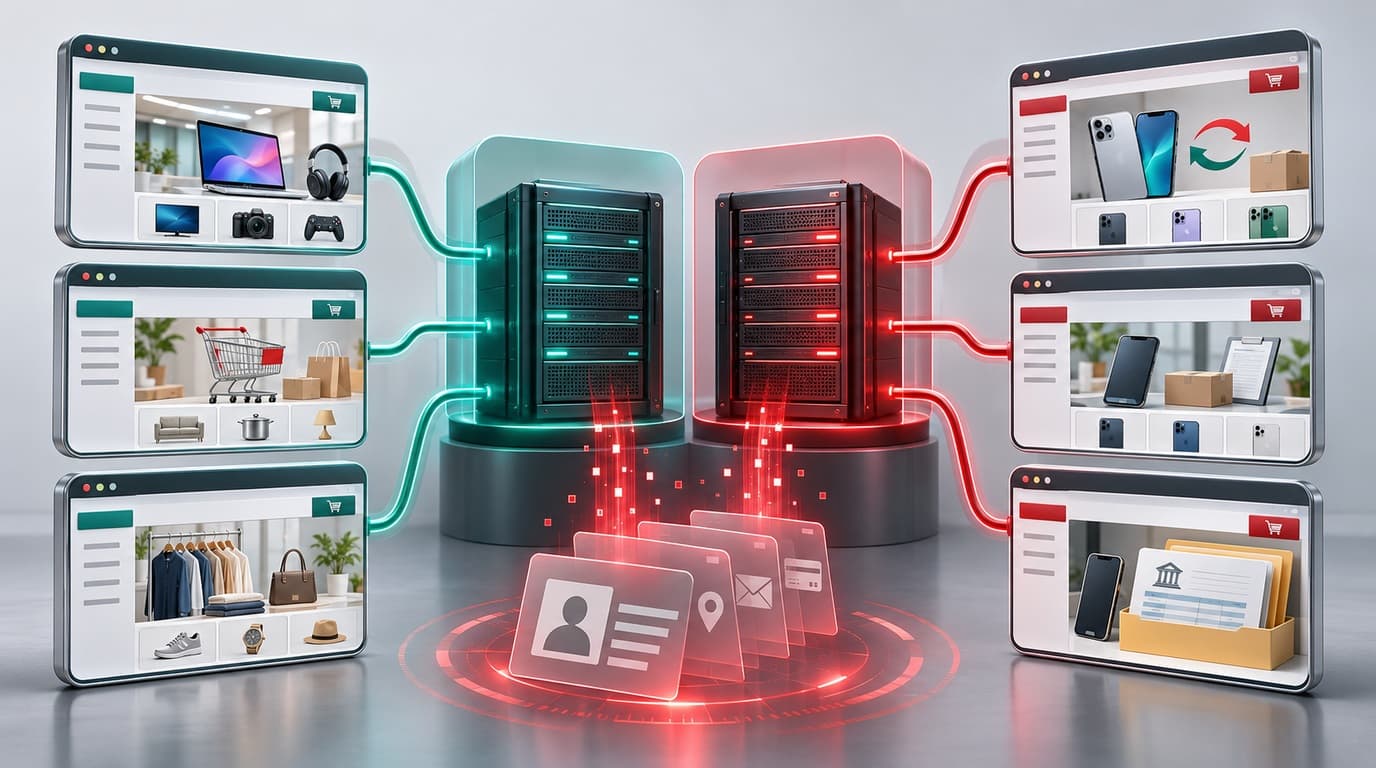
Nojima originally disclosed unauthorized access affecting Nojima Online on November 2. In its latest investigation, it says an outsider also accessed a smartphone buyback site managed by a contractor and four other sites running in that contractor's shared environment. The five sites are separate from Nojima Online's operating environment. Nojima explicitly says it has not confirmed a connection between the two incidents. A headline that describes one attacker moving from the main store into the contractor environment would go beyond the company's evidence.
The distinction also matters for the count. Nojima Online accounts for 7,162,082 of the revised total, based on members as of November 1. The other five sites account for 17,736 people after duplicates across those sites are removed. Adding the individual site figures without deduplication would overstate the number of distinct people. Nojima's combined total is 7,179,818.
| Site or group | People in company report | Examples of exposed data |
|---|---|---|
| Nojima Online | 7,162,082 | Contact details, login IDs, encrypted passwords and email addresses |
| Five other sites, deduplicated | 17,736 | Varies by site; includes bank-account data for 4,223 people |
| Total distinct people | 7,179,818 | Not every person had every listed field exposed |
Where the more sensitive records appear
The newly identified sites include a historical campaign form, an event and game reservation site, an in-store fiber-connection application system, a smartphone buyback site, and a used-smartphone sales site. Nojima's site-by-site counts are maximum figures and can overlap. The smartphone buyback site is listed with up to 4,829 people, and the used-smartphone sales site with up to 2,749. The company says those two sites held bank-account details such as financial institution and branch, account type, number, and account-holder name. The 4,223 figure is the deduplicated number of people whose bank information was included across the additional sites.
Nojima Online's disclosed fields include names, birth dates, gender, postal and street addresses, phone numbers, login IDs, encrypted member passwords, and email addresses. 'Encrypted passwords' does not mean that the accounts are automatically safe: the notice does not provide enough information about the password protection method to make that assessment. People who reused their Nojima password elsewhere should change the password on those other services and enable multifactor authentication where available.
Nojima says the affected sites did not hold Japan's My Number identification data or credit-card information, and that those fields were not leaked. That statement should not be flattened into 'no financial data': bank-account details are separately identified for part of the affected population. The information types differ by site and by person, so individualized notice remains important.
Response and practical steps
Nojima says it strengthened security for Nojima Online after the first report. The newly identified sites were temporarily stopped and outside access blocked after the company detected the intrusion. Nojima says it has not seen further expansion of damage and plans to reopen stopped sites after strengthening controls and checking safety. It is reviewing information management and oversight of its contractor. These are the company's current response claims; the public notice does not identify an exploit, threat actor, or exact intrusion timeline for the five sites.
The retailer says it has already notified affected Nojima Online customers and will contact people affected by the other sites when preparations are complete, by registered email or other means such as post. Customers should use Nojima's official channels to check any message claiming to concern the breach. The company warns of impersonation email, phishing, and fraud. Those who used the smartphone buyback or used-phone sales services should review bank statements for unfamiliar transactions, as Nojima advises, and contact their financial institution through a known number if something looks wrong.
What remains unresolved
The company has not established a link between the two operating environments, and its disclosure should be read as an updated investigation rather than proof of a single intrusion path. It has not publicly specified which vulnerability, credential, or vendor access was used. The confirmed numbers and data categories give affected people concrete steps now, while the separate-environment finding points to a second question for organizations that outsource customer-facing services: whether incident response covers every site and shared contractor system that holds their customers' data.