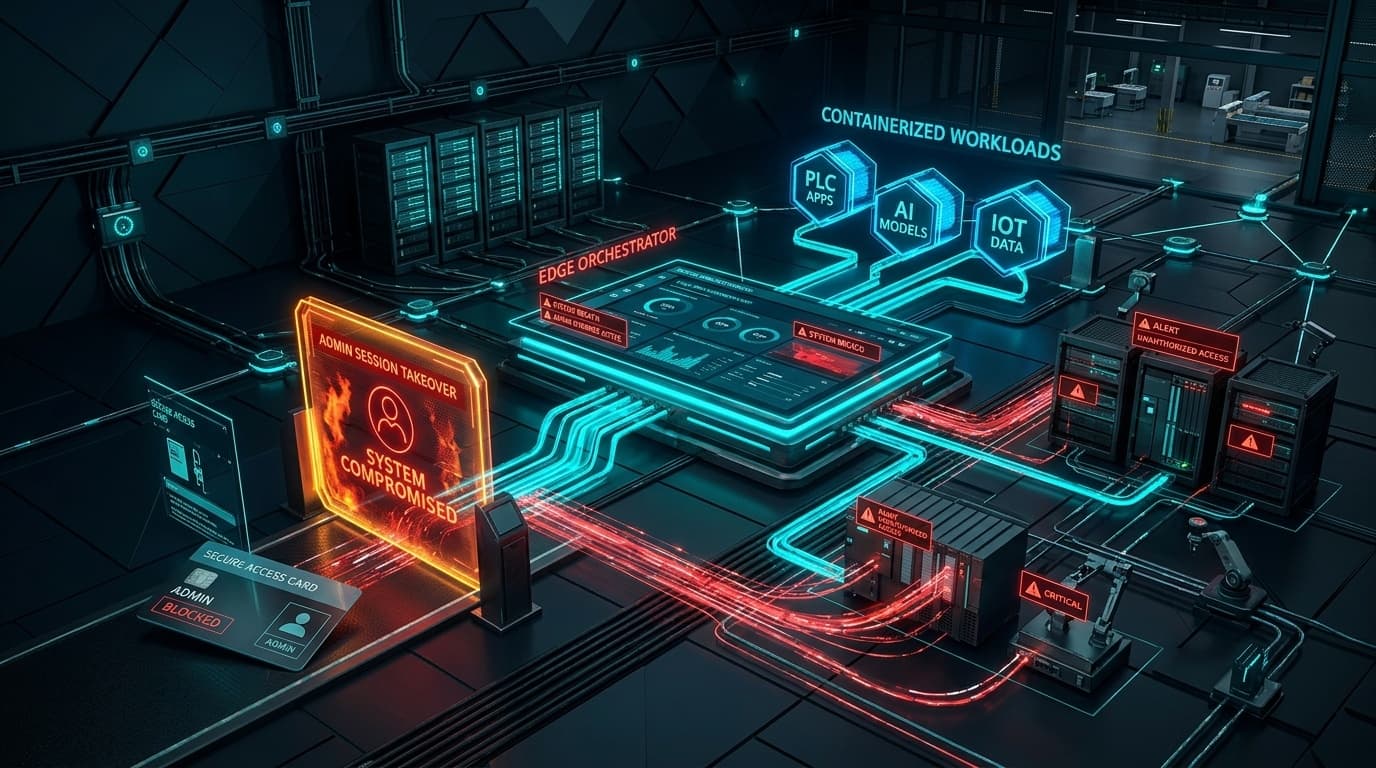
A critical security vulnerability demonstrated in client-side AI integration workflows has revealed that navigating to a single malicious webpage could allow attackers to hijack sessions within the Meta Muse assistant platform. According to security findings documented under tracking reference DISCOV-THREATS-nus1si, the flaw enables the silent extraction of a user's private conversations, persistent assistant memories, and stored authentication credentials linked to connected enterprise services, all without triggering an explicit user confirmation or security warning dialog.
The Exposure Mechanism and Interaction Flaw
Modern generative AI assistants increasingly operate as unified hubs that combine browser-level accessibility with deep API hooks into enterprise accounts, documents, and interactive dialogue histories. In the demonstrated attack scenario against Meta Muse, researchers found that visiting an untrusted external web page was sufficient to orchestrate cross-context requests that interfaced directly with the assistant's runtime memory structures.
Under normal operational conditions, interactions involving sensitive data extraction, historical transcript ingestion, or external API credential retrieval are designed to enforce strict origin isolation boundaries and present interactive consent challenges to the end user. In this instance, however, the execution flow bypassed typical interactive gates. The malicious page could issue directives that the assistant processed automatically, effectively bridging an unauthenticated external web context into the authenticated assistant environment.
Impact on Private Conversations and Stored Assistant Memories
The immediate consequence of this exposure is the silent compromise of confidential communication streams. Meta Muse retains extensive interaction telemetry, including:
- Longitudinal Conversation Histories: Detailed transcripts of interactive user prompts, containing proprietary company strategies, source code fragments, and confidential operational troubleshooting records.
- Semantic Memory Stores: Synthesized profiles, personal preferences, organizational hierarchies, and contextual entity graphs that the assistant builds over time to personalize its responses.
- Connected Service Tokens: Authentication credentials and access tokens preserved by the assistant framework to interface seamlessly with third-party web services and enterprise SaaS platforms.
Because the attack chain executes in the background without prompting for confirmation, an affected user browsing standard web resources would have no visible telemetry or UI cue indicating that active conversation states or memory banks were being queried and exfiltrated to an adversary-controlled server.
Technical Context and Affected Deployments
The vulnerability primarily impacts users who maintain active, authenticated sessions with the Meta Muse platform while navigating disparate, untrusted web destinations within the same operating or browsing profile. When AI assistants maintain persistent background listeners or fail to strictly isolate origin handling during cross-context script execution, the boundary separating arbitrary web content from high-privilege assistant hooks erodes.
| Target Component | Exposure Pathway | Compromise Impact |
|---|---|---|
Meta Muse Assistant Runtime |
Cross-context request without approval prompt | Unauthorized extraction of private conversation records |
Assistant Memory Cache |
Unvalidated client-side extraction hook | Systematic leakage of persistent personalized profiles |
Connected Account Store |
Extended authorization context traversal | Potential exposure of session tokens and enterprise credentials |
Credential Traversal Risks
Beyond the theft of qualitative chat dialogues, the researchers emphasized that the same foundational attack path could be extended to reach connected account credentials. Many generative productivity assistants are granted OAuth tokens or scoped API keys to access email systems, corporate knowledge repositories, and code repositories on behalf of the user. If an untrusted page can manipulate the assistant into surfacing these stored credential tokens, the adversary's blast radius expands from simple conversational espionage into direct, unauthorized lateral movement within enterprise third-party services.
Practical Defensive Response for Organizations
In response to client-side assistant hijacking techniques and systemic cross-origin manipulation, security teams and systems administrators should institute rigorous defensive measures across managed endpoints and identity perimeters:
- Session and Profile Isolation: Enforce strict browser containerization or dedicate isolated browser profiles specifically for interacting with AI productivity assistants, ensuring untrusted web browsing cannot interact with authenticated assistant sessions.
- Audit Connected SaaS Integrations: Systematically review all enterprise permissions and third-party integrations connected to assistant accounts. Revoke unnecessary or high-privilege scopes that grant read access to sensitive corporate data stores.
- Endpoint Web Filtering: Deploy network-level inspection and web reputation filtering to block outbound connections to suspicious or unverified domains, preventing malicious script staging.
- Credential Hygiene and Invalidation: Where potential exposure is suspected, invalidate active authentication tokens for third-party platforms linked to the assistant and force user re-authentication across identity providers.
Confirmed Findings Versus Operational Unknowns
Security guidance and disclosure documentation confirm the structural viability of the attack path, noting that arbitrary web content could successfully manipulate the assistant's retrieval mechanics without requiring affirmative user permission. The ability to pull both real-time transcripts and stored contextual memories represents a validated failure in boundary enforcement between general web browsing and local assistant privileges.
However, several critical operational details remain unconfirmed in public source records. Primary disclosures have not detailed specific downstream patch version numbers, specific vulnerable sub-builds of the Core System & Services layer, or whether this vulnerability was ever actively weaponized by malicious actors in the wild prior to the security research demonstration. Similarly, official disclosures have not published formal CVSS severity metrics or detailed whether the underlying fix requires server-side token restrictions or updated client-side browser extensions.
As AI assistants become further embedded into enterprise workflows and daily browsing routines, organizations must recognize that the integration layer connecting autonomous language models to local web browsers creates novel attack surfaces that require continuous auditing, strict credential isolation, and proactive compartmentalization.