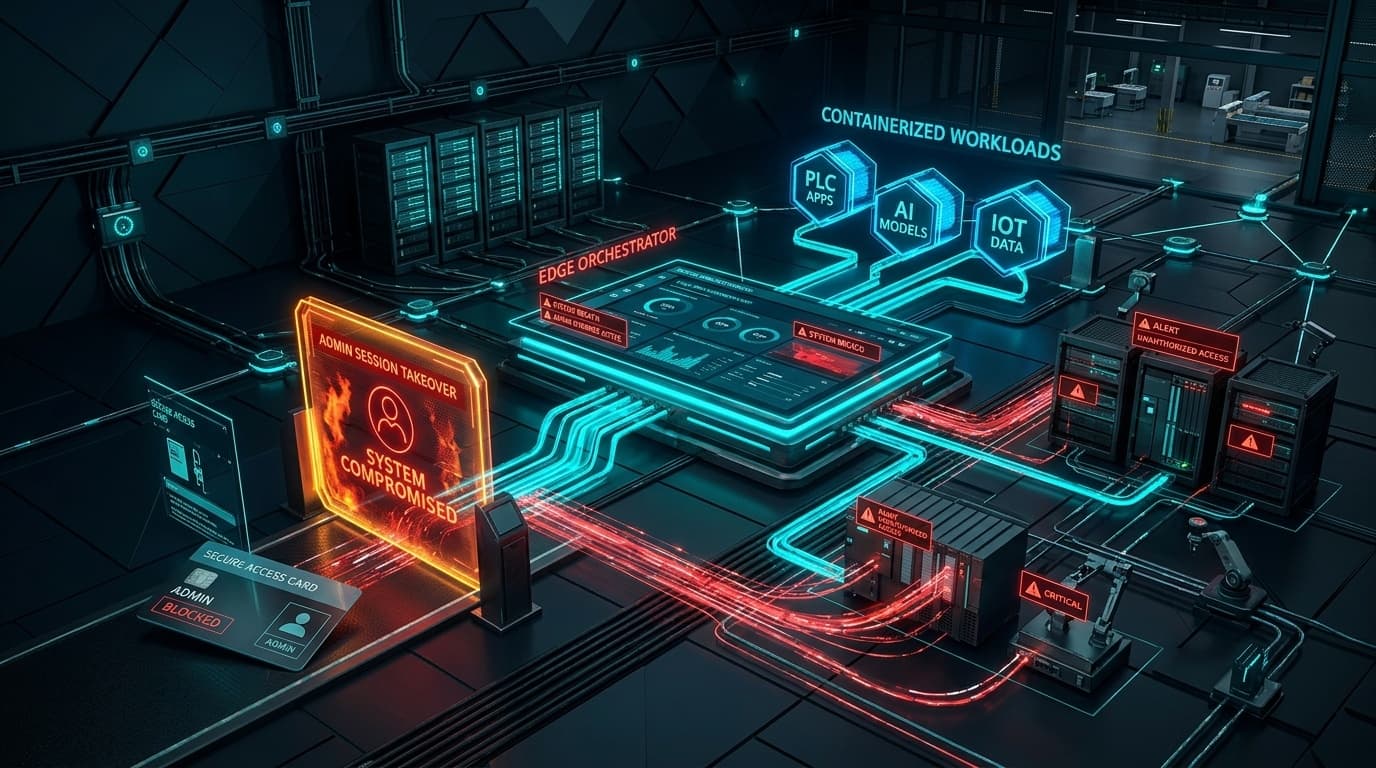
Security research has identified a significant vulnerability chain in assistant integration architectures where visiting an untrusted webpage could enable silent data exfiltration. According to technical disclosure findings, the vector allows an external webpage to siphon sensitive telemetry, including a user's historical chat sessions and retained memory context, without requiring explicit authorization or raising administrative prompts.
Beyond conversational metadata and chat transcripts, researchers demonstrated that the same architectural weakness could be extended to access authentication credentials maintained for third-party connected services. The exposure underscores recurring structural challenges in modern AI agent deployments where web content parsing intersects with persistent privileged context.
Confirmed Facts and Scope of Exposure
The confirmed findings center on the unintended bridge between untrusted web-based execution contexts and the local assistant environment. When an authenticated user navigates to an attacker-controlled web asset, the page leverages existing ambient permissions and session states to issue background requests.
- Silent Data Extraction: Private discussions, generated responses, and contextual logs held within the assistant runtime can be accessed and retrieved by the page origin without generating a user-facing dialogue or confirmation query.
- Memory Context Exposure: Persistent personalization memory—designed to maintain long-term facts, preferences, and operational context across multiple sessions—can be queried and transmitted out-of-band.
- Credential Boundary Bypass: The attack chain extends past transcript exfiltration to interrogate token stores and authentication secrets managed for external linked accounts.
- Lack of Approval Prompts: The workflow operates under the assumption of existing client trust, failing to demarcate boundary crossings when processing third-party web content.
Technical Context and Attack Mechanics
Modern productivity assistants often function by ingesting dynamic content from the user's active browsing session or local client environment to provide automated summarization, task management, and API delegation. To support integration with external enterprise applications and services, these assistants retain bearer tokens, OAuth credentials, and synchronized personal history.
The vulnerability manifests through an inadequate security boundary separating web content execution from the assistant's internal query endpoints. When an external site executes client-side scripts, the request handling infrastructure treats the context as a benign interface call. Because the user's session remains authenticated within the broader environment, cross-origin or local IPC requests do not prompt the user to confirm whether the page should possess read access to stored conversational history or assistant secrets.
Vulnerability Boundary Analysis
| Component | Intended Security Posture | Observed Behavior |
|---|---|---|
| Conversation Store | Restricted strictly to authenticated, verified user sessions and local interface panels. | Exfiltrated by background scripts hosted on third-party pages without explicit consent prompts. |
| Long-Term Memory | Persistent cross-session knowledge isolated from external web contexts. | Readable across origins, exposing historical interactions and profile data. |
| Connected Account Vault | Isolated secret storage requiring scoped step-up authorization or hardware-backed signing. | Reachable through automated chained requests originating from the malicious site. |
Affected Deployments
This attack vector primarily threatens desktop environments, browser-integrated toolbars, and operating system widgets configured with active assistant integrations where local session contexts are shared or bridged with general web navigation. Deployments exhibiting the following configurations face heightened exposure:
- Environments where assistant utilities automatically inspect, ingest, or bridge with the active browser instance without strict origin isolation.
- Clients with pre-authenticated third-party services whose access tokens are stored in accessible shared local configuration stores.
- Workstations where enterprise users maintain long-lived sessions across SaaS applications, code repositories, and collaboration hubs linked to the assistant.
Practical Response and Defensive Guidance
System administrators and security teams supporting endpoints with integrated assistant tools must implement defense-in-depth measures to mitigate unintended context sharing:
- Audit Linked Service Integrations: Review all active OAuth connections and API keys linked to assistant profiles. Disconnect legacy or high-privilege connections that are not strictly necessary for operational workflows.
- Enforce Strict Origin Isolation: Where local proxies or bridging agents run on localhost, configure endpoint security policies to reject cross-origin HTTP or WebSocket connections that do not provide cryptographically verifiable anti-CSRF tokens.
- Revoke Compromised Session Tokens: If an unverified domain is suspected of executing payloads against local assistant interfaces, immediately revoke authentication tokens for connected accounts to invalidate any potentially exfiltrated session state.
- Implement Web Content Sandboxing: Utilize enterprise browser policies, browser isolation containers, and network-level domain filtering to isolate untrusted web browsing from internal service environments.
What Remains Unknown
While the fundamental mechanism of cross-context exfiltration has been verified, several details have not been publicly confirmed in initial advisory disclosures. Official technical advisories have not provided formal Common Vulnerability Scoring System (CVSS) metrics, nor has an official CVE assignment been finalized in national vulnerability databases. Specific version ranges, build numbers, and the precise timeline for downstream vendor remediation across all integration variants remain pending further vendor disclosures.