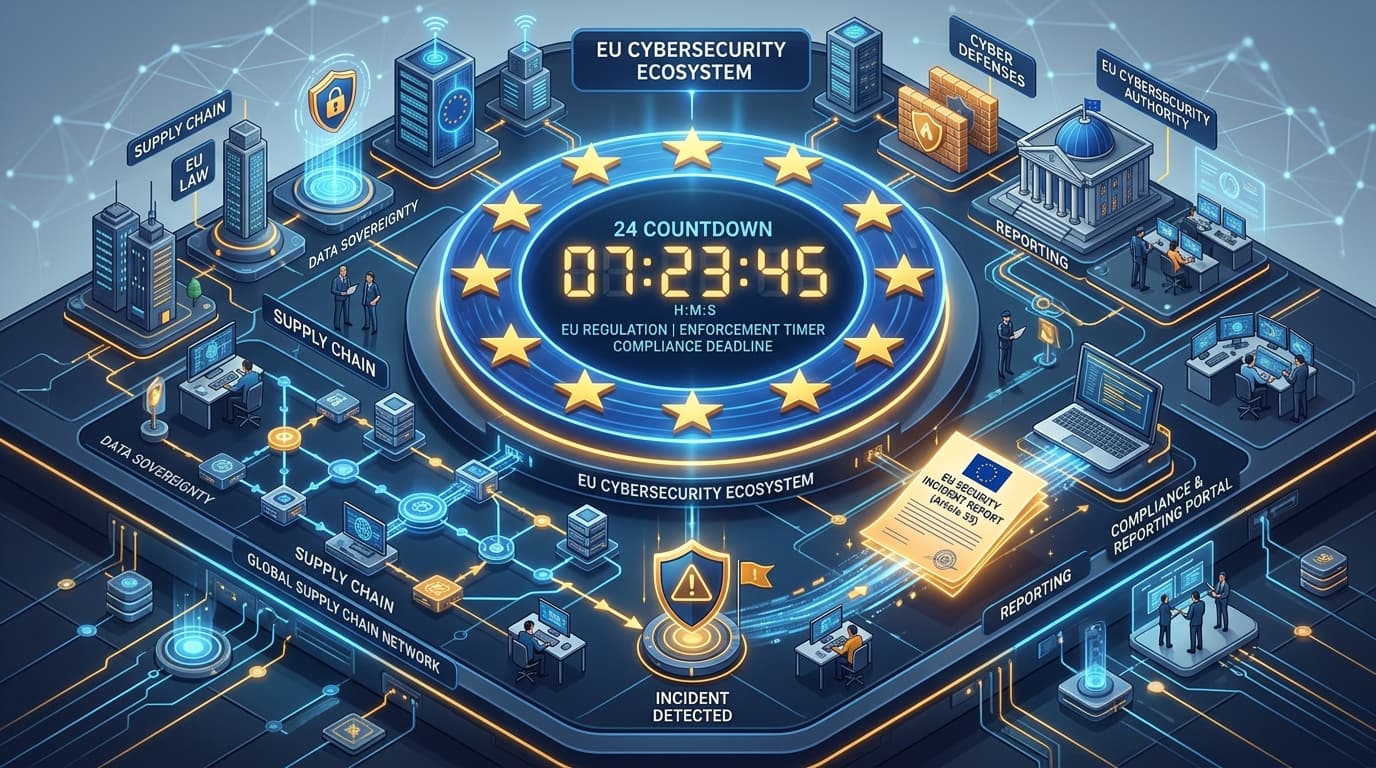
The European Supervisory Authorities (EBA, EIOPA, and ESMA) have announced the formal enforcement timeline for the Digital Operational Resilience Act (DORA), establishing binding requirements for financial entities and their Critical ICT Third-Party Service Providers (CTPPs). Central to the mandate is the implementation of Threat-Led Penetration Testing (TLPT), requiring rigorous live-fire adversarial simulations across production financial architectures.
Threat-Led Penetration Testing (TLPT) Architecture
Unlike conventional vulnerability assessments, DORA Article 26 establishes a standardized testing methodology derived from the TIBER-EU framework. Financial institutions and critical cloud service providers must commission independent certified red-teams to simulate sophisticated advanced persistent threat (APT) campaigns:
- Scope of Live Testing: Tests must encompass all critical or important functions, including outsourced cloud infrastructure, application programming interfaces (APIs), and third-party data pipelines.
- Production Environment Mandate: Simulations must be conducted against live production systems with comprehensive risk mitigation controls to ensure operational safety without disrupting financial clearing.
- Triennial Testing Cycle: Regulated institutions must execute a full TLPT exercise at least once every three years, with interim remediation assessments reviewed by national competent authorities (NCAs).
Direct Oversight Over Cloud Providers and Hyperscalers
In a historic expansion of regulatory authority, DORA establishes a direct supervisory framework governing critical third-party technology providers (including AWS, Microsoft Azure, Google Cloud, and major core banking SaaS vendors). Lead Overseers possess the statutory authority to conduct on-site inspections, demand physical architecture blueprints, and mandate operational changes:
// DORA Oversight and Incident Escalation Model
[European Supervisory Authorities (ESAs)] -> [Lead Overseer]
                                                    |
                                 +------------------+------------------+
                                 |                                     |
                  [Financial Institution (Client)]       [Critical ICT Provider (Cloud/SaaS)]
                                 |                                     |
                                 +------ Shared Operational Risk ------+
                                 +------ Synchronized TLPT Remediation +
Executive Compliance Roadmap for Financial CISOs
- Map ICT Interdependencies: Develop comprehensive dependency graphs identifying all third-party software components and cloud infrastructure supporting critical banking functions.
- Integrate Joint Testing Clauses: Update contracts with critical cloud providers to mandate participation in multi-party TLPT exercises and ensure reciprocal audit access.
- Establish ICT Incident Telemetry Pipelines: Build automated reporting workflows capable of submitting initial major incident notifications to competent authorities within 4 hours of classification.
Regulatory Mandates & Statutory Enforcement Matrix
| Governance Pillar / Directive | Regulated Scope & Entities | Mandated Compliance Deadline | Statutory Enforcement & Penalties |
|---|---|---|---|
| Core Operational Resilience | Banking, Cloud Providers & Financial Institutions | Immediate Mandatory Enforcement | Supervisory audits, business restrictions & statutory fines |
| Incident Disclosure & Telemetry | Critical IT & Third-Party Cloud Infrastructure | Strict Statutory Reporting Window | Regulatory inquiry and executive liability under statutory acts |
| Data Governance & Risk Management | Enterprise Data Fiduciaries & Cloud Processors | Rolling 180-Day Audit Baseline | Statutory financial penalties and remediation embargoes |
Step-by-Step Technical Audit & Compliance Verification Playbook
Enterprise compliance and security operations teams must verify technical controls and audit readiness:
- Verify Immutable Audit Log Retention in Cloud Storage:
# AWS S3: Verify Object Lock retention compliance mode on SIEM audit bucket aws s3api get-object-lock-configuration --bucket enterprise-siem-compliance-logs # Output must confirm ObjectLockEnabled: Enabled with Compliance mode - Audit Cloud Workload Encryption & IAM Privileges:
# Query Azure Key Vault or AWS KMS for automated annual key rotation status aws kms list-keys --query "Keys[*].KeyId" --output text | xargs -n 1 aws kms get-key-rotation-status --key-id - Automated Regulatory Incident Notification Dispatch Test:
# Automated compliance deadline alert trigger verification
import time, datetime

def verify_compliance_window(incident_epoch: float, max_hours: int = 6):
    elapsed = (time.time() - incident_epoch) / 3600
    if elapsed > max_hours:
        print(f"CRITICAL: Statutory notification window exceeded ({elapsed:.1f}h / {max_hours}h)")
    else:
        print(f"Within compliance window: {max_hours - elapsed:.1f}h remaining")

verify_compliance_window(time.time() - 3600)
Continuous Threat Monitoring & Log Auditing Queries
Monitor SIEM logs for anomalous privilege escalation and unapproved administrative role assumptions:
-- Query SIEM audit trail for high-privilege IAM policy updates
SELECT timestamp, user_identity, event_name, request_parameters
FROM cloud_audit_logs
WHERE event_name IN ('PutRolePolicy', 'AttachUserPolicy', 'CreateSecurityGroupRule')
  AND status = 'Success'
ORDER BY timestamp DESC
LIMIT 50;