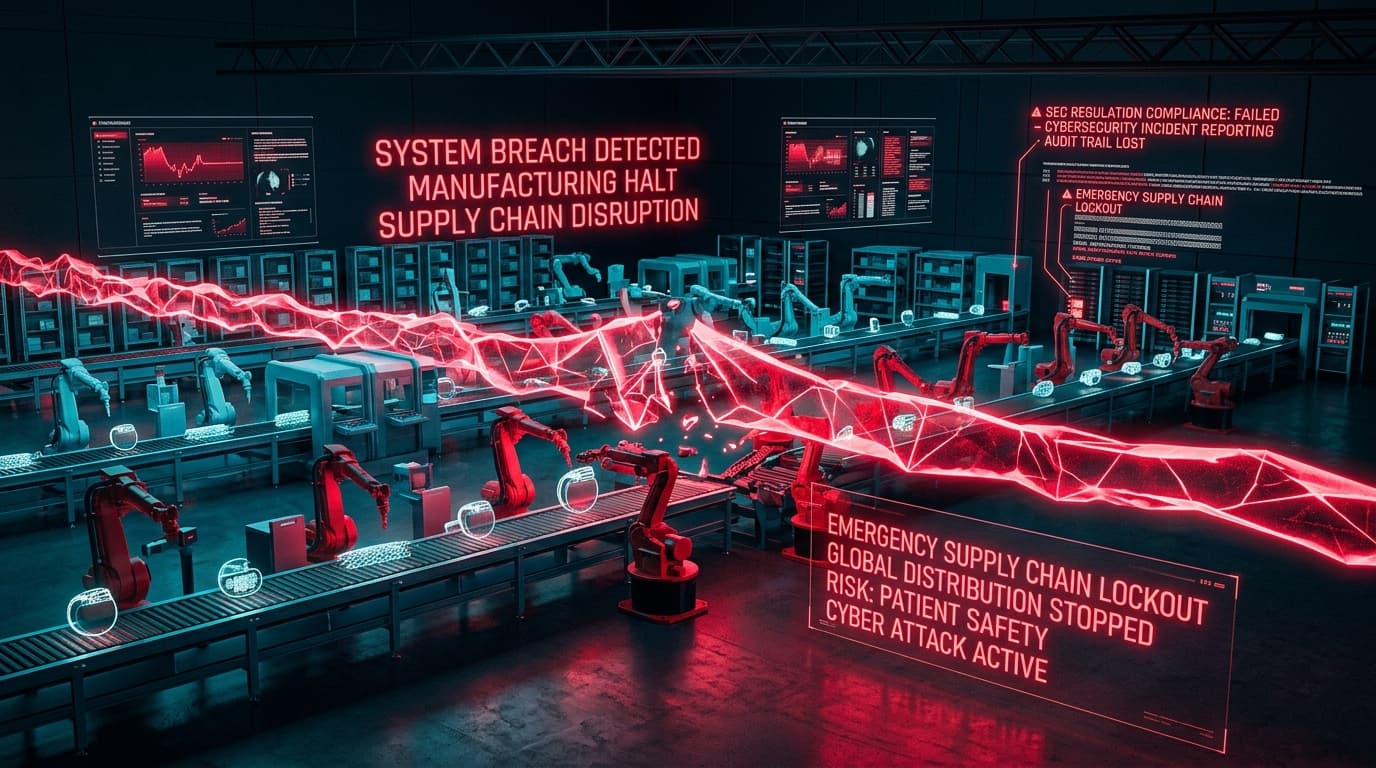
Medical technology manufacturer Boston Scientific has confirmed a cybersecurity incident in which attackers breached its cloud-based enterprise business applications following a targeted voice phishing (vishing) campaign. The unauthorized access allowed an external threat actor to compromise corporate systems and access sensitive personal and medical-related information. Following forensic discovery and evaluation of the impacted cloud environment, the company initiated formal breach notifications to affected individuals and regulatory authorities across multiple U.S. states.
The Anatomy of the Voice Phishing Infiltration
Voice phishing, or vishing, represents a focused phone-based social engineering tactic designed to circumvent perimeter cyber defenses by manipulating internal personnel. In modern enterprise environments, threat actors executing vishing campaigns frequently impersonate internal corporate help desks, IT support representatives, or third-party service providers. By calling employees directly, operators convince staff to reveal session credentials, approve remote identity verification prompts, or visit adversary-in-the-middle (AiTM) authentication proxy portals disguised as corporate Single Sign-On (SSO) gateways.
According to enterprise disclosure findings, the adversary leveraged social engineering over telephony channels to bypass standard access controls and establish authenticated foothold access within Boston Scientific's cloud-hosted enterprise applications. Rather than exploiting memory corruption or zero-day vulnerabilities in underlying operating system kernels, the attackers targeted human operators to harvest valid authentication tokens, granting them authorized visibility into production business environments.
Once initial credentials or session cookies were captured, the threat actor accessed integrated cloud IT applications housing records concerning customers, healthcare contacts, or affiliated individuals. Modern enterprise cloud platforms typically connect diverse internal data repositories through Application Programming Interfaces (APIs), meaning an account compromised via voice phishing can traverse disparate operational workspaces if granular least-privilege policies are not strictly enforced.
Affected Systems and Data Exposure Profile
The scope of the incident encompasses cloud-based IT business applications utilized by Boston Scientific to manage commercial, administrative, or clinical coordination workflows. Forensic reviews established that unauthorized parties interacted with repositories containing both general personal identifiable information (PII) and specific medical-related data elements. While complete schema listings remain restricted to administrative filings, exposed categories typically include identifiers that create identity theft and targeted social engineering risks for recipients.
| Incident Dimension | Operational Assessment | Technical Details |
|---|---|---|
| Initial Access Vector | Telephony Social Engineering (Vishing) | Direct phone manipulation of personnel to harvest credentials or bypass multi-factor authentication (MFA). |
| Compromised Infrastructure | Cloud IT Business Applications | Commercial software-as-a-service (SaaS) and hosted business management applications. |
| Impacted Information | Personal & Medical Data | Individual personal identity details alongside health-related records maintained within affected cloud systems. |
| Notification Scope | Multi-State Regulatory Filings | Mandatory consumer and regulator notifications across multiple U.S. state jurisdictions. |
The Rising Threat of Enterprise Social Engineering
The Boston Scientific breach mirrors an industry-wide escalation in targeted telephony attacks against corporate technical infrastructure. Threat actors have increasingly abandoned pure technical exploit development in favor of sophisticated social engineering rings that systematically target enterprise service desks. Attackers compile detailed organizational charts from publicly available business networking platforms, identify specific employees within administrative or supply chain divisions, and engage them in convincing phone conversations designed to reset enterprise credentials.
When enterprise organizations adopt basic multi-factor authentication mechanisms such as SMS one-time passwords (OTP) or push notifications sent to mobile authenticator apps, vishing actors use real-time conversational pressure to prompt users into relaying OTP codes or approving prompt-bombing requests. This attack path allows an unauthorized actor to satisfy secondary authentication requirements instantly, converting phone-based deception into authenticated cloud tenant access.
Actionable Defensive Playbook: Hardening Organizations Against Vishing
Mitigating sophisticated voice phishing requires transitioning away from fallible human trust verification models toward strict cryptographic authentication architectures. Organizations managing critical infrastructure, healthcare environments, or sensitive customer records should implement the following defensive controls:
- Mandate Phishing-Resistant Authentication: Standard push notifications and SMS one-time passwords remain highly vulnerable to conversational relay attacks. Organizations must deploy hardware-bound FIDO2/WebAuthn credentials (such as physical security keys or platform-native passkeys) that bind authentication sessions cryptographically to the exact domain origin, neutralizing credential harvesting portals entirely.
- Establish Formal Help Desk Out-of-Band Verification: Service desks must strictly prohibit password resets, multi-factor re-registrations, or temporary bypass approvals initiated via unverified phone calls. Standard operating procedures must require out-of-band verification through an established secondary channel—such as supervisor sign-off, live video verification, or internal cryptographically validated messaging.
- Implement Conditional Access and Session Constraints: Cloud identity platforms should enforce contextual access policies. Access to sensitive IT business applications containing PII or medical records should require managed enterprise device health checks, compliant mobile device management (MDM) certificates, and restricted trusted IP ranges, blocking foreign cloud infrastructure even when valid credentials exist.
- Continuous Telephony Threat Awareness: Security awareness training must simulate realistic voice phishing scenarios, instructing workers never to share one-time passcodes, approve unexpected multi-factor notifications while on voice calls, or grant unattended remote desktop sessions to unsolicited callers.
Configuring Conditional Access Policy Safeguards
Security engineering teams managing enterprise cloud environments can prevent compromised credentials from functioning outside managed enterprise hardware by implementing strict device posture rules in directory policies:
# Conceptual policy structure requiring compliant corporate hardware and FIDO2 authentication
{
  "displayName": "Block-Untrusted-Access-To-Cloud-Business-Apps",
  "state": "enabled",
  "conditions": {
    "applications": {
      "includeApplications": ["All-Cloud-Business-Applications"]
    },
    "users": {
      "includeUsers": ["All"]
    },
    "clientAppTypes": ["browser", "mobileAppsAndDesktopClients"],
    "devices": {
      "deviceFilter": {
        "mode": "exclude",
        "rule": "device.isCompliant -eq True -and device.trustType -eq 'ServerAdJoined'"
      }
    }
  },
  "grantControls": {
    "operator": "AND",
    "builtInControls": [
      "requireCompliantDevice",
      "requirePhishingResistantMfa"
    ]
  }
}
Regulatory Compliance and Notification Mandates
Because the unauthorized access compromised medical-related information alongside personal identifiers, Boston Scientific initiated breach notifications in compliance with individual U.S. state breach disclosure statutes. In the United States, states enforce varying reporting triggers that obligate organizations to deliver prompt notice to impacted residents and respective state attorney general offices when unauthorized acquisition of personal or protected health data occurs.
Entities handling health-adjacent records also face regulatory review regarding safeguards implemented under data security governance standards. Regulatory agencies typically review whether the compromised organization maintained appropriate administrative, technical, and physical safeguards prior to the intrusion, including whether role-based access controls sufficiently segmented internal records to prevent broad data access from an isolated credential compromise.
What Remains Unknown
While the initial intrusion vector and general categories of impacted applications have been established, several technical facets remain undisclosed in public regulatory documentation. The precise identity or operational affiliation of the threat actor executing the vishing campaign has not been officially confirmed. Additionally, Boston Scientific has not publicly detailed the exact duration of threat actor dwell time inside the compromised cloud applications, the complete headcount of individuals affected across all reporting states, or whether data was actively exfiltrated to adversary infrastructure versus viewed within the affected platforms. Independent security reviews and state regulatory disclosures will continue to clarify the broader forensic scope as statutory investigations proceed.