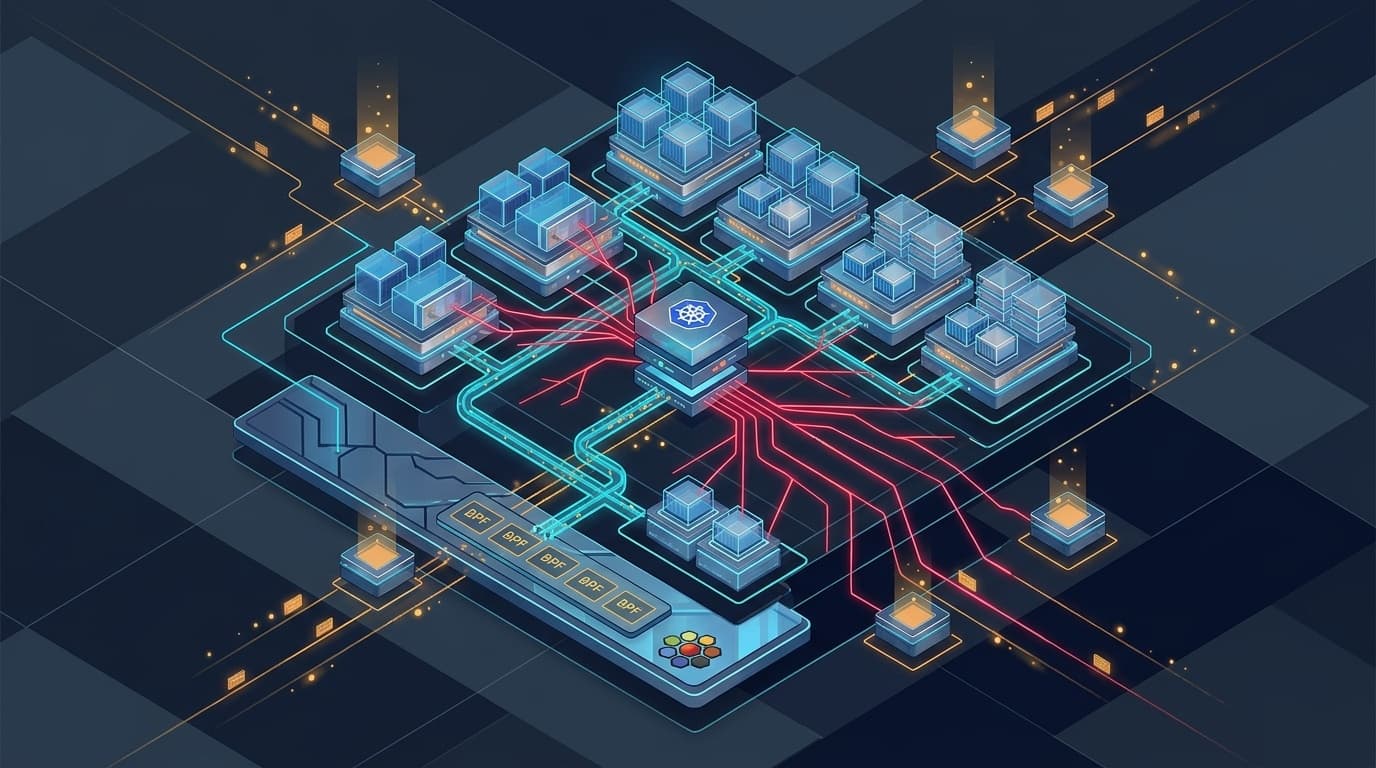
Amazon Web Services (AWS) has expanded the identity and access management capabilities of the AWS Security Token Service (AWS STS) by introducing the GetScopedCredentials API. The new API is engineered to address runtime authorization challenges that arise when orchestrating multi-tiered applications, distributed workflows, and autonomous artificial intelligence (AI) agents. Rather than passing an application’s broad session credentials to delegated child tasks or sub-agents, administrators and developers can now programmatically issue a downgraded, temporary credential set directly from an active session.
As autonomous systems and composite tool-calling pipelines handle increasingly diverse operational steps—ranging from harmless data lookups to high-risk resource modifications—enforcing least privilege at execution time has become a critical security requirement. GetScopedCredentials provides a native mechanism to constrain ambient credentials without requiring multiple distinct IAM role assumptions or managing external credential vaults.
Technical Context and Architectural Breakdown
In traditional cloud architecture patterns, least privilege is commonly enforced by assigning designated IAM roles to specific microservices or task definitions, such as Amazon Elastic Container Service (Amazon ECS) task execution roles or AWS Lambda execution functions. However, complex agentic architectures frequently operate within a single compute boundary or persistent runtime container. In this operational model, a supervisor agent might hold credentials capable of reading data sources, updating records, and provisioning auxiliary resources.
When this primary agent spawns sub-agents to execute isolated tasks, providing those subordinate workers with the parent session's full identity presents significant blast-radius risks. Prior approaches to restricting permissions dynamically typically required calling APIs such as AssumeRole with an inline session policy, or managing separate role trust policies configured for multiple specific tasks. These patterns frequently introduced operational overhead, latency, and IAM trust configuration complexity.
The GetScopedCredentials API changes this interaction model by operating directly against the caller's existing temporary security credentials:
- Parent Session Derivation: The API derives subordinate temporary credentials directly from an active STS session without assuming a completely new IAM role.
- Downscoped Session Policies: Callers can supply policy documents that define an explicit subset of allowable actions and resources. The resulting credential pair inherits only the intersection of the original session permissions and the requested scoping policy.
- Ephemeral Scopes: The generated credentials carry a constrained lifespan appropriate for bounded tasks, reducing the risk of credential leakage during long-lived process execution.
Operational Use Cases in Autonomous AI Workflows
The rise of generative AI assistants and multi-agent frameworks has exposed architectural gaps in conventional static authorization patterns. An autonomous supervisor agent tasked with fulfilling a multi-step user request often delegates discrete operational units to specialized sub-agents. These sub-tasks might include querying a document index, generating code, or invoking third-party integration endpoints.
Granting broad write or delete permissions to an exploratory research sub-agent creates severe exposure if that agent processes untrusted inputs or behaves unpredictably. By integrating GetScopedCredentials, the orchestration harness can evaluate each sub-task in sequence and issue temporary tokens strictly limited to the necessary S3 prefix, DynamoDB table, or API gateway route.
| Operational Pattern | Conventional Approach | GetScopedCredentials Model |
|---|---|---|
| Sub-agent Delegation | Share parent session credentials or assume separate cross-task IAM roles | Generate an in-line scoped token derived directly from the current active session |
| IAM Role Management | Requires provisioning dozens of specialized IAM roles and trust relationships | Operates dynamically under the parent identity using intersective session policies |
| Privilege Containment | High risk of over-privileging child workers across runtime tool calls | Restricts child workers strictly to defined actions and resource ARNs |
Affected Deployments and Environment Scope
The introduction of GetScopedCredentials impacts development and security teams architecting systems across several key AWS deployment patterns:
- AI and LLM Orchestration Frameworks: Applications orchestrating autonomous sub-agents, tool-calling pipelines, and multi-agent workflows running on Amazon EC2, Amazon EKS, AWS Lambda, or containerized environments.
- Multi-Tenant and Task-Sharing Systems: Internal platform services where a central broker process performs operations on behalf of different callers or customer tiers.
- Continuous Integration and Automation Pipelines: Automated scripts and deployment jobs where intermediate build steps must not possess administrative credentials assigned to the overarching pipeline execution.
Practical Defensive and Architectural Guidance
Cloud security architects and engineering teams looking to take advantage of the new scoping mechanism should adopt structured implementation practices to ensure permissions are curtailed effectively:
1. Define Strict Intersective Session Policies
When invoking GetScopedCredentials, pass tightly bounded IAM policies that specify exact actions and resource Amazon Resource Names (ARNs). Because the effective permissions represent the intersection of the primary identity's IAM policy and the scoping policy, any action omitted from the scoping policy is denied by default.
2. Enforce Ephemeral Lifespans for Delegated Tokens
Keep session validity windows aligned with task execution limits. Restricting subordinate token lifespans ensures that compromised or mishandled credentials cannot be reused indefinitely if an execution environment or intermediate log stream is compromised.
3. Monitor STS API Activity via AWS CloudTrail
Ensure that AWS CloudTrail event logging is actively capturing AWS STS API invocations across all regions. Teams should monitor GetScopedCredentials calls to maintain complete audit trails of which sessions requested scoped-down tokens and the specific policy parameters applied.
Confirmed Facts and Outstanding Operational Details
Confirmed technical facts regarding this announcement include:
- The service is introduced as an official AWS Security Token Service (AWS STS) API named
GetScopedCredentials. - The API's primary functional design is to scope down the permissions of existing active sessions.
- The capability specifically targets AI agent architectures, sub-agents, and distributed workloads requiring dynamic privilege containment.
Certain granular implementation details remain subject to standard service quota verification and regional rollout schedules:
- Specific minimum and maximum session duration bounds enforced natively by the API endpoint across different account classifications.
- Regional availability timelines across non-standard AWS partitions, such as isolated or government-specific sovereign clouds.
- Native integration timelines within vendor-supported SDKs and high-level agentic orchestration toolkits.
Organizations developing agentic workloads on AWS should review their credential distribution flows and determine whether integrating GetScopedCredentials can eliminate shared parent session credentials in favor of strictly delineated, task-specific authorization boundaries.