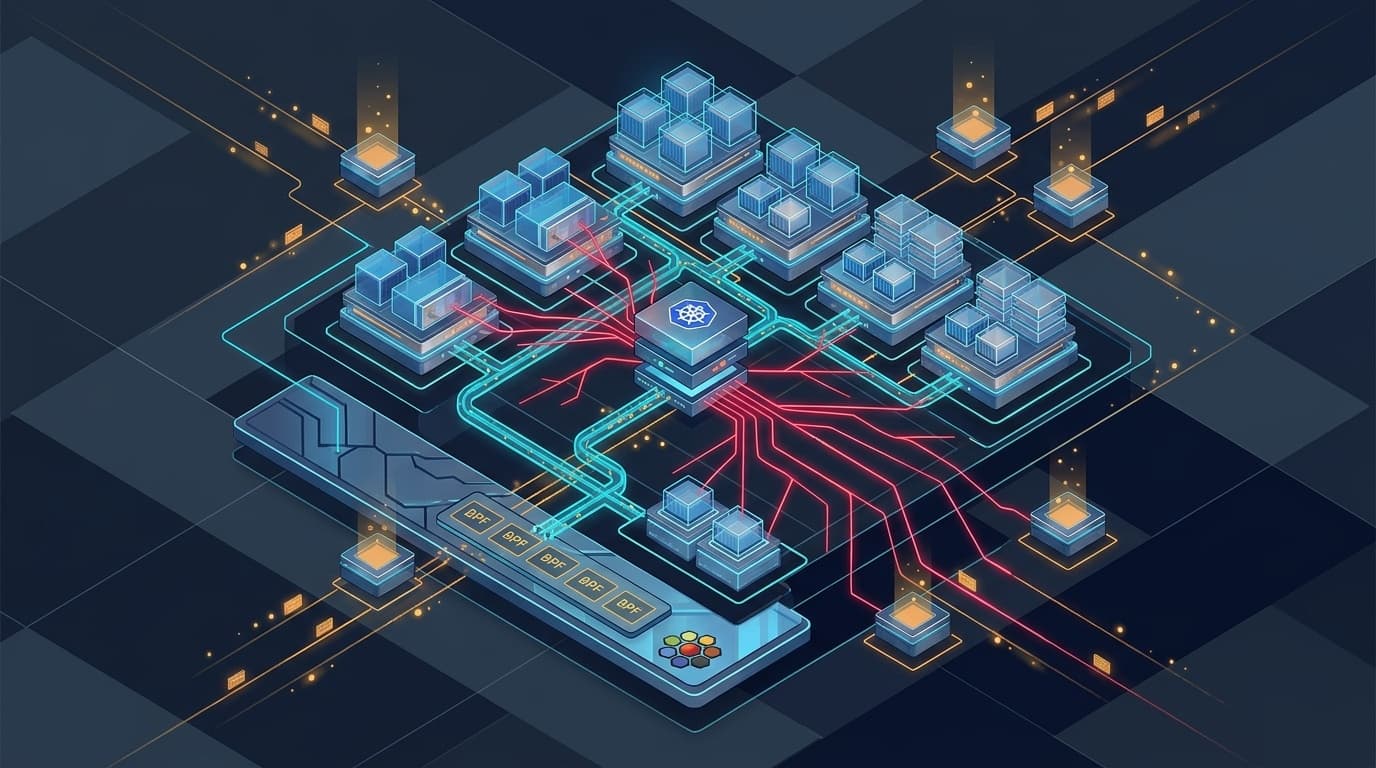
Amazon Web Services has introduced GetScopedCredentials, a new application programming interface (API) within AWS Security Token Service (AWS STS) designed to allow workloads to programmatically narrow the effective privileges of existing IAM sessions. The capability directly addresses security architectures required by autonomous AI agents, multi-stage automation pipelines, and dynamic micro-workflows that execute on behalf of a parent identity without requiring its full access privileges.
The Identity Dilemma in Autonomous Agent Architectures
Modern cloud environments increasingly rely on autonomous software agents and specialized sub-agents designed to conduct sequential, open-ended tasks such as code analysis, cloud resource querying, data transformation, and incident response orchestration. Traditionally, assigning least-privilege credentials to dynamic sub-tasks within AWS environments presented operational trade-offs.
Previously, engineering teams executing multi-agent frameworks had limited options when provisioning short-lived access for subordinate processes:
- Session Reuse: Passing the parent agent's ambient IAM role credentials to subordinate tasks or tools, violating least-privilege principles by giving sub-agents permission to access data stores, API endpoints, and configuration parameters outside their narrow assignment.
- Repeated Role Assumption: Requiring parent identities to call
sts:AssumeRolefor distinct intermediate IAM roles tailored to each sub-task, requiring complex IAM trust policies, cross-role assumption permissions, and pre-defined role sprawl. - Federation Complexities: Leveraging session policies via
sts:AssumeRoleor federation APIs, which can trigger additional permission boundaries and administrative policy management overhead.
The introduction of GetScopedCredentials establishes a native, programmatic mechanism to restrict the boundary of an active session directly at runtime, enabling parent agents to carve out bounded, temporary credentials for delegated workers.
Technical Mechanics of GetScopedCredentials
The GetScopedCredentials API operates as an in-session permission reduction mechanism. Rather than stepping into a completely new IAM role identity or traversing cross-account trust boundaries, the calling identity derives down-scoped temporary credentials from its own active session.
Key operational characteristics of the new STS API include:
- Runtime Policy Intersection: The effective permissions granted to the derived temporary credentials represent an intersection between the parent session's existing effective permissions and the inline session policy provided during the
GetScopedCredentialscall. A delegated sub-agent cannot gain any privileges that the parent session does not already possess. - No Privilege Escalation: Down-scoped credentials cannot bypass the original identity's Service Control Policies (SCPs), permission boundaries, or identity-based policy statements. The operation is strictly monotonic in reducing privilege scope.
- Ephemeral Lifetime: Temporary access keys, secret keys, and session tokens generated by the call carry bounded validity periods, reducing the exposure window if subordinate tool execution environments or sandbox instances are intercepted.
Permission Evaluation Matrix
| Evaluation Layer | Parent Session State | Scoped Child Credential Result |
|---|---|---|
| Organization SCPs | Must explicitly permit actions | Inherited; denies override all scoped allowances |
| IAM Permissions Boundary | Must explicitly permit actions | Inherited; cannot exceed boundary ceilings |
| Parent Identity Policy | Defines baseline allowable actions | Serves as upper limit for all sub-agent operations |
| GetScopedCredentials Policy | Supplied at invocation time | Intersects with parent policy to define exact sub-agent boundary |
Securing Multi-Agent and Tool-Calling Pipelines
Autonomous agent frameworks, including architectures where an orchestrator breaks down high-level instructions and delegates sub-tasks to dynamic executors, are prime beneficiaries of runtime privilege reduction. When an agent invokes external tools, plugins, or isolated compute sandboxes, ambient credentials have historically posed serious lateral movement risks.
If an agent experiences prompt injection or logic manipulation while evaluating untrusted external data, any AWS API actions initiated by the compromised agent are constrained to the permissions explicitly granted to its current session. By enforcing GetScopedCredentials prior to invoking external tools:
- A sub-agent assigned to inspect an Amazon S3 log bucket can receive temporary credentials limited exclusively to
s3:GetObjecton that specific bucket prefix, preventing any access to adjacent database clusters, secrets, or cloud control-plane settings. - A monitoring sub-agent dispatched to pull Amazon CloudWatch metrics cannot execute destructive infrastructure updates, even if its parent process has administrative oversight across the broader deployment.
Affected Deployments and Architecture Recommendations
Organizations building, deploying, or operating automated cloud workflows should evaluate where long-running or broad ambient credentials are shared across decoupled workers. Specifically, review is warranted for:
- Generative AI & Agentic Systems: Workloads running frameworks where dynamic planner agents invoke tool-use functions requiring access to AWS services.
- CI/CD and Automation Pipelines: Orchestration jobs that execute third-party scripts or untrusted build artifacts within containerized environments.
- Multi-Tenant Application Workflows: Backend tasks where a shared service worker processes jobs on behalf of distinct tenant boundaries and needs strict, dynamic data isolation.
Practical Implementation and Response Guidance
Security engineering and cloud infrastructure teams should take the following steps to evaluate and integrate the new STS API:
- Audit Agent Credential Flow: Map identity flows in existing AI agent frameworks to determine whether sub-agents, tool plugins, or sandboxes currently share broad parent IAM role credentials.
- Update SDK Dependencies: Ensure that runtime environments, containers, and deployment microservices utilize recent versions of the AWS SDK that include definitions for the
GetScopedCredentialsAPI call. - Configure Caller IAM Policies: Verify that IAM roles assigned to orchestrators and parent systems include explicit authorization to invoke
sts:GetScopedCredentialsin their identity-based policies. - Define Template Session Policies: Develop standardized, minimal JSON session policies that parent orchestrators can dynamically pass when initiating sub-tasks, ensuring least-privilege scoping is enforced by default.
- Monitor CloudTrail Telemetry: Ingest and review AWS CloudTrail event logs for
GetScopedCredentialsinvocations to validate session lifetimes, calling identities, and the structural integrity of passed session policies.
Known Parameters and Operational Considerations
While the core API functionality facilitates on-demand privilege restriction, specific configuration ceilings—such as maximum duration limits for derived sessions, exact token string sizes, and potential regional service endpoint variations—should be verified against the official AWS Security Advisory Portal and technical documentation. Cloud security teams should test policy intersection behaviors within non-production staging environments prior to migrating mission-critical autonomous pipelines.