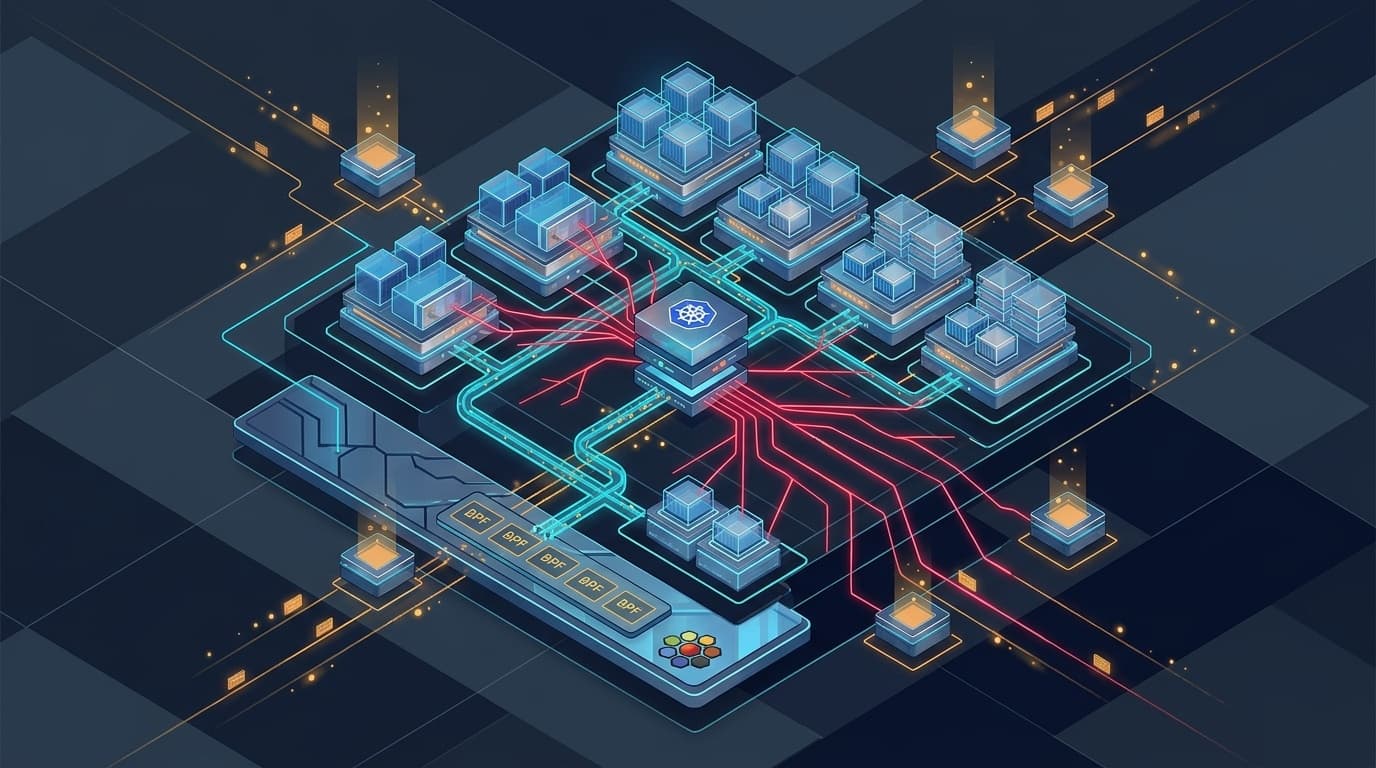
Enforcing Least Privilege in Agentic Workloads
Amazon Web Services has introduced GetScopedCredentials, a dedicated API action within the AWS Security Token Service (AWS STS) engineered to restrict and attenuate the authority of active temporary credential sessions. The capability addresses an emerging architectural challenge across enterprise cloud environments: runtime permission creep in multi-agent artificial intelligence pipelines and automated task orchestration systems.
As organizations deploy autonomous AI agents and hierarchical sub-agents, orchestrators commonly initiate workloads using an assumed IAM role. Historically, propagating that initial session to spawned child processes or sub-agents risked granting downstream tasks excessive privileges across AWS infrastructure. With GetScopedCredentials, engineers and system architectures can derive constrained, short-lived security tokens directly from existing active sessions, ensuring each operational sub-agent retains strictly the authorizations necessary to complete its discrete assignment.
Technical Architecture: Session Downscoping Mechanics
The core objective of GetScopedCredentials is deterministic permission attenuation. In standard STS operations, credentials generated through operations such as AssumeRole, AssumeRoleWithSAML, or AssumeRoleWithWebIdentity inherit the full permission envelope defined by the target IAM identity, constrained only by session policies applied at the moment of initial assumption.
When an autonomous workflow splits into specialized sub-tasks—such as an analysis agent invoking a data retrieval utility alongside a code evaluation runtime—passing the primary execution token exposes ambient resources to broad operational scopes. GetScopedCredentials alters this dynamic by accepting downscoping policies passed programmatically at the point of delegation.
Key Mechanics of the GetScopedCredentials API
- Parent Session Dependency: The call must be executed from an already authenticated temporary credential session; it cannot synthesize permissions out of thin air or exceed the capabilities granted to the calling token.
- Strict Intersection: The effective authority of the generated scoped session is the strict mathematical intersection of the calling session's permissions and the downscoping policy supplied in the request. If the parent session lacks an authorization, specifying it in the child policy yields no access.
- Temporal Bounding: The resulting scoped credentials receive independent expiration bounds, allowing orchestrators to establish fine-grained operational windows suited for ephemeral sub-agent execution.
- Contextual Isolation: Sub-agents execute under isolated cryptographic context, mitigating the blast radius if an individual tool, code interpreter, or external integration within an agent pipeline encounters unexpected input or operational failures.
Comparative Workflow Analysis
Before the release of dedicated session-scoping operations, architects frequently relied on complex workarounds to enforce least privilege between interconnected software components. The table below outlines operational characteristics across common temporary credential mechanisms in AWS STS.
| STS API Operation | Calling Identity Required | Primary Operational Purpose | Permission Boundary Model |
|---|---|---|---|
AssumeRole | IAM User, Role, or Authenticated Identity | Cross-account or privilege escalation delegation | Target role policy bounded by optional session policy |
AssumeRoleWithWebIdentity | OIDC/OAuth Federation Provider | Workload identity federation (e.g., EKS, GitHub Actions) | Target role trust policy bounded by session policy |
GetSessionToken | Root or IAM User Long-Term Keys | MFA-protected temporary credential acquisition | Inherits full permissions of the calling IAM identity |
GetScopedCredentials | Existing Active Temporary Session | In-flight permission reduction for agents and sub-tasks | Intersection of parent session and downstream restriction policy |
Implications for Autonomous Agents and Delegated Runtimes
Autonomous AI systems represent a departure from deterministic microservices. Modern agent architectures typically feature a supervisory model coordinating several specialized workers. For example, a supervisory agent may hold wide read-and-write permissions across analytical infrastructure to intake telemetry, schedule workflows, and publish summaries.
However, subordinate workers spawned by that orchestrator do not require uniform infrastructure access:
- A documentation summarization sub-agent requires read-only access to a specific Amazon S3 prefix containing raw logs.
- An automated diagnostic sub-agent may only require permission to invoke targeted
Describe*APIs across compute instances without modifying security groups or terminating resources. - A reporting module might only require permission to push structured payloads into an Amazon SQS queue or write an object to a sandboxed bucket.
By programmatically invoking GetScopedCredentials prior to delegating work to subordinate modules, the supervisor ensures that even if an execution path exhibits unintended behavior or parses malformed untrusted prompts, the ambient environment remains insulated. The child token cannot pivot to access broader resources held by the primary supervisor.
Implementation Considerations and Defensive Response
Enterprise cloud security teams, platform engineers, and developers maintaining autonomous agent runtimes should review their current credential issuance pipelines to incorporate downscoping controls.
Recommended Implementation Actions
- Audit Multi-Stage Task Frameworks: Identify applications where an initial assumed role distributes identical credential bundles across multiple asynchronous workers, threads, or autonomous agents.
- Implement Dynamic Policy Synthesis: Configure orchestration logic to generate minimal inline policies matching the exact boundaries of child jobs prior to invoking
GetScopedCredentials. - Monitor AWS CloudTrail Telemetry: Update operational monitoring baselines to track
GetScopedCredentialsevents in AWS CloudTrail logs. Ingest the associated event records to verify that autonomous pipelines execute within expected scoping constraints and adhere to structural least privilege standards. - Establish Session Duration Limits: Ensure that downscoped sessions utilize minimal valid durations corresponding to the expected execution lifecycle of the underlying sub-task.
Remaining Operational Considerations
While GetScopedCredentials provides a structural control mechanism for permission bounding, security teams must recognize that access enforcement remains fundamentally dependent on the quality of the downscoping policy supplied during invocation. If an orchestrator supplies an excessively broad policy, the resulting credentials will reflect that exposure up to the limit of the parent session.
Furthermore, cloud governance teams must establish operational patterns for managing CloudTrail event volumes as highly active multi-agent platforms scale the frequency of runtime token derivation. Integrating automated validation within continuous integration pipelines will help ensure that policy templates passed to GetScopedCredentials maintain strict, minimal access footprints.