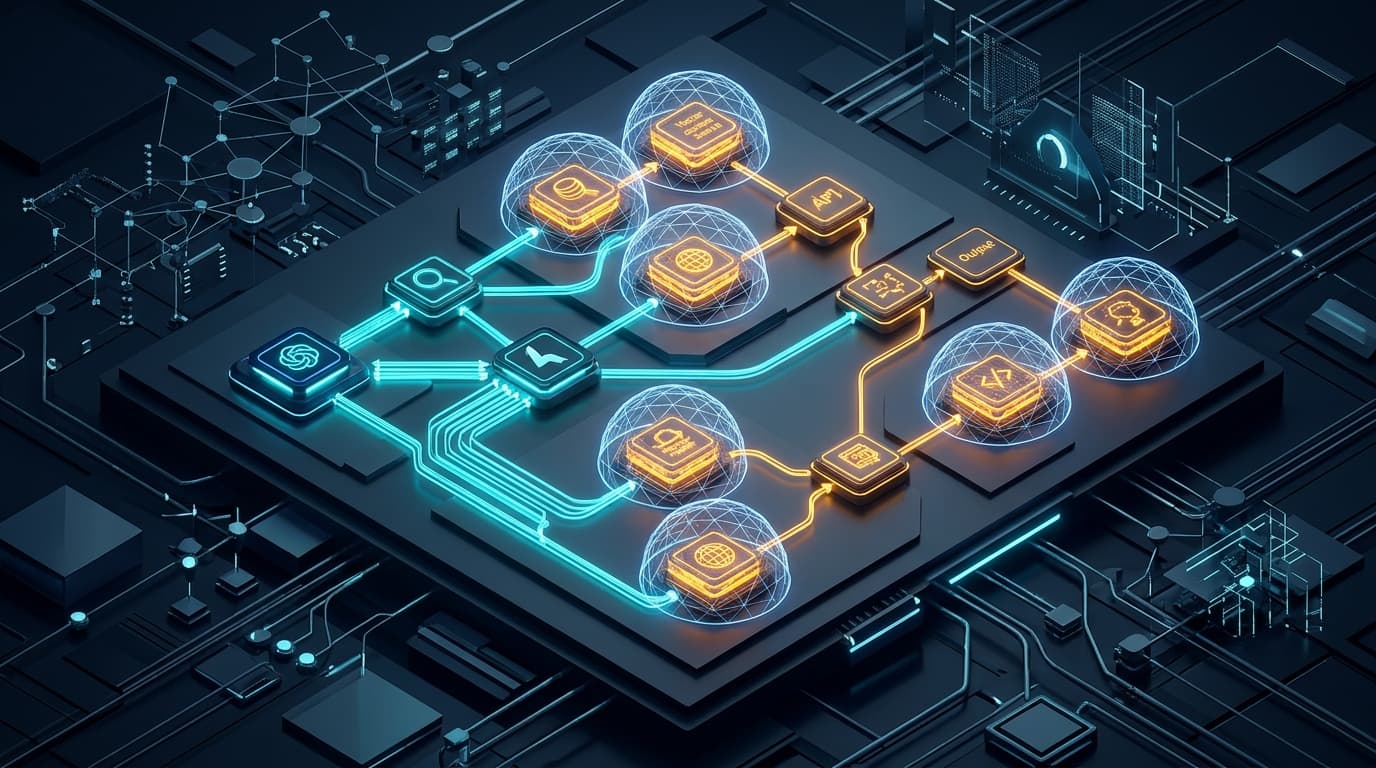
The rapid integration of autonomous artificial intelligence agents into core enterprise architectures has exposed a structural security challenge: the emergence of an uncontrolled shared responsibility gap. As autonomous agents are granted cross-platform operational authority to execute multi-step workflows, retrieve sensitive data, and trigger external API actions, they frequently transcend the boundary controls established by individual platform providers. In environments where an autonomous agent initiates processes in one cloud environment, queries data stored in another, and commits updates inside a third software-as-a-service tenant, traditional demarcation lines governing who secures the transaction break down.
The Cross-Platform Visibility Breakdown
Traditional cloud computing operates under established shared responsibility models where the cloud service provider safeguards the underlying host, storage, and control plane infrastructure, while the enterprise customer assumes responsibility for securing identities, access policies, operating systems, and application configurations. However, autonomous AI agents function dynamically across disparate boundaries, creating severe structural friction.
When an agent operates across multiple services, no individual platform vendor maintains comprehensive end-to-end visibility into the agent's full operational lifecycle. Cloud providers monitor API interactions hitting their own gateway endpoints, yet they remain fundamentally unaware of the contextual orchestration occurring outside their infrastructure. Conversely, software providers that host agentic automation orchestrators oversee prompt workflows and action chaining, but lack deep behavioral telemetry regarding down-funnel enterprise cloud environments. This structural partition leaves security operations centers with disjointed audit trails, obfuscated provenance, and blind spots regarding where accountability lies during unintended system mutations or operational failures.
Identity, Permission Creep, and Autonomous Tokens
At the center of this architectural friction is the management of non-human identities. To perform complex operational tasks without manual human intervention, AI agents are frequently provisioned with broad service identities, static service principal keys, and expansive API tokens. The resulting delegation presents significant technical exposures:
- Non-Human Identity Governance Deficits: Autonomous agents often function under static OAuth credentials or prolonged API tokens, allowing them to traverse enterprise architectures without periodic re-authentication or session expiration checks.
- Multi-Hop Permission Accumulation: To guarantee uninterrupted autonomous execution across varied tools, administrators routinely grant agents sweeping read, write, and execute permissions across multiple services, leading to chronic privilege accumulation.
- Broken Lineage and Traceability: When an autonomous system executes a destructive or out-of-policy command inside an infrastructure tenant, audit logs typically record the identity of the service principal rather than the intermediate autonomous decision sequence that triggered the event.
Because each vendor platform only evaluates identity permissions relative to its own resource boundaries, the holistic blast radius of an agent’s combined cross-service privileges remains largely invisible to enterprise administrators.
Cross-Domain Operational Exposures
To understand the breakdown of traditional controls across multi-service deployments, security architects must examine how operational responsibilities diverge when autonomous workflows span varied administrative zones:
| Operational Layer | Platform Vendor Responsibility | AI Agent Orchestrator Responsibility | Enterprise Security Responsibility |
|---|---|---|---|
| Host & Infrastructure | Physical server, hypervisor, and native cloud network fabric security. | Runtime host execution and core model serving environments. | Network ingress/egress filtering and cross-tenant peering rules. |
| Authentication & Secrets | Local IAM authorization, local token validation, and API rate limiting. | Storage of linked enterprise credentials and integration secrets. | Credential lifecycle, rotation policies, and service principal least privilege. |
| Telemetry & Audit Logs | Native endpoint access logs and resource modification history. | Prompt execution logs and tool-calling execution history. | Unified log ingestion, behavioral analysis, and cross-platform SIEM correlation. |
| Execution Governance | Platform-level execution safety and quota enforcement. | Agent loop termination and tool parameter verification. | End-to-end blast radius scoping, change management, and human-in-the-loop gates. |
Practical Defensive Strategy and Identity Scoping
Until standardized cross-cloud delegation frameworks mature, organizations deploying autonomous AI agents must actively manage the operational gap by implementing centralized identity, governance, and containment boundaries.
1. Enforce Ephemeral, Least-Privilege Scoping
Organizations should eliminate long-lived, multi-service credentials assigned directly to autonomous workloads. Agentic systems should request short-lived, task-bounded credentials via token exchange mechanisms that dynamically restrict permissions to the precise duration and scope of an authorized execution.
2. Establish Centralized Agent Identity Repositories
Security teams must classify and track every autonomous agent as an independent non-human identity within the enterprise directory. Every agent instance must maintain clear structural ownership, designated business accountability, and explicit mapping to every third-party service interface it is permitted to query.
3. Aggregate Cross-Platform Telemetry
Because native platforms will not correlate agent actions across vendor divides, enterprise security operations must aggregate logs from orchestration layers, identity providers, and receiving cloud environments into a centralized security information and event management (SIEM) pipeline. Traceability IDs must be propagated through API headers across each service call to reconstruct entire execution chains.
4. Implement Out-of-Band Verification Gates
For high-impact operations—such as infrastructure provisioning, production database alterations, or sensitive directory adjustments—enterprises must enforce deterministic policy gates. Autonomous agents should not possess autonomous authorization to execute destructive mutations without external, verifiable approvals or policy checks.
Unresolved Questions and Future Governance
Despite defensive improvements, key structural and regulatory questions remain unresolved across multi-vendor AI ecosystems. Currently, there are no uniform industry standards dictating how SaaS vendors and infrastructure providers should securely communicate agent identity context or maintain continuous authorization across platform borders.
Furthermore, liability boundaries during complex operational outages remain ambiguous. When an autonomous agent causes systemic disruption through a series of individually compliant API calls across multiple cloud vendors, determining whether accountability falls on the model provider, the agent orchestrator, or the customer organization remains a complex legal and regulatory challenge. As autonomous deployments continue to scale, closing this accountability void will require coordinated security protocols and formalized cross-vendor governance frameworks.