The Emerging Identity and Visibility Vacuum Across Agentic Systems
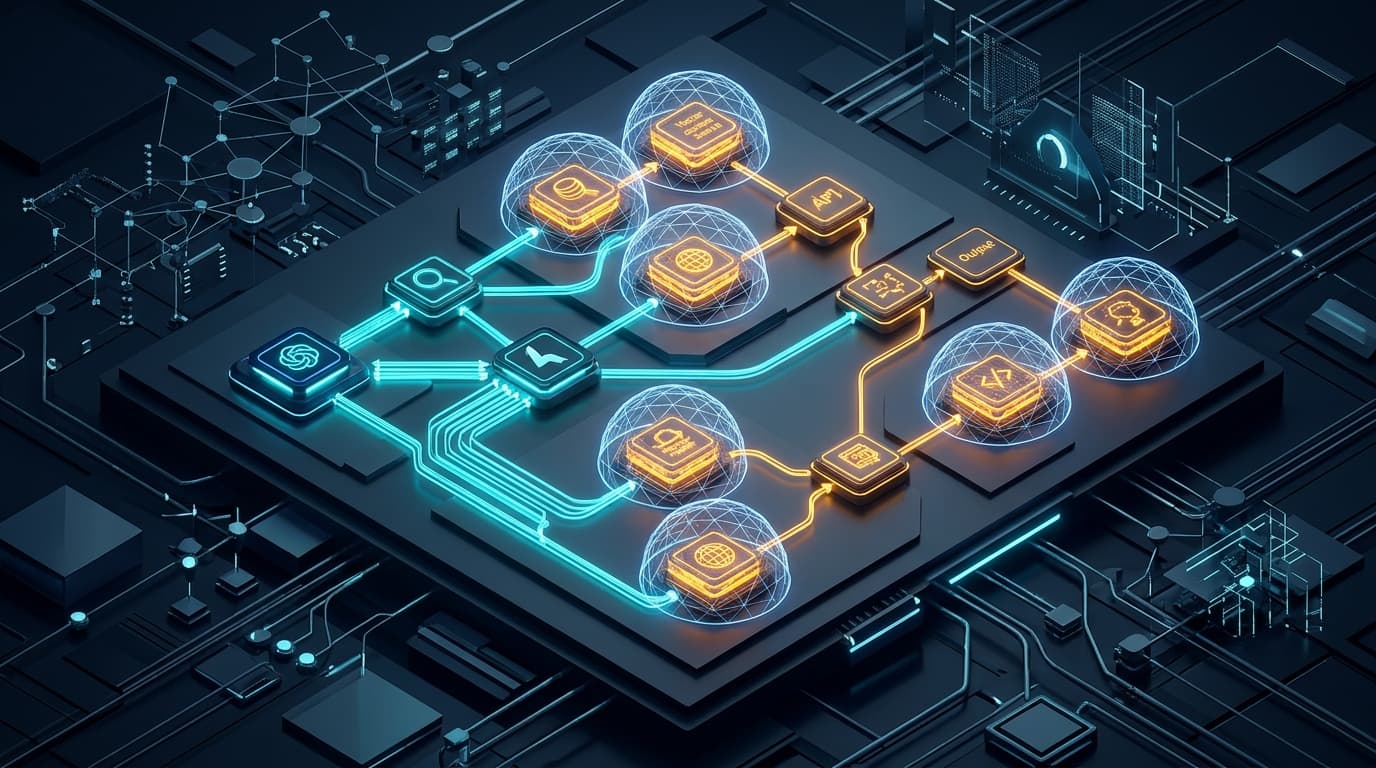
Enterprise adoption of autonomous artificial intelligence systems has transitioned rapidly from contained, single-prompt conversational tools to highly autonomous multi-platform agents capable of executing chained workflows. However, this architectural evolution has introduced a fundamental security challenge: a significant shared responsibility gap across modern enterprise environments. Because these autonomous entities operate dynamically across heterogeneous cloud software, microservices, and specialized internal environments, security teams are finding that no single software-as-a-service (SaaS) vendor, cloud infrastructure provider, or security monitor maintains end-to-end visibility or enforcement authority over their actions.
As specialized research into machine authentication and identity boundaries demonstrates, the fundamental breakdown occurs at the intersection of non-human identity management, permission delegation, and autonomous execution. Traditional cloud security architecture relies heavily on static, well-defined trust perimeters and discrete access controls assigned either to human employees or distinct system service accounts. Autonomous AI agents deliberately subvert these assumptions by design. They parse high-level operational goals, synthesize execution plans, dynamically interact with disparate third-party APIs, and invoke privileged operational tools across cloud environments without direct human oversight at each transition point.
When an agent operates simultaneously across identity providers, productivity suites, enterprise databases, and developer infrastructure, the operational context of any single transaction becomes fragmented. Individual target platforms observe only discrete API calls or token-authorized requests, completely isolated from the upstream reasoning process, origin trigger, or secondary tool calls that initiated the activity.
Dissecting the Shared Responsibility Deficit
The core dilemma mirrors the classic cloud computing shared responsibility model, but with significantly heightened opacity and distributed liability. In traditional infrastructure-as-a-service (IaaS) and platform-as-a-service (PaaS) models, boundary lines between customer responsibilities and provider obligations are documented explicitly. Providers secure the physical hardware, hypervisors, and core platform code, while enterprises govern user identities, network firewalls, and application workloads.
With autonomous agent ecosystems, this demarcation breaks down entirely across three critical operational layers:
- The Platform Visibility Barrier: Cloud vendors and SaaS endpoints receive validly signed tokens or automated requests from the agent. To the downstream service, the access request appears structurally authentic, legitimate, and indistinguishable from normal programmatic automation. The recipient vendor has no telemetry into the multi-step prompt chains, agent memory state, or external context that produced the instruction.
- The Non-Human Identity Governance Gap: Enterprise identity and access management (IAM) frameworks are rarely calibrated to track the high-frequency privilege reassignment required by dynamic agents. When an agent requires ephemeral elevated permissions to execute a complex multi-stage remediation or data synthesis task, traditional identity governance pipelines fail to register the blast radius across independent services.
- The Distributed Audit Void: When an anomalous event, unintended modification, or unauthorized exfiltration occurs, security incident responders must reconstruct forensic timelines across multiple disconnected vendor logs. Because each platform captures only a narrow, vendor-specific transaction slice, auditing end-to-end causality becomes virtually impossible.
Comparative Matrix: Traditional Service Accounts vs. Autonomous Agents
Understanding the root causes of the shared responsibility gap requires evaluating the systemic differences between traditional automated service credentials and modern agentic architectures.
| Operational Attribute | Legacy Service Account / Programmatic API | Autonomous AI Agent Architecture |
|---|---|---|
| Execution Path | Deterministic, hardcoded procedural logic | Dynamic, generative step-by-step reasoning |
| Identity Scope | Scoped to dedicated, static system resources | Fluidly delegated across multiple distinct SaaS and cloud platforms |
| Authorization Context | Pre-authorized fixed roles and explicit entitlements | Context-dependent tool calling and variable operational boundaries |
| Forensic Traceability | Predictable log entries tied to specific automation jobs | Dispersed, asynchronous multi-provider transactions with no unified thread ID |
| Failure Modes | Syntax errors, explicit API threshold rejections | Contextual misinterpretation, excessive permission exploitation, untracked tool misuse |
Technical Context and Enterprise Deployment Exposure
The friction between rapid AI enablement and enterprise risk management is most pronounced in organizations deploying agentic systems into mission-critical pipelines. Enterprise workloads currently integrating autonomous agents encompass code refactoring pipelines, customer service resolution engines, automated financial transaction reconciliations, and threat triage automation systems.
In typical enterprise configurations, security operations teams provide an agent framework with access tokens or machine credentials allowing access to communication channels, corporate ticketing systems, and cloud storage repositories. If the agentic system ingests untrusted inputs or encounters ambiguous execution parameters, it may issue subsequent commands across secondary services. Because no single orchestrator acts as a universal reference monitor, each receiving application processes the incoming instruction in isolation under the agent's broad ambient authority.
This architectural blind spot transforms permissions governance. Organizations frequently grant broad, persistent administrative or read-write access to ensure the agent does not stall during multi-part workflows. However, this directly violates the principle of least privilege, establishing persistent, highly privileged execution paths that bypass conventional segregation-of-duties controls.
Practical Engineering Responses and Governance Controls
Remediating the shared responsibility gap requires organizations to avoid treating AI agents as either monolithic applications or standard human users. Security leaders and infrastructure architects must establish dedicated controls tailored specifically to cross-platform agent execution:
1. Decouple and Ephemerally Scope Non-Human Identities
Enterprises must eliminate static, persistent API keys or broad long-lived OAuth grants allocated to agent orchestrators. Instead, deployments must implement just-in-time (JIT) short-lived machine tokens tied directly to bounded execution tasks. Credentials should automatically expire upon task completion, limiting the potential blast radius of an unauthorized or erratic execution sequence.
2. Implement Centralized Egress and Tool-Calling Proxies
Rather than permitting autonomous agents to query disparate SaaS APIs and cloud platforms directly, organizations should route agent tool executions through an internal mediation proxy. This proxy serves as an independent control plane, validating whether an intended API call conforms to organizational security policies, inspecting payload content, and enforcing deterministic rate limits before forwarding the traffic to target endpoints.
3. Standardize Deterministic Audit Telemetry
Incident response and engineering teams must inject unique operational trace identifiers into every agent execution thread. Propagating a cryptographically signed transaction header across all external API requests enables downstream ingestion monitors to correlate isolated platform events into a unified, chronologically verifiable audit trail.
4. Establish Human-in-the-Loop Interlocks for High-Impact Sinks
Critical operational sinks—such as modifying production database schemas, issuing financial transfers, updating DNS records, or permanently deleting cloud storage buckets—must enforce hard policy boundaries. These actions should require out-of-band human confirmation, ensuring that fully autonomous operations remain restricted to read operations and non-destructive intermediate stages.
Current Ambiguities and Remaining Unknowns
Despite increased industry attention on agent governance, several critical architectural questions remain unresolved. Standardized protocols for cross-vendor agent identity attestation do not yet exist, leaving individual enterprises to engineer proprietary proxy layers and custom policy enforcement points.
Furthermore, cloud service providers have yet to agree on a universal standard for transmitting semantic execution context alongside API credentials. Until identity protocols natively convey the provenance, intent, and parent workflow of an automated agent transaction, organizations will bear the primary operational burden of bridging cross-platform visibility gaps and securing decentralized machine workflows.