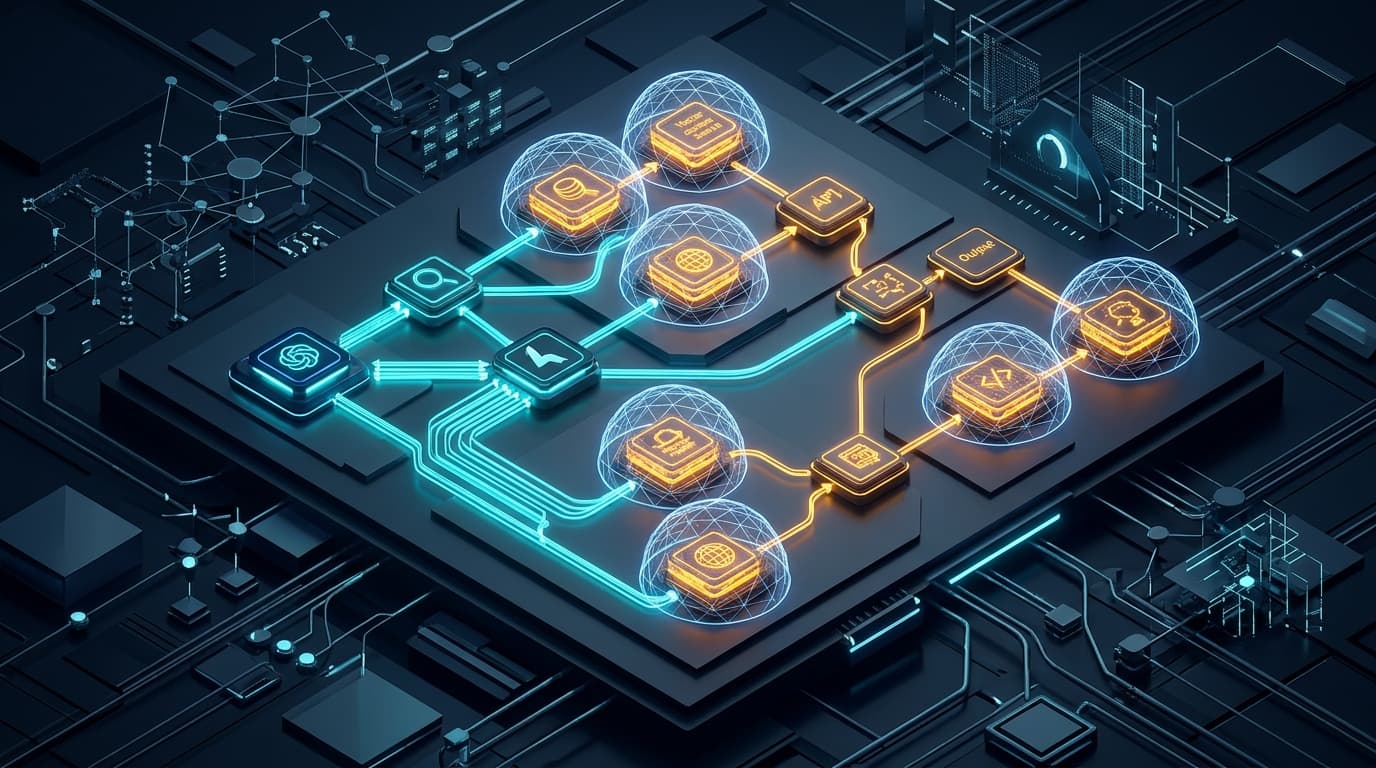
The rapid enterprise adoption of autonomous artificial intelligence agents has revealed a structural security challenge across modern IT architectures: a widening shared responsibility gap. As autonomous software agents are granted authority to query databases, execute API operations, orchestrate cloud infrastructure, and communicate across disparate software-as-a-service (SaaS) platforms, traditional boundary definitions between customer responsibility and cloud service provider accountability have become increasingly decoupled.
In standard cloud computing paradigms—spanning Infrastructure as a Service (IaaS), Platform as a Service (PaaS), and Software as a Service (SaaS)—the shared responsibility model delineates clear operational boundaries. Cloud hosts manage underlying hypervisors, hardware, and physical security, while tenant organizations secure identity configurations, application logic, and data governance. However, autonomous agents operate natively across multiple vendor boundaries simultaneously, executing chained transactions that obscure the visibility and control of each individual provider.
The Mechanics of Cross-Platform Shared Responsibility Failures
When an autonomous agent operates across an enterprise technology stack, it functions neither as a standard human operator nor as a conventional, static microservice. Instead, it behaves as an adaptive, persistent non-human identity capable of initiating workflows dynamically based on natural language inputs, contextual reasoning, and real-time operational feedback.
This dynamic execution profile introduces three distinct friction points within existing governance frameworks:
- Multi-Vendor Visibility Silos: When an agent receives an instruction in one productivity suite, parses relevant parameters in a cloud data warehouse, and commits changes inside an operational deployment pipeline, each individual vendor only inspects its isolated API call. None of the involved vendors possess end-to-end telemetry across the full transaction lifecycle.
- Fragmented Identity and Token Chaining: Autonomous agents frequently exchange short-lived tokens, impersonate service accounts, or leverage OAuth-scoped permissions across external connectors. If security posture validation is not centrally synchronized, a compromise or misconfiguration at one integration point cascades silently across trust boundaries.
- Ambiguity in Audit Accountability: In the event of unintended data modifications or anomalous execution flows, auditing pipelines often struggle to delineate whether the fault stems from model misinterpretation, downstream API provider policy defaults, or customer-defined tool privileges.
Identity, Permissions, and Machine Governance Breakdown
At the center of the shared responsibility dilemma is the management of non-human machine identities. Organizations routinely grant broad or open-ended privileges to autonomous agents to prevent workflow interruption during multi-step automated tasks. Because agents require broad data access to interpret instructions and synthesize context, they often accumulate standing administrative access across multiple unrelated domains.
Traditional access models rely on deterministic role-based access control (RBAC). In contrast, autonomous agent operations are non-deterministic: the exact API endpoints and parameters invoked by an agent vary based on inputs received at runtime. When access permissions are assigned statically to accommodate worst-case requirements, the agent becomes an over-privileged proxy operating outside standard behavioural baselines.
Furthermore, credential storage and delegation mechanisms are often fragmented across multiple environments. An agent might retrieve API keys from one secrets manager, interact with internal microservices via mutual TLS (mTLS), and authenticate to external third-party services using long-lived bearer tokens. If an organization lacks dedicated non-human identity management controls, monitoring these distributed authorizations becomes impractical.
Technical Comparison: Traditional vs. Agent-Centric Shared Responsibility
| Operational Dimension | Traditional Cloud Service Model | Cross-Platform Autonomous Agent Model |
|---|---|---|
| Identity Lifecycle | Static human accounts or deterministic service principals. | Dynamic, multi-hop non-human identities with broad operational scope. |
| Session Visibility | Contained within a single provider tenant log stream. | Distributed across disparate provider APIs without unified session linkage. |
| Authorization Scope | Explicit least-privilege RBAC tailored to specific functions. | Over-scoped access patterns frequently applied to accommodate variable tasks. |
| Incident Attribution | Clear demarcation between provider infrastructure and user actions. | Ambiguous liability spanning platform host, model layer, and connected SaaS. |
Enterprise Risk Mitigation and Defensive Engineering
To eliminate security blind spots arising from the shared responsibility gap, engineering teams and system architects must re-evaluate how agentic integrations are instrumented, authorized, and audited. Organizations cannot rely on individual platform vendors to protect assets beyond their direct perimeter.
1. Enforce Non-Human Identity Governance
Organizations must catalog every active autonomous agent, explicitly documenting its authorized workflows, data touchpoints, and functional dependencies. Machine identities should be tied to formal ownership records within enterprise identity and access management (IAM) systems. Unmonitored shadow agents or ad-hoc test automations must be identified and decommissioned.
2. Establish Granular Just-in-Time (JIT) Scoping
Avoid assigning standing broad access privileges to agent accounts. Instead, deploy programmatic identity brokering that provisions scoped, short-lived session tokens strictly for the duration of a discrete task. Workflows requiring write access or high-impact actions should mandate explicit user re-authorization or deterministic approval gates before execution.
3. Centralize Unified Telemetry and Session Correlation
Because downstream cloud providers do not correlate cross-platform agent transactions, security teams must capture and aggregate agent execution events at the orchestration level. By injecting unique session correlation IDs across downstream API requests, security operations centers (SOC) can reconstruct complete transaction graphs across disparate SaaS environments.
# Architectural pattern for structured agent telemetry tracking
{
  "agent_id": "agt-core-svc-0412",
  "session_correlation_id": "corr-9e12-4fbc-891a",
  "execution_origin": "internal-orchestration-engine",
  "invoked_endpoint": "https://api.external-provider.com/v1/records",
  "assigned_scope": ["records:read"],
  "token_validity_seconds": 300,
  "delegation_chain": ["user-initiator-77", "agent-proxy"]
}
4. Implement Egress and Action Guardrails
Deploy application-layer policy engines to monitor outbound API calls initiated by autonomous agents. Pre-validation checks should intercept and evaluate outbound payloads against predefined structural and semantic constraints to block unintended data exfiltration, mass record modifications, or out-of-scope system calls.
Strategic Outlook and Unresolved Complexities
As autonomous systems become standard components of enterprise productivity and operations, defining universal compliance and audit standards for non-human identities remains an evolving challenge. Currently, standard regulatory frameworks do not formally categorize liability when cross-platform automated agents generate unauthorized data exchanges or propagate misconfigurations across vendor boundaries.
Organizations must recognize that while cloud and SaaS vendors protect their underlying infrastructure, the governance, behavioral validation, and cross-platform access management of autonomous agents remain entirely the responsibility of the deploying enterprise.