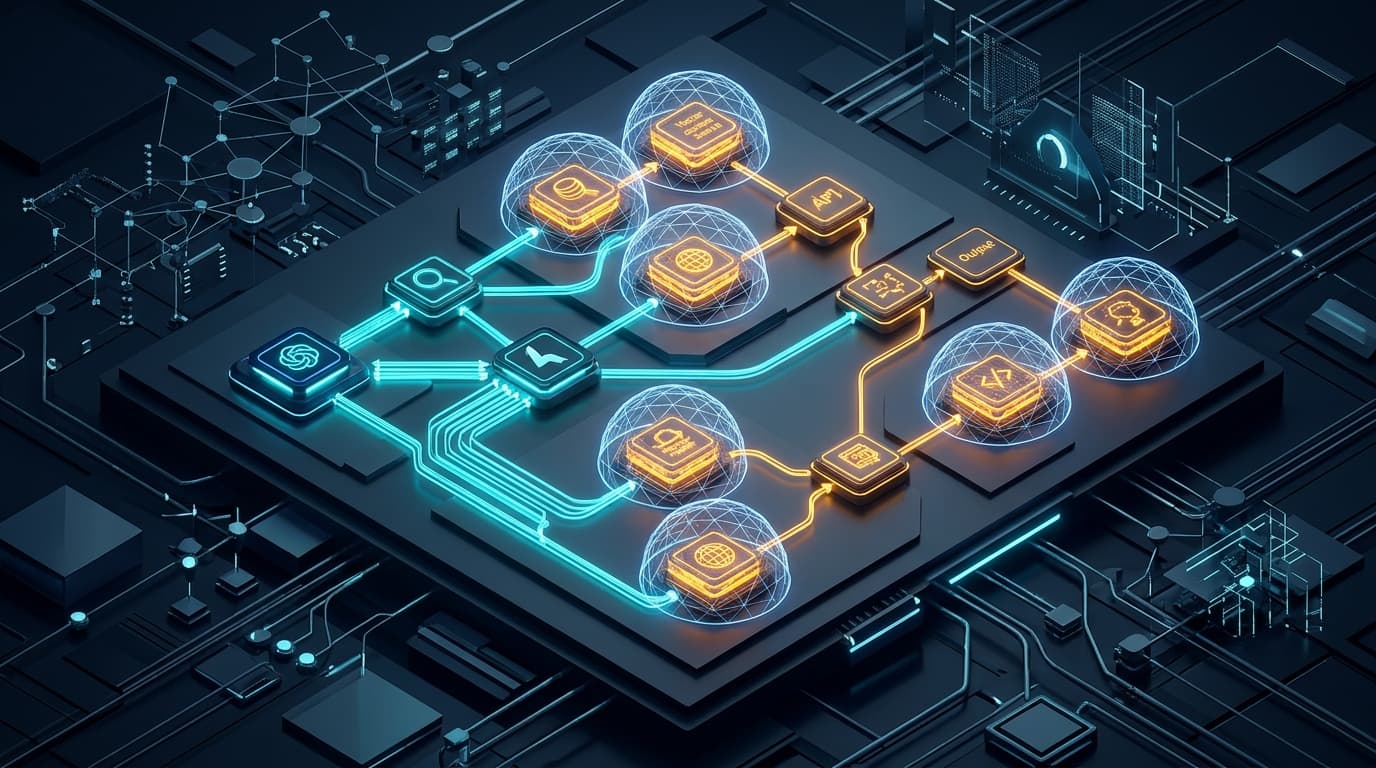
The Emergence of the Cross-Platform AI Agent Dilemma
As enterprise architectures increasingly operationalize autonomous artificial intelligence agents, security operations centers face an operational blindspot: multi-system agent autonomy. These software entities execute tasks across heterogeneous software-as-a-service (SaaS) environments, private cloud repositories, customer relationship management (CRM) systems, and developer pipelines. While conventional robotic process automation (RPA) runs inside tightly partitioned runtime boundaries with static service accounts, modern agentic systems operate dynamically, delegating tokens, chaining tool-calls, and querying fragmented corporate knowledge stores.
This distributed execution footprint has fragmented enterprise governance, creating a systemic shared responsibility dilemma. When an autonomous entity executes actions across multiple distinct vendor environments, no individual platform provider maintains complete administrative visibility or centralized telemetry over the sequence of actions. Consequently, enterprise security teams must reconcile identity attribution, access scoping, and operational accountability without the support of unified cross-provider audit planes.
Dissecting the Shared Responsibility Deficit
In classical cloud computing architectures, the shared responsibility model delineates boundaries between infrastructure providers, platform operators, and enterprise customers. Hyperscalers secure physical datacenters, virtualization hypervisors, and core networking fabrics; customers configure identity and access management (IAM), workload permissions, and data protection policies. SaaS integrations established predictable trust relationships through discrete API keys and single-tenant OAuth scopes.
Autonomous AI agents subvert these traditional demarcations. An individual agent typically operates on behalf of human users, system accounts, and disparate workflow orchestrators simultaneously. During cross-platform tasks, an agent might read data from an enterprise workspace, parse metadata via a third-party hosted language model, invoke database APIs hosted on an external cloud provider, and update administrative records in a separate ticketing system.
Cross-Vendor Visibility Breakdowns
The structural vulnerability within this architecture stems from observability gaps across vendor boundaries:
- Context Fragmentation: Host platforms log API executions independently. Vendor A records a legitimate read request; Vendor B logs an authorized data write; Vendor C observes a standard pipeline trigger. Neither host possesses the context to recognize that these separate events form a multi-stage data staging or policy evasion sequence.
- Identity Masking: When agents execute actions using high-privilege service principals or inherited user credentials, audit trails attribute operations either to the generic automation service or to the delegating human worker, masking the autonomous agent's intermediate logic.
- Transitive Trust Abuses: If an agent bridges a low-trust data input pipeline with an administrative execution endpoint, unvetted external instructions processed by the model can trigger privileged internal API calls without human authorization gates.
Technical Breakdown: Identity Delegation and Access Scoping
The primary control surface in agentic systems is access delegation. Because AI agents rely on autonomous tool-calling to resolve open-ended goals, traditional static least-privilege models are frequently misconfigured. Operators routinely provision expansive permissions across SaaS connectors to prevent runtime task execution failures.
When an agent maintains broad read and write access across separate application environments, any execution anomaly or misdirected context query affects all connected domains. Because these connections rely on decentralized OAuth tokens, bearer credentials, and API service keys stored across orchestration layers, revoking access in one service does not invalidate the active workflow state maintained in another.
Architectural Comparison Matrix
| Operational Dimension | Traditional Service Integrations | Autonomous Agentic Deployments |
|---|---|---|
| Execution Topology | Point-to-point, static API pipelines with fixed logic trees. | Dynamic, non-deterministic cross-platform tool invocation. |
| Identity Model | Single-tenant service principal or individual OAuth grant. | Chained delegation spanning user context and system agents. |
| Monitoring Boundary | Vendor-specific native audit logs and central SIEM ingestion. | Dispersed vendor logs lacking end-to-end trace correlation. |
| Access Posture | Pre-declared, least-privilege endpoints and schemas. | Broadly provisioned tool definitions to support dynamic workflows. |
Affected Deployments and Operational Vulnerabilities
The operational risks associated with multi-platform agent execution primarily affect enterprise environments that permit programmatic agent orchestration across unlinked platforms:
- Enterprise Collaboration and SaaS Connectors: Workspaces integrating automated assistants capable of simultaneously reading internal communications, updating ticketing repositories, and interacting with external developer platforms.
- Automated DevOps and CI/CD Integrations: Agents granted authorization to review code repositories, analyze build pipeline failures, and push automated commits or configuration updates across third-party hosting infrastructures.
- Customer Data and CRM Automation: Intelligent agents configured to parse unauthenticated incoming correspondence, extract customer records, and dynamically adjust client tiering or billing data across distinct financial and relational systems.
Defensive Playbook and Practical Enterprise Response
Mitigating the visibility and governance gap introduced by autonomous agents requires rearchitecting identity, telemetry aggregation, and operational boundaries across organizational deployments.
1. Implementing Agent Identity and Scoped Attribution
Enterprises must mandate explicit, unique machine identities for every deployed agent rather than permitting inherited human OAuth sessions or generic shared service accounts. Security architectures should implement ephemeral, short-lived tokens generated specifically for individual workflow executions, ensuring access ceases immediately upon task termination.
2. Centralized Multi-Platform Telemetry Correlation
Security teams should establish centralized logging architectures designed to capture end-to-end agent traces across all integrated endpoints. Audit pipelines must link external model prompt transactions with downstream API calls across all SaaS and cloud environments using unified trace identifiers (Trace IDs), enabling detection systems to evaluate the complete execution path.
3. Deterministic Egress and Tool-Invocation Guardrails
Deploy programmatic intermediary proxies between agent execution runtimes and external SaaS APIs. These policy enforcement points validate whether the target action, data payload, and destination endpoint align strictly with deterministic administrative policies, blocking anomalous cross-platform operations before they hit target vendor APIs.
4. Defining Strict Vendor Accountability Matrices
Enterprise procurement and security compliance teams must explicitly document vendor boundaries for AI services. Clear contractual and operational SLAs must establish how third-party platforms log agent invocations, whether vendor-side models retain processing context, and how cross-boundary security telemetry is shared during incident investigations.
Unresolved Governance Challenges
Significant architectural questions remain unresolved regarding multi-vendor agent monitoring. Currently, no universal open standard governs cryptographic trace propagation across disparate commercial SaaS applications, leaving enterprises to develop custom logging abstractions. Furthermore, the industry lacks standardized cross-platform revocation protocols capable of instantaneously severing an agent's active sessions across diverse independent third-party ecosystems simultaneously. As agentic capabilities advance, closing the shared responsibility gap will necessitate cross-industry standardization across identity providers, SaaS platforms, and enterprise monitoring frameworks.