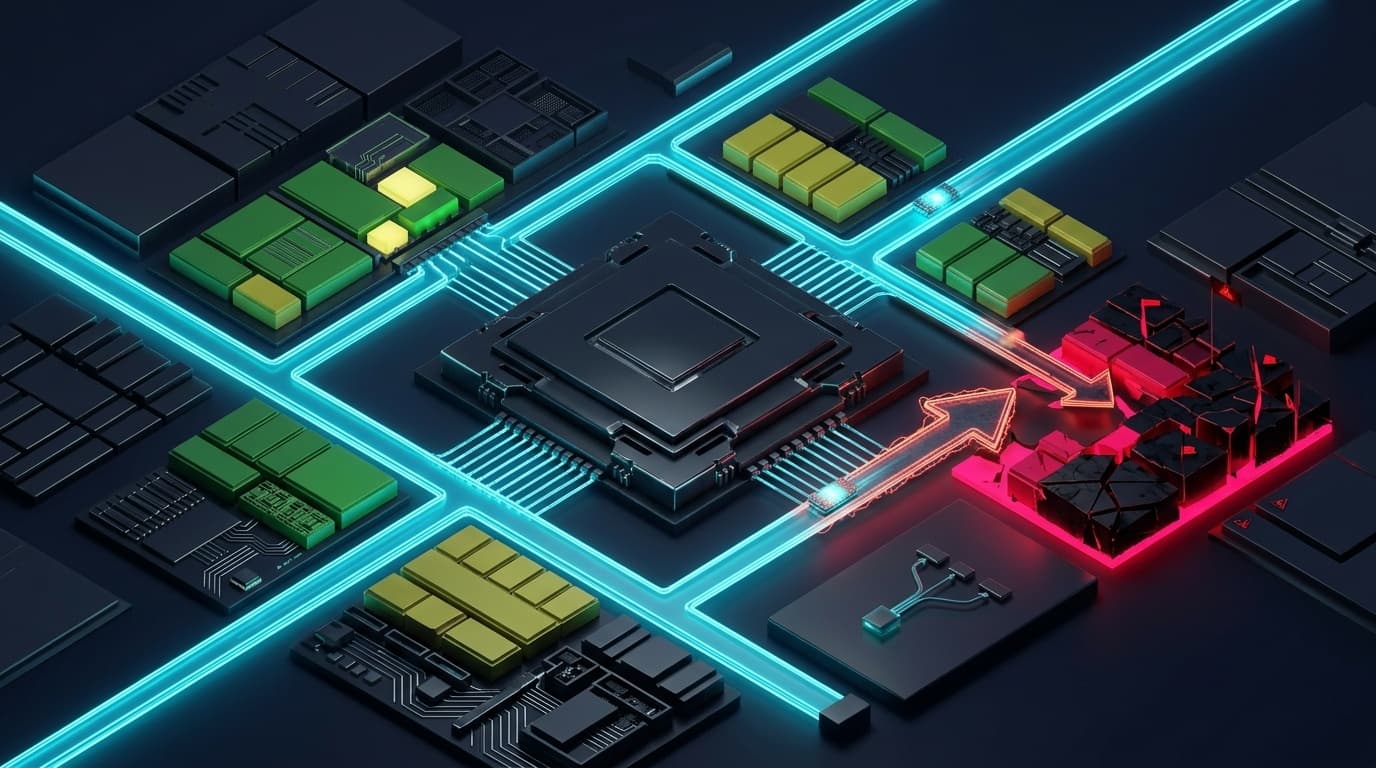
Ethereum co-founder Vitalik Buterin has issued a cautionary assessment regarding the security assumptions underpinning cryptocurrency hardware wallets, warning that evolving supply chain and physical attack methodologies necessitate an architectural transition toward verifiable silicon. As cryptographic asset custody has standardized around isolated hardware enclaves, the defensive surface has shifted from purely software-based exploit chains toward the physical provenance and integrity of microcontrollers and secure elements.
According to disclosures detailing emerging threat vectors, Buterin highlighted that future adversary operations will likely move beyond overt physical tampering and external interconnect manipulation. Instead, sophisticated adversaries could introduce lookalike microchips manufactured to appear identical to authentic vendor components while housing covert malicious circuitry designed to bypass isolation barriers or exfiltrate private key entropy.
The Emergence of Covert Silicon Substitution
For more than a decade, hardware wallets have served as the foundational defense against credential theft, operating on the premise that private keys never enter untrusted general-purpose operating system memory. Devices typically rely on commercial Secure Elements (SEs) or microcontroller units (MCUs) to generate entropy, sign transactions, and present visual confirmation interfaces to users.
However, Buterin noted that adversaries targeting high-value custody infrastructure are increasingly incentivized to target earlier phases of the hardware lifecycle. When attackers gain upstream supply chain access or intercept devices prior to end-user receipt, traditional tamper-evident packaging and superficial circuit board inspections offer limited protection against deceptive silicon substitution.
Mechanisms of Lookalike Microchips
A lookalike chip attack occurs when an authentic semiconductor package is swapped with an identically packaged component that mirrors the original pin layout, form factor, and standard command responses. The counterfeit silicon operates transparently during routine diagnostic checks, executing typical operations while concealing secondary execution logic.
Potential implementations of covert silicon manipulation include:
- Manipulated Pseudo-Random Number Generators (PRNG): The rogue microcontroller appears to produce high-entropy cryptographic seeds while secretly constraining output states to a predictable keyspace decipherable exclusively by the attacker.
- Side-Channel Leakage Gateways: Secondary microcode embedded in the chip alters power dissipation, electromagnetic emissions, or bus timing signals during cryptographic signing, enabling local or near-field exfiltration of transaction signatures.
- Firmware Signature Bypass: Hardware-level debug gates or backdoored secure boot logic that permits malicious, unsigned firmware blobs to execute without triggering host attestation warnings.
Limitations of Traditional Physical Tamper Detection
Historically, hardware security architectures have depended on physical countermeasures such as tamper-evident tape, epoxy potting, and acoustic or optical chassis intrusion sensors. While these mechanisms deter casual interference, they are fundamentally inadequate against factory-level component replacement or sophisticated re-soldering techniques executed with specialized surface-mount technology (SMT) rework equipment.
Once an adversarial component matches the physical package geometry and electrical pinout of the authentic microcontroller, visual optical microscopy and X-ray inspection fail to distinguish malicious gate-level routing from original semiconductor layouts without destructive decapping and electron microscopy.
| Inspection Layer | Traditional Hardware Wallet Verification | Proposed Verifiable Chip Architecture |
|---|---|---|
| Enclosure & Packaging | Tamper-evident seals, ultrasonic welding, epoxy encapsulation. | Secondary defense; not relied upon for fundamental trust guarantees. |
| Component Authenticity | Optical labeling, package markings, manufacturer lot numbers. | Cryptographic attestation with unique on-die keys and zero-knowledge layout proofs. |
| RNG / Key Generation | Firmware-level entropy collection from internal analog sources. | Verifiable randomness mixed with external entropy inputs signed across multiple circuits. |
| Attestation Model | Proprietary vendor root certificates loaded in closed-source Secure Elements. | Open-source gate-level designs verified via decentralized consensus or open registries. |
The Case for Verifiable Silicon and Open Architectures
To mitigate the systemic risk posed by lookalike chips, Buterin advocates an industry evolution toward verifiable hardware designs. Rather than treating microchips as black boxes certified solely through non-disclosure agreements and centralized foundry relationships, secure hardware ecosystems must develop mechanisms where the computational integrity of the underlying silicon can be mathematically or cryptographically substantiated.
Verifiable computing applied to hardware manufacturing explores several complementary approaches:
- Open-Source Instruction Set Architectures (ISAs): Leveraging transparent silicon architectures such as RISC-V, where gate-level designs can be publicly audited and compiled into silicon without proprietary logic insertions.
- Multi-Source Component Redundancy: Designing signing devices that do not rely on a single MCU, instead requiring multiple distinct chips produced by different foundries to independently sign transaction shards.
- Split-Key Generation Protocols: Combining entropy from the hardware wallet's internal generator with user-supplied and host-supplied entropy, ensuring that a compromised chip cannot unilaterally force a known cryptographic seed.
- Optical and Electrical Micro-Attestation: Standardized diagnostic routines capable of measuring sub-micron capacitance and propagation delays across internal registers to detect unaccounted transistor clusters.
Affected Deployments and Sector Impact
The concerns raised by Buterin extend across the digital asset industry, directly affecting entities responsible for safeguarding critical cryptographic keys:
- Institutional Custodians and Exchanges: Organizations managing cold storage vaults that rely on commercial hardware security modules (HSMs) and offline signing devices procured through third-party supply chains.
- Individual Asset Holders: Retail users procuring consumer hardware wallets through online marketplaces, retail distributors, or direct shipping lines vulnerable to targeted interdiction.
- Decentralized Infrastructure Validators: Proof-of-Stake node operators utilizing hardware authentication tokens to manage validator keys and withdrawal credentials.
Recommended Custodial Defenses and Practical Response
While industry standards for commercially viable verifiable silicon continue to mature, enterprise security teams and asset holders can implement immediate defense-in-depth measures to counter single-device supply chain threats:
1. Enforce Multi-Vendor, Multi-Signature Custody
Do not rely on a single hardware wallet or single vendor model to secure significant digital asset reserves. Multi-signature schemes (e.g., 2-of-3 or 3-of-5 configurations) should be constructed across devices manufactured by competing vendors utilizing distinct secure elements and microcontroller architectures. Even if a sophisticated adversary compromises the supply chain of one device family, the compromised lookalike chip cannot unilaterally authorize fund transfers.
2. Enforce Host and User Entropy Mixing (Dice Rolls)
When generating fresh mnemonic seed phrases, avoid relying solely on the device's internal random number generator. Utilize hardware wallets that support manual entropy injection via physical dice rolls or external entropy sources, mathematically preventing a backdoored pseudo-random number generator from dictating the derived keypairs.
3. Secure Supply Chain Procurement Protocols
Organizations should procure hardware devices directly from manufacturers rather than third-party re-sellers or secondary fulfillment networks. High-security environments should utilize blinded, decentralized shipping addresses to prevent adversaries from targeting shipments directed toward known high-net-worth individuals or institutional custody operations.
What Remains Unknown
While the theoretical viability of lookalike chip substitution is well recognized within hardware engineering and semiconductor intelligence fields, several critical factors remain unconfirmed in public disclosures:
- Specific manufacturing batches or existing consumer wallet models that have demonstrated active exploitation in the wild have not been identified.
- The precise economic thresholds and tooling costs required for threat groups to manufacture functional lookalike chips at low volumes remain closely guarded among specialized testing facilities.
- Standardized specifications for zero-knowledge silicon attestation and consumer-verifiable chip testing remain in research phases, with industry-wide commercial deployment timelines still undetermined.
As threats targeting hardware-isolated systems advance beyond software firmware injection toward raw physical fabrication channels, the cryptographic community faces a renewed imperative to extend zero-trust principles down to the microscopic gate architecture of secure silicon.