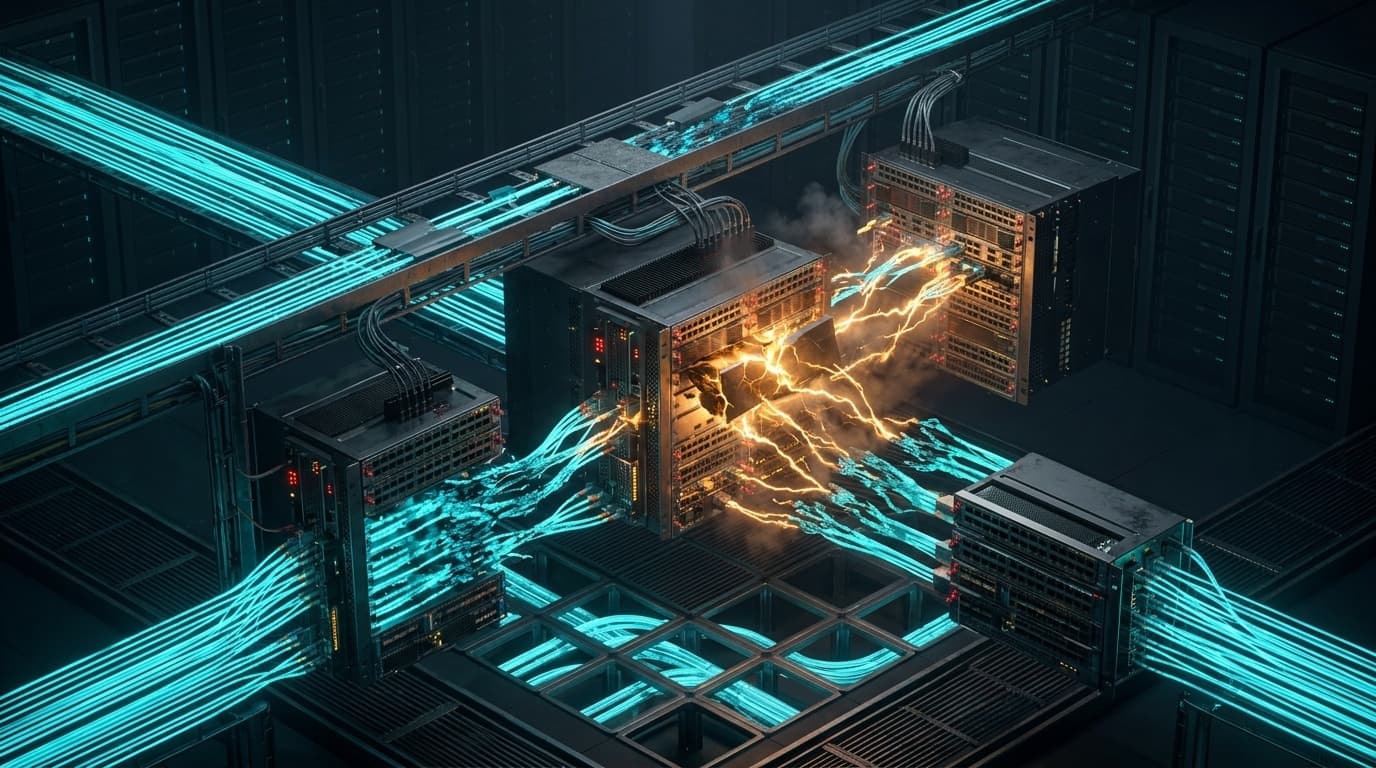
A cybersecurity breach has impacted the United States Air Force's enterprise cloud computing platform, Cloud One, representing a significant intrusion into defense cloud infrastructure. The incident follows a pattern of recent cyberattacks targeting core United States federal departments, including documented security events at the Federal Bureau of Investigation, Central Intelligence Agency, and the Department of the Treasury. Federal authorities and defense incident response teams have initiated containment actions across affected service boundaries to determine the depth of unauthorized access within central cloud instances.
Confirmed Facts and Scope of Incident
Official enterprise disclosures indicate that unauthorized external actors succeeded in compromising environments associated with the Air Force Core System & Services operating within Cloud One. The compromised architecture represents the military branch's central shared-services hosting ecosystem, engineered to deliver enterprise cloud management, identity services, data repository hosting, and application infrastructure across multicloud environments.
While initial discovery confirmed persistent illicit activity inside platform administrative boundaries, investigators have focused immediate containment procedures on isolating core system segments. The full timeline of initial access, persistence mechanisms, and potential operational disruptions across mission-critical systems remain subject to ongoing technical triage by federal defense authorities.
| Deployment Component | Observed Status | Operational Function | Mitigation Focus |
|---|---|---|---|
| Cloud One Core Computing Platform | Compromised | Enterprise multicloud infrastructure and hosting | Boundary re-authentication and credential revocation |
| US Air Core System & Services | Access Confirmed | Central administrative and operational shared services | Tenant workload isolation and telemetry capture |
| Inter-Agency Federal Boundaries | Elevated Risk | Cross-department communication and shared infrastructure | Zero trust policy verification and access auditing |
Technical Context and Architecture
Cloud One functions as a centralized hosting framework designed to modernize operational workloads by transitioning enterprise applications into standardized multicloud instances. Managed centrally to host Air Force and defense mission partner applications, the platform integrates compute instances, unified network peering, continuous deployment delivery chains, and centralized identity access management across commercial hosting providers.
Because the platform acts as an administrative hub for varied defense services, an intrusion into core management planes introduces severe operational risks. Attackers targeting central cloud tiers frequently seek to manipulate directory configurations, harvest elevated access credentials, bypass automated security monitoring controls, and move laterally across tenant boundary interfaces. The scale of Cloud One means that administrative compromise could yield avenues into shared infrastructure repositories unless workload-level zero trust protections successfully arrest post-exploitation exploration.
Affected Deployments and Inter-Agency Connections
The confirmed incident impacts the central infrastructure managing Air Force enterprise services, with specific exposure centered around common enterprise compute resources. Because Cloud One provisions cloud space for hundreds of mission applications, the perimeter encompasses varied classifications of technical workflows, support logistics, personnel databases, and operational coordination tools.
Crucially, this event does not stand in isolation. The intrusion into Air Force platform assets occurred in close chronological proximity to confirmed compromises across other high-profile federal agencies, specifically:
- The Department of the Treasury: Impacted by broader federal targeting, threatening sensitive economic policy information, executive communication channels, and fiscal management platforms.
- The Federal Bureau of Investigation (FBI): Exposed to recent cyber operations, underscoring concerted attempts to penetrate domestic investigative and operational datasets.
- The Central Intelligence Agency (CIA): Targeted within the same sequence of offensive campaigns, highlighting an aggressive focus on national security intelligence perimeters.
The convergence of intrusions across national security, intelligence, and fiscal leadership points to a coordinated campaign aimed at core United States federal computing platforms.
Practical Response and Incident Remediation
Enterprise cloud architects, incident response coordinators, and federal defense administrators have enacted structured remediation playbooks across affected hosting tiers. Practical mitigation procedures currently underway emphasize strict structural containment:
- Comprehensive Credential Invalidation: Global revocation and rotation of enterprise identity tokens, service principal keys, administrative API secrets, and root tenant credentials across all Cloud One instances.
- Tenant Segmentation and Network Isolation: Enforcing strict network security group rules, isolating affected virtual networks (VNets) and virtual private clouds (VPCs), and temporarily severing shared interconnects between core platform services and edge application environments.
- Audit Log and Telemetry Preservation: Exporting immutable control-plane audit logs, identity federation access traces, and storage access records to an isolated forensics environment for timeline reconstruction and compromise assessment.
- Privileged Access Enclave Lockdown: Restricting all administrative console access to hardened, internal bastions enforcing strict hardware-backed multi-factor authentication (MFA) and conditional location validation.
- Workload Integrity Verification: Conducting automated cryptographic hash checks and configuration baseline comparisons across all running containers, virtual machine images, and deployment pipelines.
Federal cybersecurity leadership recommends that defense contractors and interconnected civilian agency liaisons review access logs linked to centralized directory connectors to identify anomalous activity originating from centralized cloud service accounts.
What Remains Unknown
Significant operational questions remain unresolved as forensic triage continues across the Air Force's computing environment:
- Initial Vector of Compromise: Official disclosures have not confirmed whether access was gained through exploited zero-day software vulnerabilities, stolen administrative credentials, compromised third-party contractor accounts, or software supply-chain poisoning.
- Identity of the Threat Actor: Federal agencies have withheld attribution regarding whether the campaign represents foreign state-sponsored cyber espionage, an advanced persistent threat (APT) collective, or opportunistic cybercriminal activity.
- Extent of Data Exfiltration: Investigators have not disclosed whether unauthorized actors managed to copy, exfiltrate, or manipulate proprietary defense datasets, classified assets, or sensitive communications prior to containment.
- Dwell Time: The exact date of initial entry and the duration of unauthorized presence inside the Cloud One perimeter before discovery have not been verified publicly.
Federal defense cyber teams continue active eradication efforts within Cloud One instances while monitoring interconnected federal networks for signs of secondary exploitation.