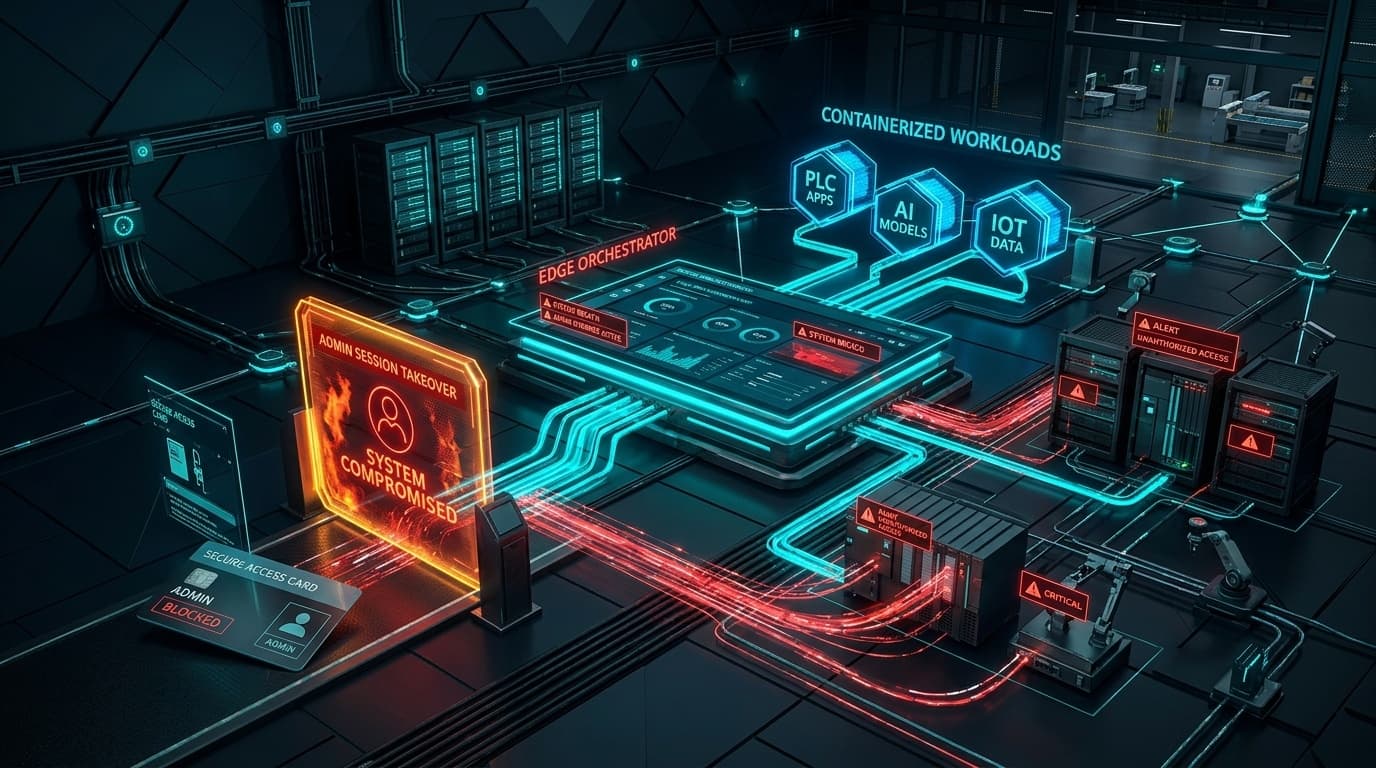
National cybersecurity authorities in Switzerland and Italy have issued an alert warning operators of critical national infrastructure about automated cyberattacks powered by autonomous artificial intelligence agents. The coordinated advisory highlights a shift in offensive operations, where threat actors deploy agentic AI frameworks to perform reconnaissance, identify vulnerabilities, and orchestrate attack workflows against essential industrial and operational infrastructure across both nations.
Emergence of Autonomous Agent-Driven Campaigns
According to the joint intelligence issued by Swiss and Italian cybersecurity agencies, the primary area of concern centers on offensive threat actors operationalizing autonomous multi-agent systems. Unlike conventional automated scripting or pre-programmed scanning tools, autonomous AI agents possess dynamic decision-making capabilities, allowing them to adjust tactical sequences based on real-time network feedback and environmental telemetry.
The advisory states that organizations across critical sectors—including energy, water supply, transportation, digital communications, and healthcare—are being specifically evaluated and probed by automated AI pipelines. Threat actors are utilizing these autonomous systems to handle operational tasks that traditionally required hands-on keyboard operators, including rapid asset fingerprinting, cross-protocol enumeration, and recursive discovery across public and enterprise-facing perimeters.
Technical Mechanics and Targeting Modalities
The joint assessment outlines how autonomous agentic architectures modify the speed and scale of network intrusions. Rather than relying entirely on manual intervention, offensive groups configure AI orchestrators capable of breaking down complex objectives into discrete, actionable sub-tasks. These components systematically probe target environments, assess service configurations, and adapt their interaction profiles dynamically.
Reconnaissance and Dynamic Surface Analysis
In standard automated scanning, intrusion detection systems (IDS) and security information and event management (SIEM) systems typically detect predictable, repetitive patterns across network signatures. Autonomous AI agents, however, can vary interaction timing, randomize connection origins, and modify packet parameters dynamically to avoid threshold-based network detection models. The agencies observe that these capabilities enable threat actors to maintain persistent, subtle reconnaissance against perimeter systems and industrial demilitarized zones without triggering standard volumetric alerts.
Vulnerability Chaining and Multi-Vector Execution
Beyond passive discovery, the advisory cautions that AI agents can evaluate complex asset interdependencies. By correlating discovered edge technologies with existing software configurations, autonomous frameworks attempt to chain multiple misconfigurations or secondary exposure vectors together. In hybrid enterprise environments that bridge enterprise IT networks and operational technology (OT) supervision systems, such automated correlation drastically compresses the reconnaissance-to-exploit window.
| Operational Metric | Traditional Automated Tooling | Autonomous AI Agent Frameworks |
|---|---|---|
| Reconnaissance Methodology | Static signature scanning, uniform probe cadences | Dynamic probing, adaptive evasion, variable intervals |
| Target Environment | Broad, indiscriminate IP range sweeps | Context-aware mapping of critical infrastructure targets |
| Chaining & Decision Making | Linear, deterministic rule sets | Recursive evaluation of network responses and asset relations |
| Operator Overhead | Requires manual analysis for multi-step pivots | Autonomous execution of intermediate objectives |
Affected Sectors and Deployment Considerations
The joint advisory warns that organizations operating essential services and critical supply infrastructure remain the primary focus of these campaigns. Deployments characterized by complex, heterogeneous software suites, remote management interfaces, and interdependent cloud and on-premises environments face significant operational risks.
Core Sector Deployments at Risk
- Energy and Utilities: Power generation facilities, grid distribution systems, and oil and gas management infrastructure maintaining internet-facing telemetry gateways.
- Water and Wastewater Facilities: Supervisory control systems featuring remote telemetry units and administrative portals accessible across external routing boundaries.
- Transportation and Logistics: Municipal transit networks, rail monitoring hubs, and logistics coordination platforms operating across distributed edge endpoints.
- Telecommunications and Data Routing: Core service providers managing public exchange points and backbone communication networks.
Actionable Defensive Playbook and Technical Mitigations
In response to the growing operationalization of autonomous AI targeting, cybersecurity authorities recommend immediate, defensive hardening actions. Because agentic workflows operate dynamically, network defenders must implement strict architectural controls and identity verification standards across all perimeter and internal network boundaries.
Architectural and Perimeter Hardening
- Enforce Strict Multi-Factor Authentication: Mandate phishing-resistant multi-factor authentication across every exposed management service, virtual private network (VPN) portal, and administrative endpoint.
- Eliminate Unnecessary External Exposure: Audit all external IPv4 and IPv6 assets to ensure operational control interfaces, databases, and development endpoints are completely removed from public internet access.
- Network Segmentation and Micro-Segmentation: Enforce strict firewall rules and perimeter gateways between corporate enterprise IT infrastructure and supervisory, industrial, or production zones.
- Strict Least Privilege Policy: Restrict service accounts, administrative groups, and machine-to-machine application programming interfaces (APIs) to the minimum access permissions required for operational continuity.
Telemetry, Logging, and Behavioral Analysis
- Centralized Logging: Aggregate audit logs from perimeter firewalls, load balancers, domain controllers, and cloud gateways into a centralized, tamper-resistant monitoring repository.
- Monitor for Anomalous Access Sequences: Configure alerts for unusual administrative API consumption, rapid cross-protocol connection attempts, and atypical out-of-hours reconnaissance queries.
- Implement Rate-Limiting and Behavioral Thresholds: Deploy behavioral endpoint detection tools capable of identifying non-standard execution chains and rapid credential validation attempts.
Confirmed Facts and Known Intelligence Gaps
To assist security engineers and incident response teams in distinguishing verified telemetry from speculative reporting, the current intelligence status is organized into confirmed agency findings and pending forensic determinations.
Confirmed Intelligence
- Swiss and Italian cybersecurity authorities have officially verified that automated attacks leveraging autonomous AI agents are actively focused on critical infrastructure targets.
- The campaigns utilize autonomous agent workflows capable of recursive discovery, adaptive reconnaissance, and automated workflow coordination.
- Multiple essential service sectors have received coordinated warnings regarding increased scanning and probing activities.
Current Intelligence Gaps
- Attribution: Authorities have not publicly identified specific threat actor groups, advanced persistent threat (APT) clusters, or state-sponsored entities responsible for orchestrating these automated campaigns.
- Exploit Tooling and Frameworks: The specific underlying machine learning models, open-source orchestration packages, or proprietary agent codebases employed by the attackers have not been disclosed by the agencies.
- Root-Cause Breach Confirmations: Official bulletins have not confirmed whether these reconnaissance and targeting phases have resulted in active physical disruptions or unauthorized lateral control inside operational networks.
Italian and Swiss cybersecurity agencies continue to analyze incoming telemetry from public-sector networks and critical operators. Organizations that identify indicators of autonomous, multi-vector reconnaissance against essential network assets are urged to preserve volatile log data and notify their national incident response authorities immediately.