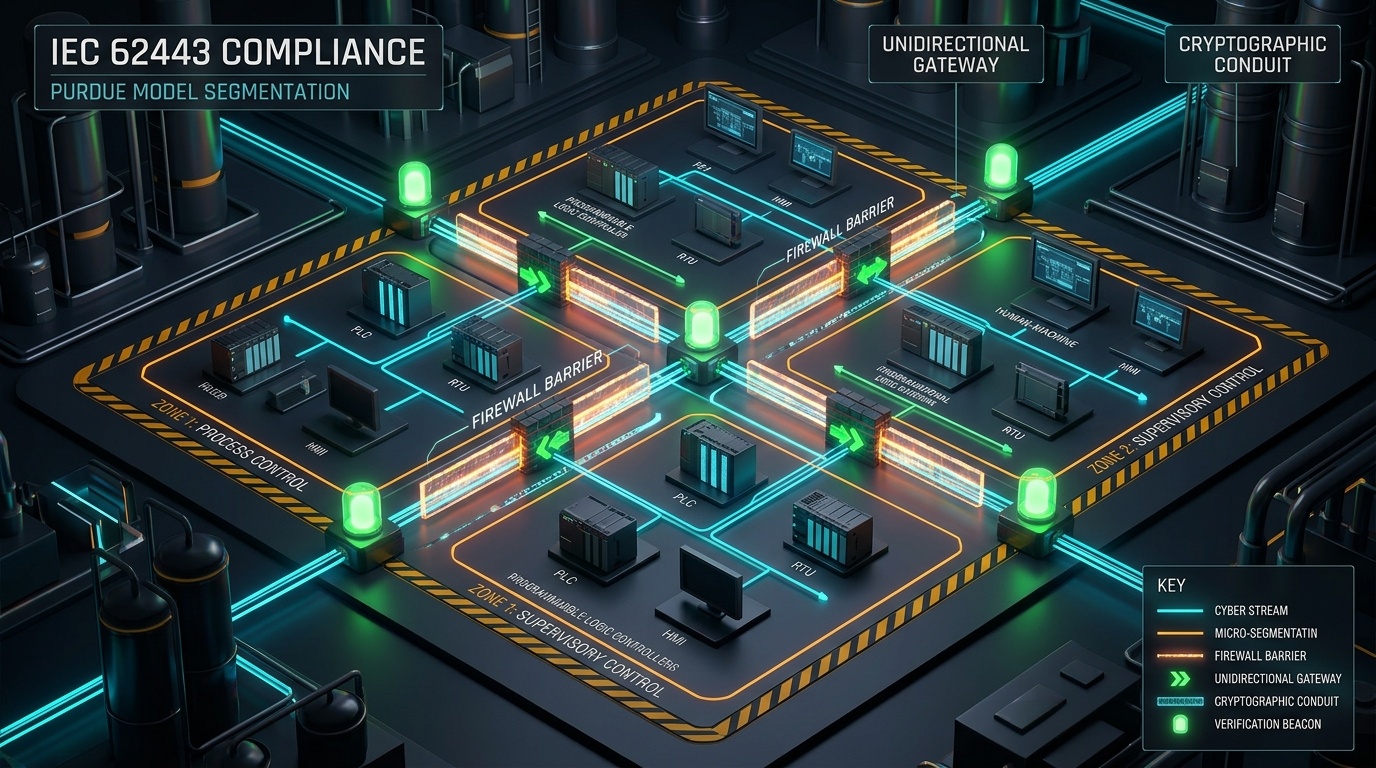
The Cybersecurity and Infrastructure Security Agency (CISA) has issued industrial advisory ICSA-26-279-01 detailing a critical denial-of-service vulnerability (CVE-2026-31940, CVSS 7.5) affecting Siemens SIMATIC S7-1500 and ET 200SP Programmable Logic Controllers (PLCs). The vulnerability permits unauthenticated network adversaries to force affected industrial automation CPUs into an unrecoverable DEFECT condition, halting physical manufacturing lines and energy distribution feeds.
Vulnerability Analysis: Unbounded State Exhaustion (CWE-400)
Siemens SIMATIC S7-1500 controllers manage time-critical industrial processes communicating via the proprietary S7comm-Plus protocol and standard ISO-on-TCP (RFC 1006) over TCP port 102. When an attacker dispatches a high-frequency sequence of malformed connection setup request packets containing inconsistent protocol version negotiation fields, the controller's internal communications coprocessor encounters an unhandled pointer exception:
// Anomalous ISO-on-TCP Connection Frame Pattern
[TPKT Header: Version 3, Length 0x001B] -> [COTP Connection Request]
                                               |
                                               +--> S7comm-Plus Setup Block: Inconsistent PDU Length
                                               +--> Fails Coprocessor State Allocation -> Fatal CPU DEFECT State
Impact on Industrial Automation Continuity
When the CPU transitions to the DEFECT state, all automated physical outputs transition to their pre-configured safe states or de-energize completely. Crucially, the controller cannot be restored to RUN mode via remote TIA Portal engineering commands; recovery requires maintenance personnel to physically visit the substation or factory floor to perform a manual hardware power-cycle.
Defensive Remediation Checklist
- Apply Siemens Firmware Update: Upgrade affected SIMATIC S7-1500 CPUs to firmware v3.1.2 or later.
- Restrict ISO-on-TCP Port 102: Implement perimeter access control lists (ACLs) blocking external TCP port 102 traffic, restricting access strictly to authenticated engineering stations.
- Activate CPU Display Password Protection: Enforce multi-tier password protection on the integrated CPU display panel to block unauthorized local configuration overrides.