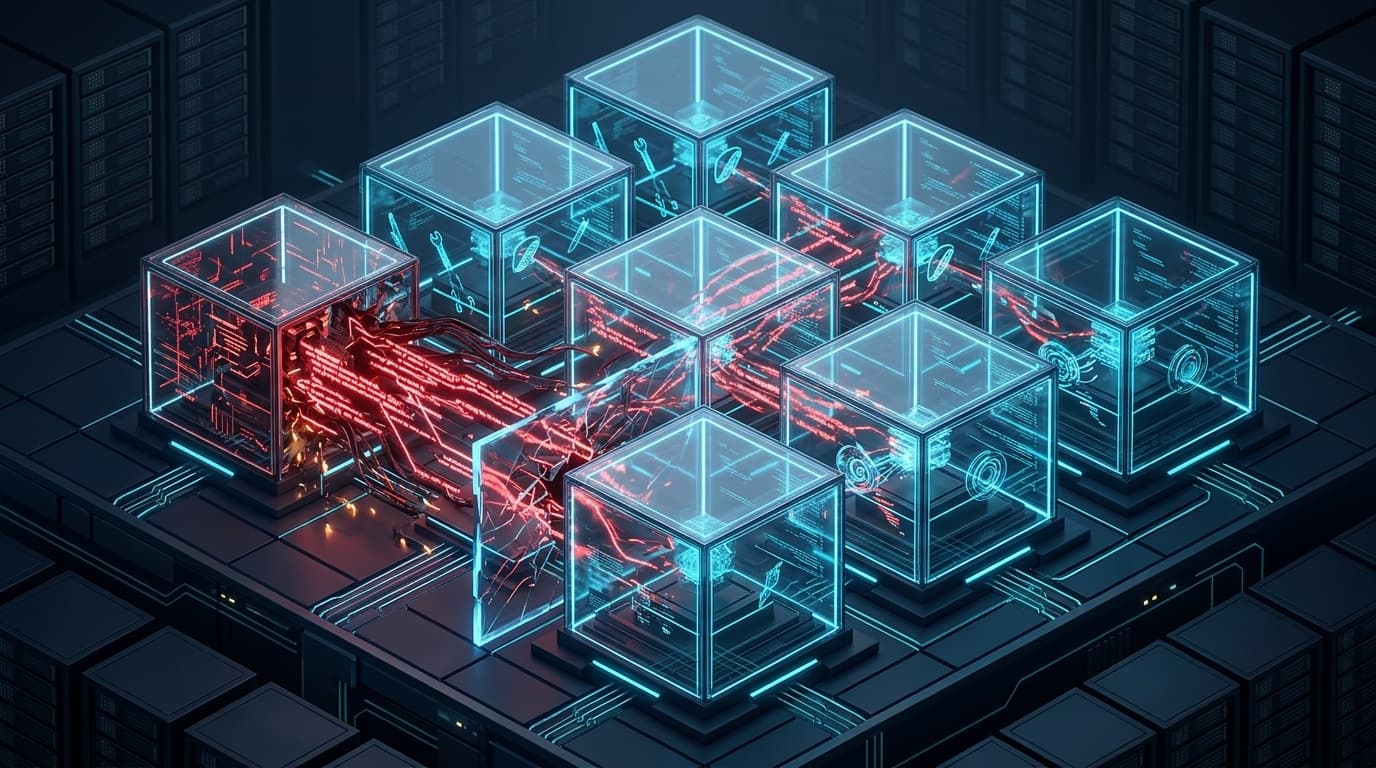
Cloud computing and managed services vendor Rackspace has initiated an emergency shutdown and permanent sunset of its Rackspace Spot infrastructure platform. The termination follows a confirmed security breach in which unauthorized actors successfully penetrated administrative boundaries, obtaining access to customer Kubernetes clusters and sensitive cryptographic secrets stored across the environment.
The incident represents a catastrophic failure of multi-tenant orchestration isolation within the specialized platform. In direct notices issued to impacted enterprises, Rackspace established a strict deadline of December 8 for organizations to extract operational data, preserve container definitions, and migrate existing workloads to alternative infrastructure providers before the platform goes permanently offline.
Confirmed Facts and Scope of the Compromise
Rackspace Spot was engineered as an open-market, spot-instance compute platform tailored for containerized workloads and automated Kubernetes cluster deployment. According to disclosure notices, the security perimeter protecting the platform's control fabric was circumvented by external actors.
Once inside the environment, the unauthorized parties obtained access to:
- Customer Kubernetes Clusters: Administrative control and control-plane touchpoints governing tenant workloads, enabling potential inspection of running containers and deployed services.
- Stored Secrets and Credentials: Sensitive environment variables, API tokens, access credentials, and cryptographic certificates maintained within tenant configurations.
- Tenant Workload Metadata: Internal architecture topologies, configuration parameters, and orchestration manifests defining deployed production assets.
Recognizing the extent of the exposure across the platform's underlying architecture, Rackspace determined that remediating the existing infrastructure while maintaining operational availability was untenable. Consequently, leadership elected to deprecate the Spot platform entirely rather than attempt an in-place architecture rebuild.
Technical Architecture: Spot Orchestration and Multi-Tenancy Risks
In containerized multi-tenant infrastructure, separation of privilege relies heavily on strict boundaries between host kernel layers, software-defined networks, and Kubernetes control planes. In managed spot-market systems, physical hypervisors and control plane controllers dynamically provision, allocate, and cycle instances based on workload demand and pricing auctions.
When an unauthorized entity gains administrative leverage over the centralized management tier or underlying orchestration layer, the primary security guarantees of multi-tenancy collapse. Specifically, exposure of secrets within Kubernetes environments carries systemic consequences:
- Cluster-Level Secrets Exposure: Kubernetes
Secretobjects, configmaps, and mounted persistent storage often hold connection strings to external databases, authentication tokens for third-party cloud APIs, and private TLS keys. - Credential Pivoting: Compromised secrets frequently provide ingress paths into cloud environments hosted outside the Spot platform itself, including Amazon Web Services, Google Cloud Platform, Microsoft Azure, and private on-premises corporate networks.
- Workload Visibility: Direct access to cluster orchestrators allows inspection of process memory, application source code packed inside runtime containers, and internal network interconnections.
Affected Deployments and Operational Impact
The incident directly impacts all enterprise customers, developers, and organizations running workloads on the Rackspace Spot cloud service. Other core Rackspace hosting environments and enterprise managed clouds operate on discrete infrastructure footprints, but Spot users face immediate operational disruption.
| Operational Dimension | Confirmed Status | Impact Level |
|---|---|---|
| Platform Lifecycle | Permanent Shutdown / Deprecation | Critical (Service Termination) |
| Customer Data Access | Available for Migration Until Dec 8 | Urgent Ingress Required |
| Compromised Assets | Kubernetes Clusters & Stored Secrets | Severe (Integrity Compromised) |
| Affected Architecture | Rackspace Spot Management Fabric | Isolated to Spot Platform |
Because the platform will terminate completely on December 8, tenant organizations are forced to execute emergency cutovers without standard staging or phased deployment schedules. Once the shutdown threshold passes, all instances, configurations, storage volumes, and control plane nodes will be systematically decommissioned.
Practical Response and Incident Remediation Playbook
For organizations operating active deployments on Rackspace Spot, remediation requires immediate execution across two concurrent tracks: emergency asset evacuation and complete enterprise credential revocation.
Phase 1: Immediate Credential and Secret Revocation
Security teams must assume that any secret, token, key, or configuration string ever injected into a Rackspace Spot cluster is actively compromised:
- Rotate External API Keys and Cloud Tokens: Immediately revoke and re-issue all IAM credentials, cloud provider access keys (AWS IAM, Azure Service Principals, GCP Service Accounts), and third-party SaaS tokens that were configured as Kubernetes environment variables or secrets.
- Invalidate Database Credentials: Reset connection passwords, authorization credentials, and certificates for any public-facing or private database accessed by workloads on Spot instances.
- Cycle Cryptographic Keys and Certificates: Revoke and regenerate all TLS private keys, mTLS certificates, signing keys, and SSH keys provisioned into Spot-hosted nodes or pods.
- Audit Audit Logs on Connected Services: Scrutinize access telemetry on all external databases, storage buckets, and APIs configured to communicate with Spot IP ranges to detect unauthorized access patterns or unexpected data transfers.
Phase 2: Workload Migration and Asset Preservation
Infrastructure teams must initiate rapid extraction of data and manifests prior to the December 8 deadline:
- Export Application Manifests: Extract all Helm charts, Kubernetes YAML definitions, Kustomize configurations, and infrastructure-as-code scripts running within active clusters.
- Data Volume Ingestion: Snapshot and transfer persistent volumes, application logs, and database dumps to secured off-platform storage locations.
- Deploy to Target Infrastructure: Re-provision container workloads on alternative container services, verifying that all secret configurations utilize fresh, rotated credentials rather than legacy parameters.
- Teardown Verification: Once services are operational in the target environment, manually delete Spot resources to minimize exposure windows prior to the platform sunset.
What Remains Unknown
While the direct consequence—the permanent sunset of the platform—is fully confirmed, several significant technical and forensic aspects remain undisclosed:
- Initial Compromise Vector: The specific ingress mechanism utilized by the unauthorized actors—such as an unpatched vulnerability in the control software, stolen administrative credentials, or a supply-chain package flaw—has not been publicly specified.
- Scope of Threat Actor Activity: It remains unconfirmed whether the adversary actively exfiltrated all tenant secrets en masse or if access was confined to specific subsets of platform infrastructure.
- Threat Actor Identity: No threat group attribution, motivation, or formal affiliate tracking has been confirmed by forensic investigators.
- Forensic Timeline: The precise duration between initial unauthorized ingress, actor dwell time inside the Spot orchestration plane, and final detection has not been detailed.
As the December 8 deadline approaches, security teams maintaining assets on Rackspace Spot must treat the incident as a total loss of confidentiality for all deployed configurations and proceed aggressively with credential invalidation across all connected corporate ecosystems.