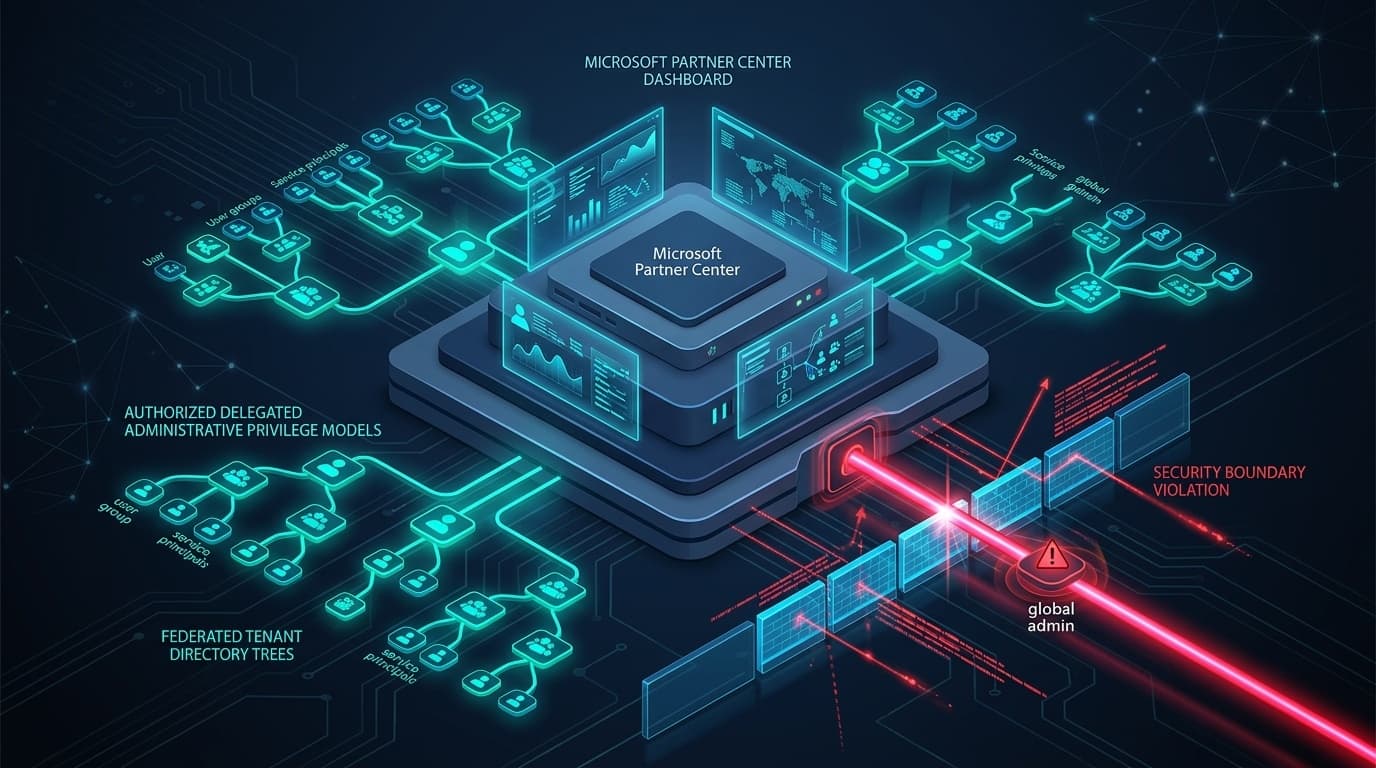
Palo Alto Networks has issued an advisory warning administrators of active exploitation targeting enterprise firewall and security appliances. According to security findings released by the vendor, threat actors are weaponizing an exploit chain combining the newly disclosed Fragnesia vulnerability with the PHP2Shell flaw. The coordinated activity is aimed directly at devices configured with management interfaces exposed to the untrusted public internet, creating an immediate operational threat for organizations operating perimeter defenses.
Enterprise firewalls and network security controllers serve as the foundational security perimeter for corporate networks. While these appliances are designed to inspect and filter inbound and outbound traffic across untrusted boundaries, their underlying operating systems and administrative services require dedicated, isolated control planes. When administrative management endpoints are mistakenly or intentionally routed directly to the public internet, exposed services become prime targets for opportunistic and state-sponsored intrusion sets looking to establish persistent ingress points.
The Exploit Chain: Linking PHP2Shell and Fragnesia
The campaign observed by Palo Alto Networks relies on multi-stage exploitation. Rather than relying on an isolated entry bug, threat actors have constructed an exploit chain that pairs the PHP2Shell vulnerability with the Fragnesia vulnerability. In modern network appliances, web management portals often rely on a combination of front-end scripting components and back-end daemon interfaces to handle administrative sessions, interface telemetry, configuration parsing, and system monitoring.
In multi-component architectures, an attacker typically uses an initial component weakness to establish a foothold or alter processing state within an unauthenticated or semi-trusted service context. Once initial code execution or parser subversion is accomplished via vectors such as PHP2Shell, secondary architectural flaws like Fragnesia are invoked to deepen control over the underlying platform. Chaining these vulnerabilities allows an adversary to pivot across subsystem boundaries, transforming limited execution access into broader appliance compromise.
While the exact memory mechanics and parser states remain under active analysis across the vendor's security response team, the operational impact of such chains is well understood: successful execution allows the attacker to compromise the integrity of the device management daemon, bypass protective boundary controls, and execute arbitrary commands within the context of the underlying system.
Targeted Environments and Exposure Scope
The confirmed telemetry indicates that vulnerable appliances are not universally susceptible across all operational deployments. Instead, exploitation explicitly hinges on the exposure posture of the administrative plane:
- Internet-Exposed Management Interfaces: Systems that have their dedicated management port, administrative web portal, or maintenance interfaces mapped directly to public IPv4 or IPv6 addresses without upstream access controls are actively targeted.
- Restricted and Segmented Interfaces: Deployments following strict administrative segmentation—where management access is restricted to dedicated, non-routable out-of-band management subnets or protected by trusted jump hosts—do not present the direct attack surface targeted in this campaign.
- Data Plane vs. Control Plane: Standard traffic processing interfaces (the data plane) processing transit user packets are distinct from the administrative control plane. The observed attacks specifically focus on the control mechanisms that govern device management and orchestration.
Organizations that permitted external access to device management panels for remote administration or administrative convenience now face active exploitation sweeps. Scanning activity targeting edge appliances regularly tests for responsive web servers and administrative endpoints on both standard HTTP/HTTPS ports and alternate non-standard management ports.
Incident Context and Primary Records
The vulnerability sequence was cataloged through vendor investigative channels and assigned threat tracking identifier DISCOV-THREATS-cpjyg0. Unlike isolated theoretical bugs uncovered during controlled internal testing, this advisory was prompted by confirmed observations of adversary exploitation in the wild.
| Reporting Vector | Confirmed Details |
|---|---|
| Affected Vendor | Palo Alto Networks |
| Product Scope | Palo Alto Networks Core System & Services |
| Exploited Flaws | Fragnesia chained alongside PHP2Shell |
| Adversary Prerequisite | Direct internet access to device management interface |
| Primary Source Reference | Palo Alto Networks Security Advisory Portal |
Recommended Response and Defensive Hardening
Given that the active attacks exploit administrative web interfaces directly exposed to untrusted traffic, the priority for all network engineering and security operations teams is the immediate isolation and validation of perimeter attack surfaces.
1. Complete Ingress Management Surface Audit
Administrators must conduct an immediate review of public-facing IP spaces across all regional firewalls and virtual security appliances. Verify that no administrative services (HTTP, HTTPS, SSH, or auxiliary management listeners) respond to probes from outside trusted boundary networks. Any internet-facing management access rule must be disabled immediately.
2. Enforce Dedicated Out-of-Band Management (OOBM)
Management interfaces should be physically or logically isolated within a dedicated management VLAN or dedicated out-of-band network. Access to this management plane must require multi-factor authenticated transit gateways, restricted bastion hosts, or internal enterprise administrative VPNs. Public route advertisements to management networks must be explicitly blocked at boundary routers.
3. Restrict Management Access Lists
On appliances where out-of-band management interfaces cannot be physically separated, configure strict hardware-level Access Control Lists (ACLs) directly within the appliance configuration. Ensure that incoming management traffic is accepted exclusively from a small, authenticated pool of internal static administrative subnets, dropping all other inbound connection requests by default.
4. Review Appliance Access Telemetry
Security teams should scrutinize connection logs, web server access records, and audit logs on edge appliances for anomalous ingress patterns. Indicators of reconnaissance or exploitation include unexpected POST requests to administrative script paths, connections originating from unfamiliar geographic IP ranges, repeated failed administrative authentication sequences, or abrupt restarts of management daemon services.
Open Questions and Unconfirmed Intelligence
While the threat notice confirms active attacks chaining Fragnesia and PHP2Shell against internet-exposed management ports, several technical elements remain unconfirmed in public source documentation. The vendor's initial disclosure has not published specific granular software revision versioning matrices, granular CVSS severity calculations, or detailed technical breakdowns of the specific underlying memory corruption or command injection mechanics.
Furthermore, attribution regarding the threat actor group, geographic origin, or campaign motivation remains unverified. Defenders should avoid assuming specific threat actor motives or nation-state attribution until formal forensic attribution is issued by authoritative incident response channels. As investigation into the exploitation chain continues, organizations operating affected network gateways should treat any exposed management endpoint as actively contested territory and implement perimeter isolation without delay.