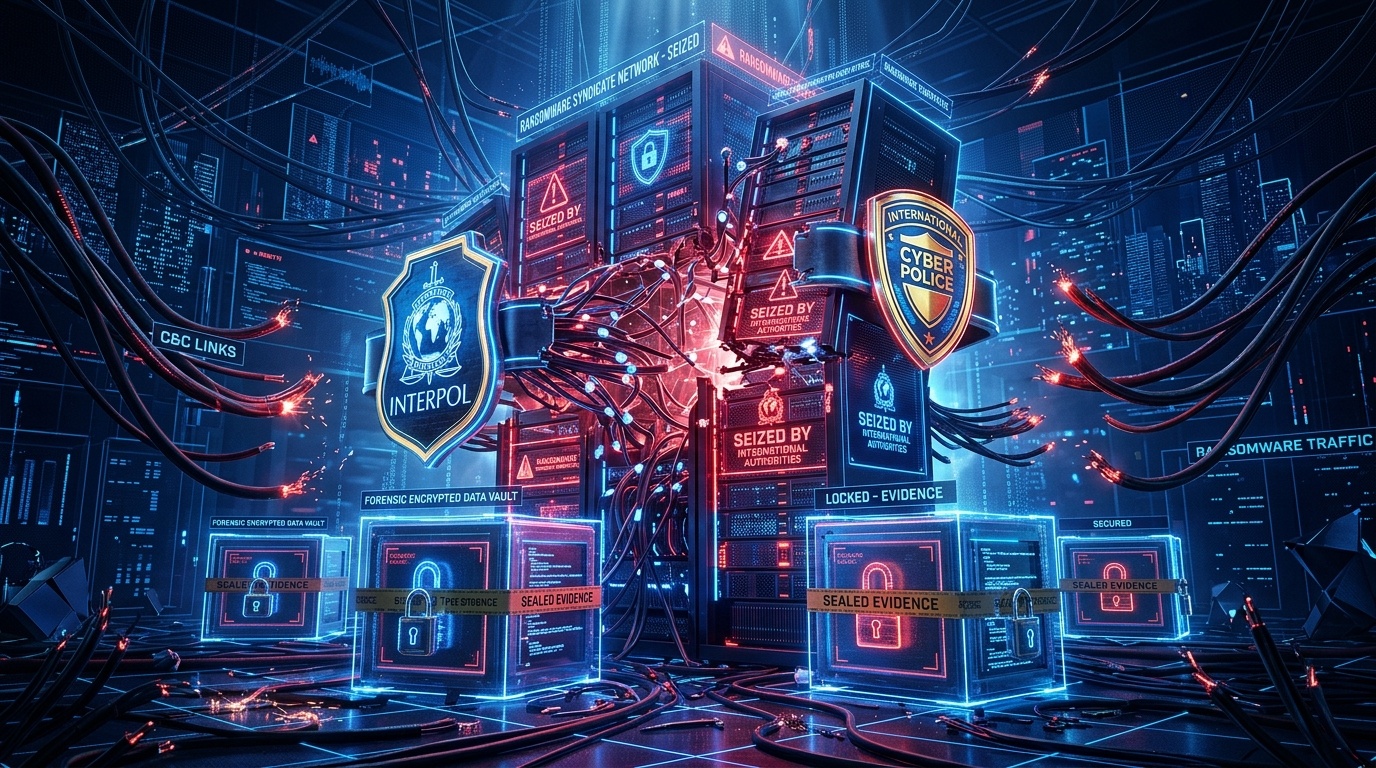
Executive Summary: The Fall of the KillSec Extortion Syndicate
In a major blow against international cyber extortion cartels, a coordinated multinational law enforcement operation led by judicial authorities in Germany, Spain, Romania, the United Kingdom, and the United States has dismantled the infrastructure of the KillSec ransomware syndicate. Coordinated through Europol's European Cybercrime Centre (EC3) and Eurojust, the synchronized sweep resulted in the arrest of KillSec's alleged primary administrator—a 16-year-old minor apprehended in Alicante, Spain—alongside two co-conspirators in their twenties detained in the UK and Bucharest, Romania.
Beyond detaining core leadership, judicial teams executed eight search warrants across Spain, Greece, the United Kingdom, and Romania, confiscating hardware rigs, mobile devices, cryptocurrency cold storage wallets, and taking physical control of 5 core infrastructure servers. Crucially, authorities seized and safeguarded 110 terabytes of stolen enterprise files before the data could be permanently leaked or auctioned on illicit forums.
From Hacktivism to Ransomware-as-a-Service: The Evolution of KillSec
KillSec first surfaced in late 2021 as a politically motivated hacktivist entity conducting distributed denial-of-service (DDoS) campaigns and defacements. However, by late 2023, the syndicate pivoted toward monetized cybercrime, developing dedicated data-theft tooling and proprietary ransomware strains:
| Syndicate Iteration | Operational Focus | Primary Exploitation Vector & Tooling |
|---|---|---|
| KillSec Phase 1 (2021–2023) | DDoS, website defacement, low-level data leaks | HTTP flood tools, basic SQL injection, defacement web shells |
| KillSecurity 2.0 (Late 2023) | Opportunistic corporate data theft and extortion | Compromised VPN credentials, unauthenticated Amazon S3/Azure Blob buckets |
| KillSecurity 3.0 (Mid 2024–2026) | Commercial Ransomware-as-a-Service (RaaS), double extortion | ChaCha20/RSA-4096 file encryption, AI-driven reconnaissance, Tor leak portals |
Under the KillSecurity 3.0 framework, the operators operated an affiliate program, renting out automated exfiltration utilities and encryption payloads to third-party affiliates in exchange for a 20% to 30% cut of extortion proceeds. Over the course of its operations, the syndicate targeted an estimated 1,000 organizations worldwide, achieving confirmed intrusions across more than 500 victims in healthcare, banking, manufacturing, and municipal government sectors.
Initial Access Vectors & Weaponization of Autonomous AI Scripting
According to operational briefings from the Hamburg State Criminal Police Office (LKA Hamburg) and Romania's DIICOT, KillSec prioritized speed and volume over custom zero-day exploits. The syndicate relied heavily on three initial entry pathways:
- Commercial Stealer Logs: Purchasing bulk credentials harvested by RedLine, Lumma, and Vidar infostealers on underground marketplaces, targeting single-factor administrative panels and remote access portals.
- Misconfigured Cloud Storage Repositories: Scanning IPv4 address spaces for publicly exposed Amazon S3 buckets, Azure Blob storage, and unsecured rsync/FTP servers belonging to corporate subsidiaries.
- Known Enterprise Vulnerabilities: Exploiting unpatched perimeter devices (Citrix NetScaler, Fortinet FortiOS, Ivanti Connect Secure) using public proof-of-concept scripts.
A notable finding highlighted by German investigators was the syndicate's extensive use of autonomous artificial intelligence tools. The group developed automated Python workflows integrated with commercial LLM APIs to parse stolen directory listings, identify highly sensitive files (such as executive emails, PII, intellectual property, and financial audits), and draft customized extortion letters tailored to the victim's annual revenues.
The International Strike: Infrastructure Seizures and Extradition
The investigation was spearheaded by the Generalstaatsanwaltschaft Hamburg, working in close liaison with the Spanish Guardia Civil, Catalonia's Mossos d'Esquadra, Romania's DIICOT, the UK National Crime Agency (NCA), and the FBI Cyber Division (San Juan and Miami field offices):
- Spanish Sweep: Officers raided a residence and a commercial hotel office in Alicante, capturing the 16-year-old alleged administrator while active on command channels. Computer hardware, encrypted drives, and mobile devices containing private keys to victim ransom payment wallets were confiscated.
- Romanian Raids: DIICOT prosecutors conducted four simultaneous raids in Bucharest and Vaslui, arresting a 24-year-old core technical operator on charges of forming an organized crime group, unauthorized data exfiltration, and extortion.
- Server Takeover: Authorities deployed legal seizure splash pages across five primary dark web domains and seized five backend command-and-control servers, securing 110TB of exfiltrated data.
- Extradition Proceedings: The United States Department of Justice, through the US Attorney's Office for the District of Puerto Rico, has unsealed indictments and filed formal extradition requests for the suspect arrested in the United Kingdom.
Forensic Remediation and Enterprise Hardening Against Pure Extortion
- Audit Cloud Bucket Access Policies: Enforce strict AWS IAM and Azure RBAC configurations. Block all public bucket policies by default and deploy automated configuration monitors (e.g., AWS Config, CloudTrail alerts) to flag unauthorized access permission alterations.
- Mandate Hardware MFA for Remote Access: Eliminate single-factor VPN, RDP, and SaaS portal authentication. Mandate FIDO2/WebAuthn hardware tokens to neutralize the impact of stolen session tokens and infostealer credential dumps.
- Implement Egress Filtering and DLP: Restrict outbound data transfers from sensitive internal repositories. Monitor large-scale file staging (e.g., unexpected
7z,tar, or Mega.nz API traffic) using network anomaly detection sensors. - Engage with Law Enforcement Upon Breach: Victims of KillSec extortion are urged to contact Europol EC3 or their national CERT. Because authorities possess the 110TB seized repository, investigators can verify whether compromised files remain contained or have been exposed to third parties.