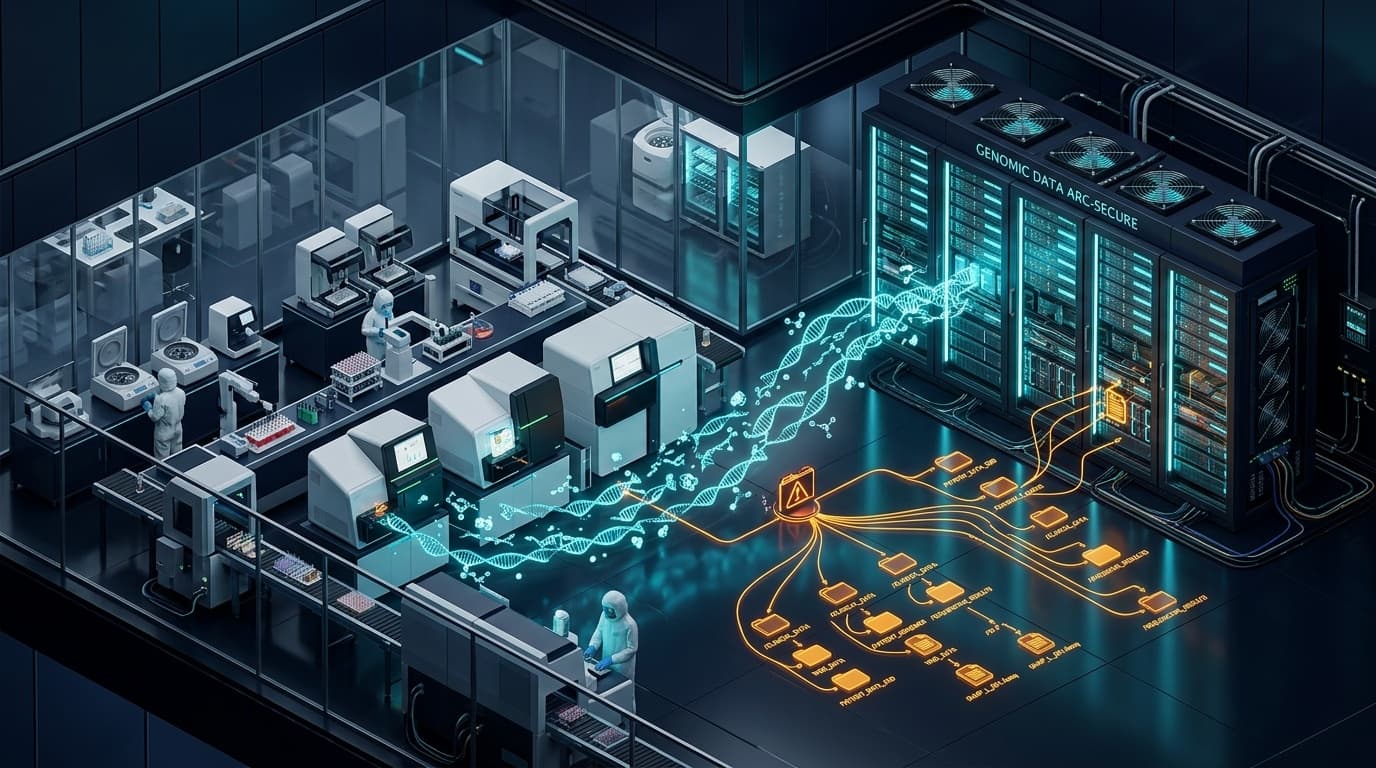
Cybersecurity agencies in Italy and Switzerland have released a coordinated alert warning organizations operating within critical infrastructure sectors about an emerging wave of automated cyberattacks powered by autonomous artificial intelligence agents. The joint disclosure signals a shift toward machine-speed adversarial activity designed to target, assess, and compromise networked systems with minimal direct human orchestration.
Confirmed Facts and Scope of the Joint Advisory
According to the official enterprise disclosure released by the authorities, Italian and Swiss operational security bodies detected coordinated activity involving automated agents acting against critical infrastructure environments. Rather than relying entirely on manual, operator-led intrusion procedures, the observed campaigns integrate autonomous AI components to accelerate reconnaissance, targeting, and operational execution.
Key confirmed findings outlined in the disclosure include:
- Targeted Verticals: The activity is directed specifically at essential services and organizations maintaining critical infrastructure networks across the affected jurisdictions.
- Technical Capabilities: The campaigns employ automated, AI-driven tooling capable of navigating environments and making autonomous tactical adjustments during intrusion attempts.
- Inter-Agency Coordination: Italian and Swiss authorities synchronized reporting to ensure cross-border critical infrastructure entities establish unified defensive postures against the automated vectors.
Technical Context and Mechanics of Autonomous AI Intrusions
Traditional threat campaigns typically depend on script automation for fixed stages, such as mass perimeter port scanning or credential stuffing, while complex lateral movement and triage require interactive human oversight. In contrast, the integration of autonomous artificial intelligence allows intrusion systems to analyze live environmental feedback, parse defensive controls, and dynamically select subsequent actions without waiting for operator commands.
Automated Reconnaissance and Discovery
In environments exposed to these tools, automated agents gather contextual telemetry across external boundaries and reachable operational interfaces. By analyzing service responses, network topologies, and accessible administrative interfaces in real time, autonomous modules can rapidly pivot through attack surfaces and locate potential entry points faster than conventional manual testing teams.
Machine-Speed Operational Iteration
By leveraging dynamic decision loops, autonomous agents can attempt multiple discovery pathways simultaneously. When confronted with defensive friction—such as rate limits, non-standard configurations, or monitoring triggers—the agent's programmatic decision logic evaluates alternative routes, altering network requests and pacing dynamically to bypass basic heuristics.
| Operational Phase | Traditional Manual Operations | Autonomous AI-Driven Intrusion |
|---|---|---|
| Reconnaissance | Static automated scripts followed by manual analysis | Dynamic target parsing and autonomous service classification |
| Target Assessment | Human operator evaluates vulnerabilities individually | Real-time machine-speed assessment and path selection |
| Execution Pace | Constrained by operator working hours and latency | Continuous, low-latency iteration driven by software logic |
| Defensive Interaction | Predictable behavioral patterns based on standard tools | Algorithmic adaptation to defensive blocks and system prompts |
Affected Deployments and Critical Infrastructure Exposure
The warning focuses directly on critical infrastructure organizations whose uptime, physical control networks, and digital monitoring systems are vital to national security and public safety. Deployments identified as potential targets include:
- Energy and Utilities: Power generation, grid management, and water distribution networks operating hybrid information technology (IT) and operational technology (OT) monitoring environments.
- Transportation and Logistics: Transit management systems, rail signaling infrastructure, and maritime logistics portals relying on automated scheduling and data exchange.
- Public Services and Core Systems: Digital government interfaces and essential core services maintaining large-scale public data backbones and continuous connectivity.
- Communication Gateways: Telecommunications routing infrastructure and enterprise perimeter gateways connecting municipal or regional networks.
Practical Response and Defensive Recommendations
Defending against automated, machine-speed intrusion vectors requires enterprise defenders to transition away from purely manual triage models toward rapid detection, rigorous segmentation, and continuous monitoring. Network administrators managing critical environments should prioritize the following actions:
1. Enforce Strict Network Segmentation
Isolate critical operational segments from external ingress routes. Ensure internal administrative networks and industrial monitoring planes are separated by strict firewall boundaries and demilitarized zones (DMZs). Restricting lateral communication pathways denies autonomous agents the ability to systematically explore internal subnets even if initial perimeter access is achieved.
2. Implement Behavioral Anomaly Detection
Because automated agents can adapt their operational cadence to mimic benign activity, organizations must implement deep telemetry analysis capable of recognizing unusual operational sequences. Security teams should monitor for rapid, automated credential validations, unusual programmatic querying of directory services, and atypical outbound communication flows.
3. Mandate Phishing-Resistant Multi-Factor Authentication
All administrative portals, remote desktop access points, and remote maintenance channels must require multi-factor authentication (MFA) backed by hardware tokens or cryptographic passkeys. Preventing automated agents from leveraging harvested or brute-forced single-factor credentials significantly curtails perimeter compromise vectors.
4. Establish Automated Quarantine Protocols
To match the pace of automated attacks, incident response playbooks should incorporate pre-approved automated isolation rules. Endpoint detection and response (EDR) platforms should be configured to isolate suspicious hosts, revoke compromised session tokens, and block offending network indicators immediately upon detection of high-confidence anomalous behavior.
What Remains Unknown
While the joint advisory confirms the deployment and threat of autonomous AI-driven attack tooling against critical assets, several technical and operational variables have not been officially disclosed:
- Specific Threat Attribution: The authorities have not publicly attributed the activity to a specific nation-state actor, cybercrime syndicate, or distinct advance persistent threat (APT) cluster.
- Specific Vulnerability Exploits: Official advisories have not tied the campaigns to an exclusive, singular Common Vulnerabilities and Exposures (CVE) identifier or proprietary zero-day vulnerability chain.
- Detailed Model Architecture: The disclosure does not specify the underlying machine learning models, training architectures, or specific agentic orchestration frameworks utilized by the threat actors.
- Total Compromise Statistics: Full casualty metrics and operational damage figures across affected Swiss and Italian critical infrastructure entities remain undisclosed as operational reviews continue.
Italian and Swiss authorities continue to urge all critical infrastructure operators to review external exposures, audit privileged credentials, and ensure rapid incident reporting protocols are fully active across their operational networks.