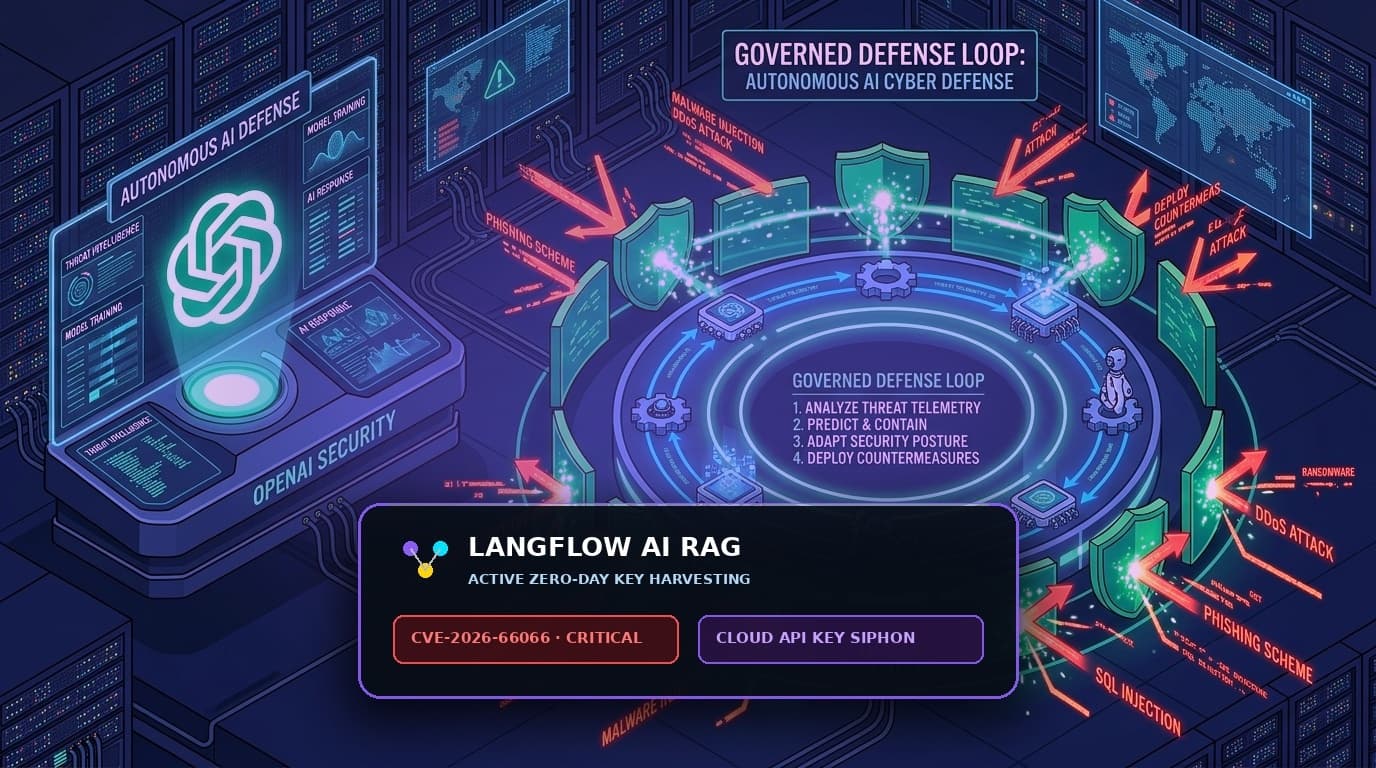
A critical security advisory has brought renewed focus to static secrets embedded in compiled binaries. Maintainers have published security advisories documenting two vulnerabilities involving hardcoded credentials embedded within an executable file, designated under CVE-2026-132209 and tracked via GitHub Security Advisory identifier GHSA-8839-9vxj-92gj. The issue carries a critical Common Vulnerability Scoring System (CVSS) v3.1 base score of 9.6, reflecting the severe consequences that unmanaged cryptographic secrets, tokens, or administrative authenticators pose when baked directly into distributed software packages.
Technical Anatomy of Embedded Credential Flaws
Static secrets compiled directly into software binaries represent an enduring architectural risk across client, server, and embedded tooling. When secret material—such as static symmetric keys, shared API authentication tokens, or internal service passwords—is incorporated during build time, it ceases to be a dynamic control. Anyone with access to the compiled executable can extract these values using standard reverse-engineering toolchains, strings inspection, or decompilation routines.
The severity of CVE-2026-132209 is defined by its CVSS v3.1 metric string: CVSS:3.1/AV:N/AC:L/PR:N/UI:N/S:U/C:H/I:H/A:H. Deconstructing this scoring breakdown reveals the core architectural exposure:
- Attack Vector (AV:N): The vulnerable surface is reachable over the network, allowing an external party to leverage the compromised credentials remotely.
- Attack Complexity (AC:L): Exploitation does not require complex environmental factors, timing races, or cryptographic breakthroughs. Extracting and replaying plaintext or weakly obfuscated strings requires minimal attacker effort.
- Privileges Required (PR:N): No prior authentication or specialized permissions within the target application are necessary to exploit the mechanism.
- User Interaction (UI:N): Exploitation occurs automatically without relying on social engineering or human error by an authenticated end user.
- Scope (S:U): The vulnerability is contained within the software authorization authority itself, rather than breaking out across hypervisors or sandbox boundaries.
- Impact Metrics (C:H/I:H/A:H): Successful leverage of the static credential grants high confidentiality, integrity, and availability compromise over the affected assets.
Mechanisms of Reverse Engineering Binary Secrets
In software pipelines where secrets are compiled into executables, extraction does not require sophisticated binary exploitation techniques such as return-oriented programming or heap manipulation. Common reconnaissance paths include:
- Basic string extraction using utility commands like
stringsto filter for high-entropy tokens, private key headers, or common credential naming conventions. - Disassembly using standard platforms to analyze initialization routines where configuration payloads and authentication structures are loaded into runtime memory.
- Network packet inspection comparing external protocol handshakes against statically declared memory buffers inside the executable image.
Affected Deployments and Operational Exposure
Deployments that distribute or execute the impacted binary within network-accessible perimeters face elevated operational risks. When credentials bundled within executable files provide shared access to downstream services, relational databases, cloud APIs, or message brokers, the compromise of a single binary instance can compromise the broader interconnected ecosystem.
Key risk areas across affected infrastructure include:
- Shared Operational Keys: If the credentials embedded in the executable are uniform across all distributed copies, a breach of one artifact exposes all systems sharing those authentication boundaries.
- Lateral Infrastructure Reach: Embedded credentials often carry over-permissioned scopes, allowing an attacker who extracts them to pivot beyond the local system into internal control planes.
- Lack of Revocation Capabilities: Static hardcoded values cannot be easily invalidated on the client without breaking client-side execution, creating an operational dilemma when attempting rapid key rotation.
Summary of Confirmed Flaw Characteristics
| Identifier | Weakness Classification | CVSS v3.1 Score | Network Reachability | Interaction Required |
|---|---|---|---|---|
| CVE-2026-132209 / GHSA-8839-9vxj-92gj | Hardcoded Credentials (CWE-798) | 9.6 (Critical) | Remote / Network (AV:N) | None (UI:N) |
Recommended Remediation and Defensive Playbook
Organizations maintaining or deploying software systems referencing GHSA-8839-9vxj-92gj must adopt a structured sequence of containment, rotation, and re-architecture steps to eliminate the exposure.
1. Cryptographic Secret Revocation
Replacing the binary alone is insufficient if the embedded secrets remain valid on upstream authentication backends. Security teams must:
- Identify all upstream endpoints, services, and databases associated with the extracted credentials.
- Generate replacement secrets within the backend directories or Identity Providers (IdP).
- Invalidate and revoke the compromised credentials across all authorization tables to block unauthorized re-use.
2. Transitioning to External Secret Stores
Applications should avoid compiling sensitive secrets into source code or build artifacts. Architectural guidance mandates moving toward external configuration patterns:
- Leverage environment-based injection during runtime deployment using container orchestration secrets or secure key management vaults.
- Implement mutual TLS (mTLS) or hardware-backed security modules (TPM/HSM) for machine-to-machine authentication rather than static shared passwords.
- Adopt short-lived token architectures, such as OpenID Connect (OIDC) identity federation, which automatically expire and reduce the window of opportunity for intercepted secrets.
3. Static Analysis and CI/CD Build Gates
To prevent recurrence during future development cycles, engineering pipelines should integrate automated scanning routines that block compilation when credential artifacts are detected. Static Application Security Testing (SAST) tools, secret-scanning git hooks, and entropy-checking linters can intercept accidental inclusions before binaries are produced and distributed.
Known Parameters and Operational Unknowns
While the CVSS scoring and advisory references document the existence and severity of the two flaws, several operational dimensions remain unconfirmed in public records:
- Active In-the-Wild Exploitation: The advisory records do not confirm whether public exploitation or targeted attacks leveraging these specific embedded credentials have occurred. The vulnerability is not currently cataloged in the CISA Known Exploited Vulnerabilities (KEV) database.
- Downstream Impact Boundaries: Official disclosures have not detailed the exact backend services or specific administrative scopes conferred by the extracted credentials.
- Patch Availability and Replacement Versions: Specific fixed release versions have not been enumerated in the initial record summary, requiring administrators to inspect official project advisories for updated software artifacts.
Organizations relying on affected binary builds should conduct immediate audits of their running executables, review service authentication logs for unauthorized access originating from unexpected endpoints, and prioritize the revocation of any exposed keys.