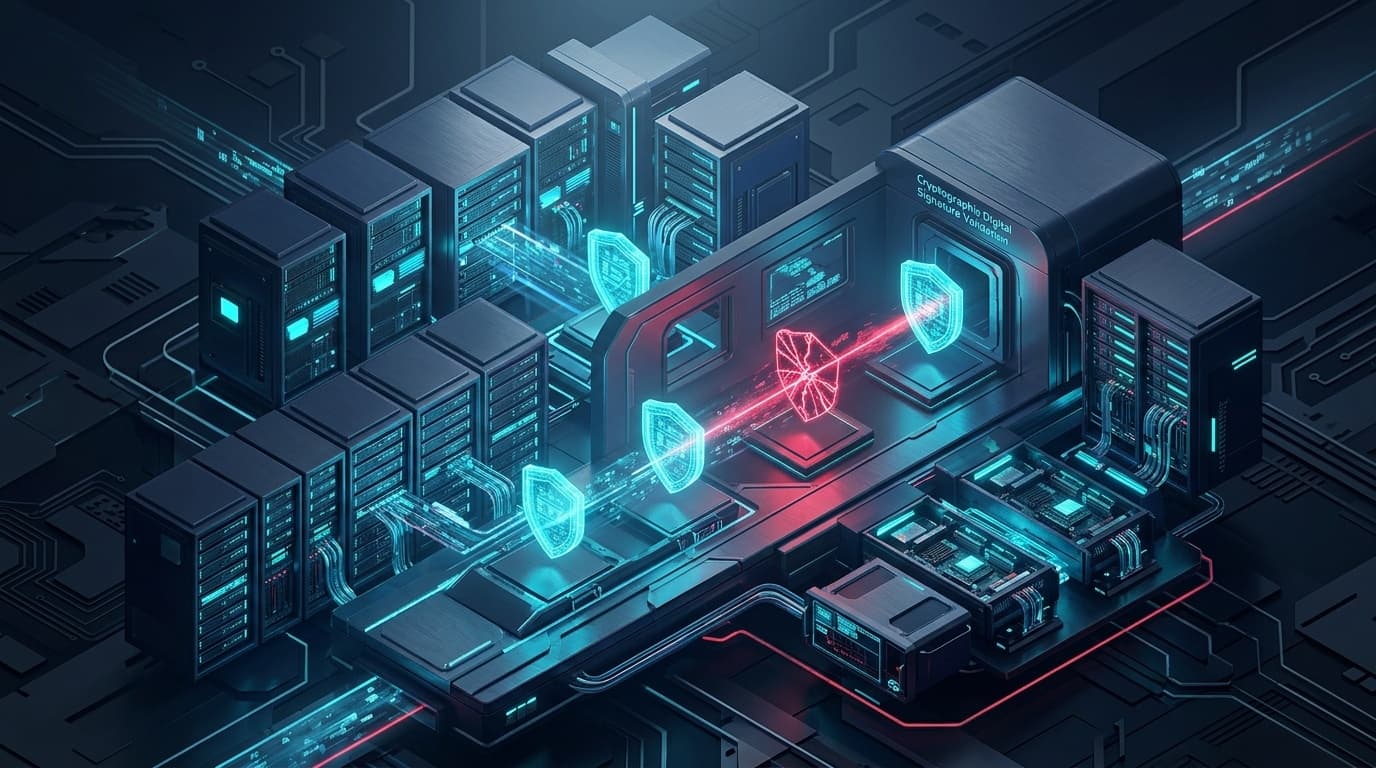
Modern enterprise architectures increasingly rely on autonomous AI agents, copilot frameworks, and task-driven orchestrators to carry out complex workflows on behalf of human operators. Whether booking reservations, orchestrating cross-system workflows, or reading profile contacts, an agent must act as an intermediary that can authenticate to target APIs while strictly preserving user identity and least-privilege scoping. Traditional patterns that share long-lived user credentials or assign omnipotent service identities to autonomous agents create severe blast-radius hazards, breaking non-repudiation and violating access governance standards.
To address the identity boundaries inherent in autonomous processing, modern identity architectures leverage formal token exchange mechanisms anchored in OAuth 2.0 standards. By converting a user’s primary authentication context into a constrained, downscoped security token targeted specifically at secondary microservices, organizations can grant autonomous agents transient access to execute discrete subroutines without persisting or exposing elevated session material.
The Delegation Challenge in Autonomous Agent Workflows
When an autonomous agent interacts with external or downstream systems—such as an email engine, a customer record database, or an internal booking endpoint—it operates under a delegation paradox. If the agent utilizes a static machine-to-machine (M2M) service account, the downstream service loses visibility into the original human principal initiating the request. Under an M2M pattern, security auditing logs only capture the agent’s service identifier, frustrating incident response and insider-threat investigations.
Conversely, passing the user’s broad primary identity or access token directly to an autonomous agent exposes critical security vulnerabilities. An agent that processes unpredictable natural language or executes autonomous decision loops may inadvertently leak raw tokens, transmit them across unauthorized tool-calling boundaries, or use an unscoped token to invoke sensitive administrative APIs. Robust architecture mandates a cryptographically verifiable mechanism where the agent can prove it is acting under the authorization of a specific user, limited strictly to the required functional scopes (such as contacts.read or specific task-level endpoints).
Technical Mechanics of OAuth 2.0 Token Exchange
The standard architectural answer to multi-tier delegation is defined by RFC 8693 (OAuth 2.0 Token Exchange). In this pattern, the initial client application receives an authorization artifact after the user authenticates against an authorized OpenID Connect (OIDC) or OAuth 2.0 provider. When an autonomous sub-agent must execute a specific subroutine, the system initiates an exchange request against the centralized authorization server rather than forwarding the root credential.
During the token exchange flow, the agent presents:
- The Subject Token: Represents the primary user identity and initial consent grant (e.g., a signed JSON Web Token or access token issued during the user sign-in flow).
- The Subject Token Type: Identifies the schema of the inbound credential (such as
urn:ietf:params:oauth:token-type:access_tokenorjwt). - Target Audience (Audience Scoping): Constrains the resulting token to the specific backend service or resource server that the agent needs to call.
- Requested Scopes: Specifies downscoped permission boundaries, such as dropping write privileges or restricting access strictly to read-only contact metadata.
The authorization server validates the digital signature of the subject token, ensures the token has not expired or been revoked, verifies that the requesting agent is authorized to act on behalf of the subject, and issues a freshly minted, short-lived security token tailored exclusively for the target resource.
Core System Architecture and Component Comparison
Deploying structured identity delegation introduces clear boundaries between client callers, agent execution runners, and authoritative token issuers. The table below outlines how architectural components behave under direct delegation versus legacy service-account impersonation patterns.
| Architectural Layer | Traditional Static Service Identity | Scoped OAuth Token Exchange |
|---|---|---|
| Caller Principal | Generic service principal (M2M role) | Human user identity preserved as delegation subject |
| Downstream Token Scope | Broad system-level privileges | Granular, per-action scope (e.g., contacts.read) |
| Token Lifetime | Long-lived static secret or credential | Ephemeral, single-purpose downscoped JWT |
| Audit Telemetry | Opaque; logs record only the background service | Dual-identity attribution (initiating user and executing agent) |
Affected Deployments and Environmental Exposure
Organizations integrating agentic systems into existing multi-tenant and hybrid enterprise architectures must evaluate their current authorization endpoints. Environments prone to identity overprivileging include:
- Multi-Agent Orchestrations: Systems where a primary coordinating agent invokes multiple specialized sub-agents (e.g., scheduling, messaging, or analytics bots) without isolating the token scope handed to each secondary worker.
- Hybrid Identity Bridges: Enterprise setups bridging cloud identity providers with on-premises directory structures, where token downscoping might fail if intermediate claims are stripped or not recognized by downstream legacy APIs.
- Tool-Calling Runtime Engines: Model execution environments where autonomous agents are granted direct network access to third-party APIs using persistent ambient API keys rather than dynamic per-user delegation tokens.
Practical Implementation and Defense-in-Depth Verification
Security teams and cloud engineers implementing token exchange for autonomous agents should institute rigorous identity controls and lifecycle management to prevent delegation abuse.
1. Enforce Strict Audience Scoping
Ensure that all exchanged tokens emitted by the authorization authority contain a dedicated aud (audience) claim matching the precise resource server URI. If an agent attempts to replay a token minted for a messaging provider against a core database or administrative API, the recipient resource server must reject the request immediately.
2. Restrict Maximum Token Validity Periods
Because autonomous AI agents execute tasks rapidly, exchanged delegation tokens should carry short time-to-live (TTL) limits—typically between 5 to 15 minutes. Ephemeral lifetimes significantly reduce exposure windows in the event an agent's memory state, intermediate logs, or execution runtime are intercepted.
3. Implement Explicit Consent and Delegated Scope Whitelisting
Configure authorization servers to enforce strict boundaries on which scopes may be requested via token exchange. The system must prevent privilege escalation: an agent presenting a user token with user.read privileges must never be allowed to request an exchanged token with elevated permissions like user.write or administrative directory roles.
4. Comprehensive Telemetry and Dual-Identity Logging
Ensure that resource servers and authorization gateways ingest and correlate both the delegated subject identifier and the executing client identifier. SIEM dashboards and anomaly detection engines should evaluate whether sudden spikes in token exchange requests represent authorized autonomous workflows or abnormal programmatic scraping.
Remaining Architectural Unknowns
While the RFC 8693 standard outlines the token exchange protocol, practical standardization across heterogeneous enterprise AI stacks remains an evolving domain. Open questions include how cross-cloud agent runtimes will standardize federated trust chains across divergent identity registries without introducing latency overhead. Furthermore, dynamic consent flows—where an agent requires just-in-time scope elevation during an ongoing multi-turn reasoning process—continue to present usability and security challenges that require ongoing governance evaluation across core system and service implementations.