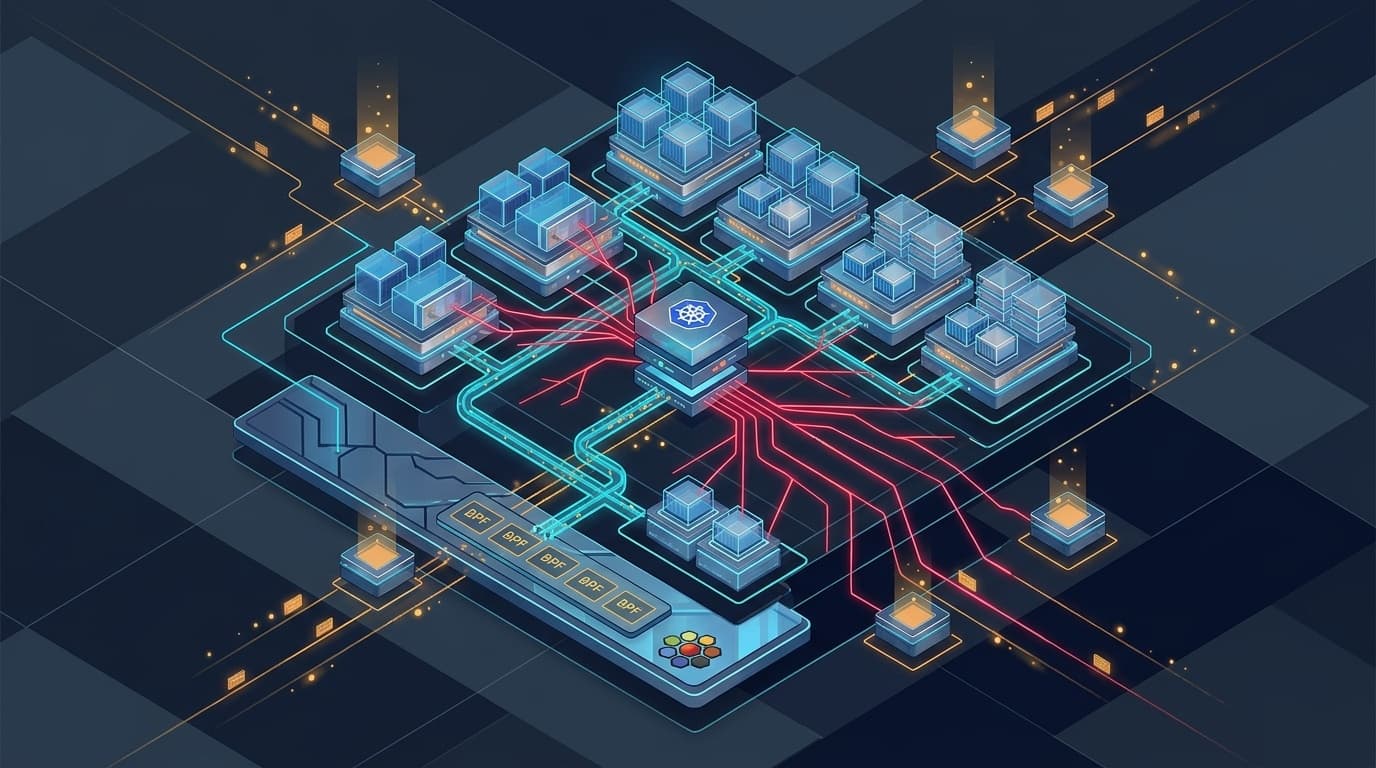
As organizations assess long-term transition pathways toward post-quantum cryptography (PQC), cloud security engineering teams face the dual challenge of swapping out classical asymmetric ciphers and establishing operational cryptographic agility. Guidance from the AWS Security Advisory Portal outlines an architectural shift: organizations must structure cryptographic infrastructure so that cipher suite transitions, protocol adjustments, and algorithm upgrades become routine engineering updates rather than disruptive, multi-year overhaul projects.
The acceleration of post-quantum standards requires defensive teams to evaluate how tightly cryptography is bound to application runtimes, operating platforms, and distributed network architectures. Modern cryptographic libraries, specifically AWS-LC (AWS libcrypto), are positioned as primary building blocks to enable systematic adoption of quantum-resistant algorithms while preserving operational stability across cloud and hybrid workloads.
The Accelerating Imperative for Cryptographic Agility
Cryptographic standards, transport protocols, and key-exchange mechanisms have evolved continuously over decades, progressing through distinct iterations of TLS, symmetric cipher enhancements, and public-key primitives. However, the pending obsolescence of legacy public-key algorithms—such as RSA and elliptic curve cryptography—due to potential future cryptanalytic attacks on quantum hardware fundamentally alters the timeline and complexity of updates.
Historically, transitioning enterprise software between cryptographic algorithms has required significant code refactoring, manual inventory discovery, and high-risk redeployments of production dependencies. Cryptographic agility represents the design principle wherein cryptographic primitives, key lengths, and signature schemes can be interchanged dynamically through standard configuration or centralized library management, without necessitating extensive codebase rewrites.
Because post-quantum cryptographic schemes introduce distinct performance characteristics—including altered key sizes, expanded ciphertext payloads, and adjusted CPU overhead—engineering teams cannot treat PQC as a simple in-place parameter replacement. Making cryptographic updates routine ensures that systems can evaluate hybrid schemes, absorb formal algorithm updates, and adapt as standardized implementations mature.
Technical Role and Context of AWS-LC
AWS-LC is an open-source, general-purpose cryptographic library maintained by AWS, derived from BoringSSL and OpenSSL. It is built to serve as the core cryptographic engine for internal AWS cloud services and external enterprise deployments that demand deterministic performance, formal verification of critical routines, and rigorous adherence to modern memory safety and continuous testing.
By embedding post-quantum cryptographic capabilities into AWS-LC, cloud architects can abstract primitive-level math and protocol negotiation away from business logic. Key structural capabilities include:
- Centralized Primitive Abstraction: Consolidating transport layer security (TLS) session management, key encapsulation mechanisms (KEMs), and signature verification into a unified, actively maintained library layer.
- Hybrid Key Exchange Support: Providing pathways to pair classical key exchange algorithms with quantum-resistant encapsulation mechanisms, safeguarding sessions against retrospective decryption ("harvest now, decrypt later") without forfeiting classical compliance guarantees.
- Optimized Platform Portability: Delivering tuned assembly and C implementations across enterprise server platforms, mitigating latency and throughput regressions introduced by larger post-quantum parameters.
Architectural Comparison: Legacy vs. Agile Implementation
The operational divide between legacy hard-coded cryptography and modern, agile architectures highlights why centralized libraries are critical for post-quantum planning:
| Design Dimension | Rigid Legacy Architecture | Agile Architecture via AWS-LC |
|---|---|---|
| Cipher Integration | Hardcoded algorithms, static key lengths, and tightly coupled SDK bindings across microservices. | Abstracted cryptographic interfaces with dynamic cipher suite selection and configurable algorithm priorities. |
| PQC Transition Path | Manual code alterations, extensive service rewrites, and prolonged integration testing cycles. | Modular algorithm updates and seamless drop-in support for hybrid key exchange mechanisms. |
| Operational Overhead | High risk of regression during security updates; slow deployment of cryptographic patches. | Routine library patching aligned with standard CI/CD deployment cadences and runtime dependency updates. |
| Protocol Support | Fragmented TLS stacks across distributed workloads with inconsistent cipher policy enforcement. | Unified cryptographic foundation supporting consistent enterprise transport security standards. |
Affected Deployments and Enterprise Exposure Points
Systems with deep dependencies on static cryptographic implementations are particularly exposed during the transition to post-quantum architectures. Key deployment categories requiring active review include:
- Long-Life Data Ingestion Pipelines: Applications processing sensitive, long-retention data that must remain confidential over decade-long horizons, making them priority candidates for early quantum-resistant key encapsulation.
- Edge and API Gateway Terminations: Perimeter load balancers, reverse proxies, and microservice mesh controllers where transport-layer performance and connection handshakes heavily influence user latency.
- Distributed Microservices: Systems that independently bundle disparate cryptographic runtimes, complicating uniform enforcement of upgraded cipher policies.
- Automated IoT and Embedded Deployments: Constrained field devices with limited bandwidth or memory, where packet expansion from larger post-quantum keys must be carefully modeled.
Practical Defensive Strategy and Modernization Roadmap
Engineering leaders should leverage the focus on cryptographic agility to establish systematic processes for maintaining software cryptographic health:
1. Cryptographic Inventory and Dependency Discovery
Audit application ecosystems to identify where cryptographic functions are executed. Identify outdated libraries, embedded dependencies, and static references to hardcoded ciphers. Automated software bill of materials (SBOM) scanning should track underlying cryptographic library versions alongside application packages.
2. Standardizing on Maintainable Cryptographic Libraries
Where practical, migrate custom or fragmented cryptographic wrappers to stable, actively supported libraries like AWS-LC. Ensuring that application runtimes leverage common cryptographic modules allows engineering teams to deploy algorithm updates via routine dependency bumps rather than bespoke application redesigns.
3. Testing Hybrid Implementations in Staging Workloads
Validate the impact of hybrid post-quantum key exchange mechanisms in pre-production environments. Evaluate whether network middleware, firewalls, and deep packet inspection appliances correctly process the larger ClientHello payloads associated with post-quantum key material.
4. Aligning with Established Security Bulletins
Establish automated feeds tracking official vendor release portals, specifically the Amazon AWS Security Advisory Portal, to capture ongoing guidance, formal benchmark updates, and supported algorithmic definitions as standardization processes advance.
What Remains Unknown
While the architectural principles of cryptographic agility are well-defined, broad enterprise implementation remains an evolving domain. Performance profiles across varied hardware environments, finalization details across diverse international standards bodies, and the precise operational degradation across legacy network middleboxes during large-scale hybrid handshakes will require sustained empirical assessment as deployments scale across multi-cloud environments.