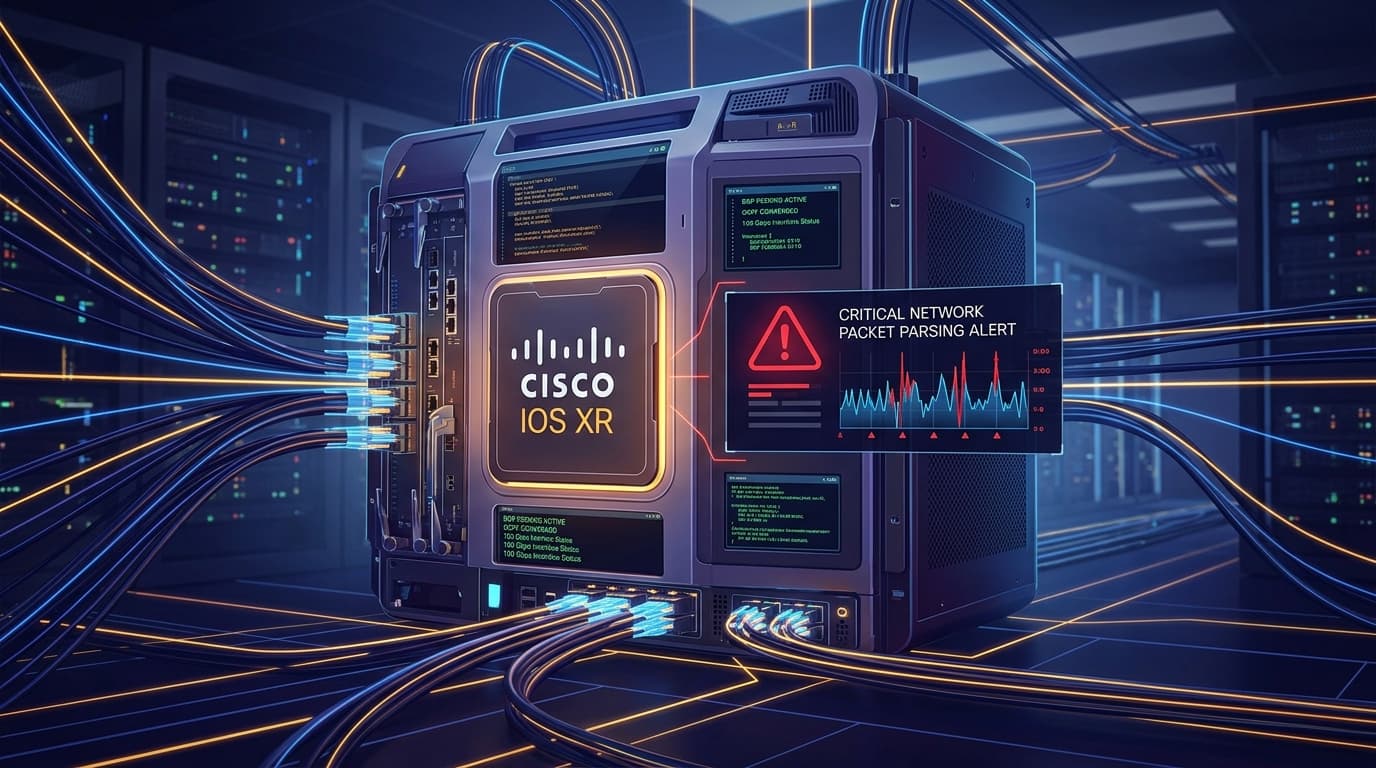
A critical shift in threat actor methodology has been observed following reports that attackers deployed an open-source autonomous artificial intelligence framework to discover a zero-day vulnerability in enterprise healthcare systems. According to official disclosures, the automated penetration-testing tool known as Cairn was weaponized to identify an undocumented flaw within a medical imaging application, ultimately allowing adversaries to compromise the underlying host server.
The Incident and Discovery Dynamics
The event, cataloged under tracking reference DISCOV-AI-SECURITY-407i9yh, marks a notable real-world manifestation of autonomous agentic tooling being used not merely to deploy known exploits, but to conduct autonomous vulnerability discovery against specialized operational software. The targeted application serves medical imaging workflows inside enterprise infrastructure environments, where high-availability systems process diagnostic records and operational telemetry.
Rather than relying on manual source code auditing or standard fuzzer sweeps, the threat actors directed the open-source Cairn framework against the target infrastructure. The framework conducted iterative probing and automated analysis, successfully mapping the application's attack surface and locating a previously unknown exploit path. Once the vulnerability was identified, the actors converted the access vector into an operational pathway that led to full takeover of the server hosting the imaging system.
Understanding the Cairn Framework
Cairn is designed as an open-source framework intended to automate end-to-end penetration testing workflows through intelligent autonomous agents. Unlike conventional automated scanners that test against static signature dictionaries or rigid script sequences, agentic systems like Cairn synthesize observations from target feedback, dynamically alter exploration tactics, and chain minor application quirks into viable exploit flows.
In this incident, the tooling operated against specialized software handling medical imaging protocols and data parsing. By iteratively parsing response headers, API entry points, and service handlers, the autonomous framework identified an unhandled logic condition or parsing defect that had escaped standard validation regimes. The automated feedback loop enabled the threat actors to bypass conventional defenses without requiring prolonged, noisy manual interaction.
Technical Context and Attack Surface
Medical imaging applications inside enterprise healthcare networks frequently bridge multiple environments, interfacing with clinical workstations, Picture Archiving and Communication System (PACS) repositories, and external diagnostic endpoints. Consequently, vulnerabilities in these platforms introduce substantial risks across clinical and operational networks.
- Software Surface: The application manages complex diagnostic image transactions, web-accessible service portals, and internal processing pipelines.
- Automated Infiltration: The AI framework executed structured reconnaissance, systematically testing parameter inputs and service responses until uncovering the exploitable state.
- Host Compromise: Upon triggering the undiscovered vulnerability, the threat actors successfully gained unauthorized administrative execution rights, securing total control over the host operating system.
The ability of an autonomous agent to evaluate, deduce, and weaponize an unknown flaw represents a significant expansion in the speed of the vulnerability lifecycle. Traditional patch development and response timelines rely on the premise that zero-day vulnerability research demands intensive manual labor. When autonomous agents compress discovery timelines to hours or minutes, defenders face dramatically narrowed response windows.
Confirmed Details vs. Unknown Elements
To assist security operations centers and incident responders in scoping potential exposure, the confirmed facts and remaining gaps surrounding the disclosure are outlined below.
| Operational Dimension | Confirmed Status | Current Assessment |
|---|---|---|
| Target Architecture | Confirmed | Medical imaging application hosted on enterprise infrastructure |
| Discovery Instrument | Confirmed | Cairn open-source autonomous AI penetration-testing framework |
| Impact Scope | Confirmed | Complete host server takeover and unauthorized control |
| Tracking Identifier | Confirmed | DISCOV-AI-SECURITY-407i9yh |
| Root Cause Breakdown | Pending Disclosure | Exact code flaw, memory bounds, or protocol parser error unreleased |
| Threat Actor Attribution | Unassigned | No specific state-sponsored or cybercrime group officially designated |
| Formal CVSS Rating | Unassigned | Base scoring and temporal metrics remain under evaluation |
Defensive Strategy and Recommended Playbook
While granular details regarding the specific lines of vulnerable code remain under evaluation by infrastructure engineers, enterprise security teams overseeing clinical, diagnostic, and imaging systems should enact proactive hardening measures immediately.
1. Isolate and Segment Medical Imaging Endpoints
Medical imaging solutions must never be exposed directly to the public internet or co-located in general enterprise subnets. Establish strict network micro-segmentation policies ensuring that servers running imaging applications are accessible only via encrypted management tunnels and authenticated clinical VLANs.
2. Implement Behavioral Rate-Limiting and Traffic Inspection
Because autonomous agentic frameworks rely on continuous feedback loops to adapt their scanning patterns, application delivery controllers and web application firewalls (WAF) should be configured with aggressive behavioral anomaly detection. Flag rapid, non-standard request mutations, repeated header permutations, and anomalous protocol queries originating from single subnets or atypical user agents.
3. Audit Host Privilege Models
Mitigate the impact of application-level compromises by running medical imaging processes under strictly contained service accounts with minimal local privileges. Ensure that underlying operating systems enforce mandatory access controls (such as SELinux or AppArmor) to prevent a compromised application daemon from obtaining administrative or root control over the host file system.
4. Heighten Centralized Telemetry and Logging
Ensure that all service access logs, transaction logs, and authentication records from imaging hosts are forwarded in real time to an isolated Security Information and Event Management (SIEM) platform. Threat actors utilizing automated frameworks often generate anomalous session lifecycles and unusual process spawning behaviors that can be detected through centralized endpoint detection and response (EDR) telemetry.
What Remains Unknown
Official advisories have not disclosed the specific code-level root cause of the flaw, nor whether the flaw resides within proprietary application middleware, third-party libraries, or a standardized network communication handler. Additionally, official records have not attributed the activity to a named advanced persistent threat (APT) actor or financial extortion syndicate, nor has an official CVSS base score been finalized.
Organizations utilizing enterprise medical imaging infrastructure should monitor authoritative advisory channels, verify perimeter isolation for all diagnostic processing systems, and prepare deployment protocols for forthcoming vendor patches.